Picture Frame Carving Tutorial? : You Decide!

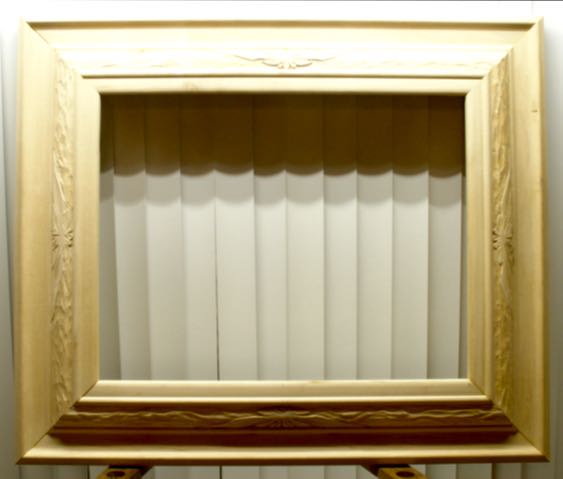
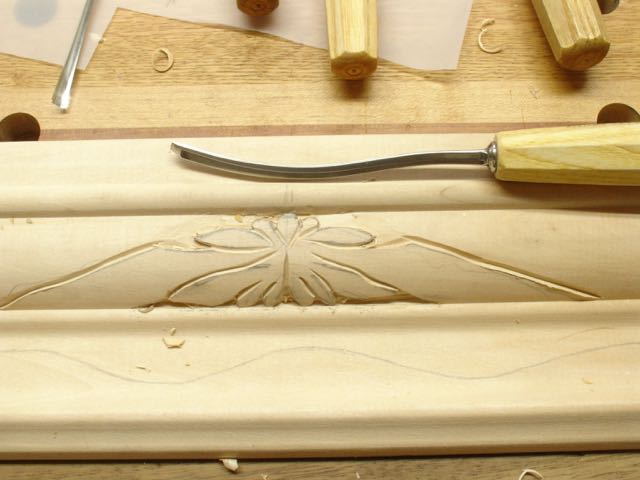
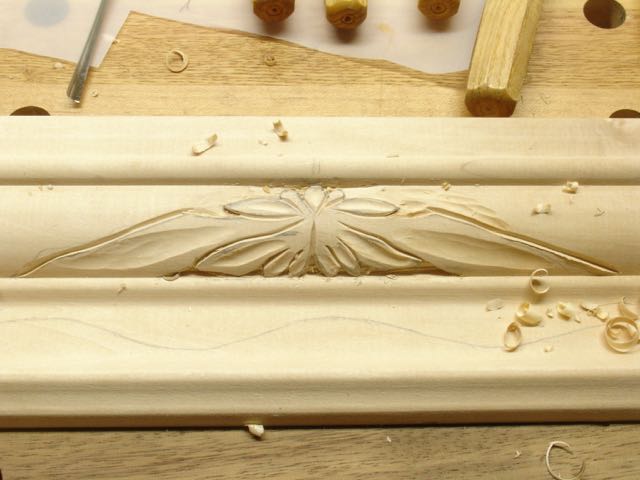
Without a doubt, much of what you and I do as woodworkers is the result of “self-teaching” and a lot of experimentation with a bit of frustration thrown in for good measure! Even with today’s technological advantage of just Googling It, we still need to strike out and follow our intuition to figure stuff out.  A case in point is my own quest on learning how to carve a closed corner picture frame.  Yes, there are many examples of others carving them on YouTube and other sites but they don’t give a step by step procedure and many are in stop motion slide show format.  You get the general idea from them but not all of the details.  I’m probably looking at this through the eyes of a retired shop teacher trying to figure out how to teach it so thought I’d give it a shot on my blog — you can decide if it’s worthy of being called a tutorial.  Here’s the results so far, then I’ll back up and explain how I got to it.

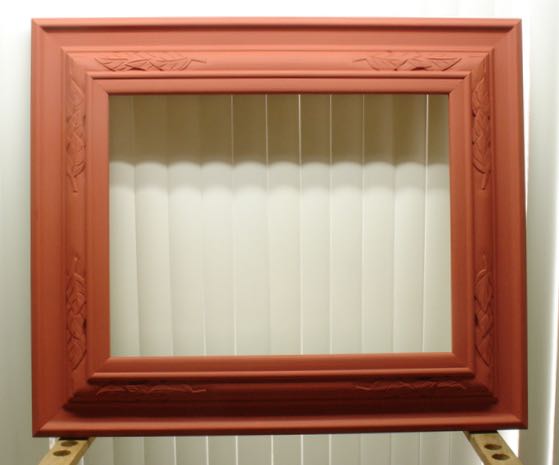
Frame so far: 5/7/2016

Frame so far: 5/7/2016

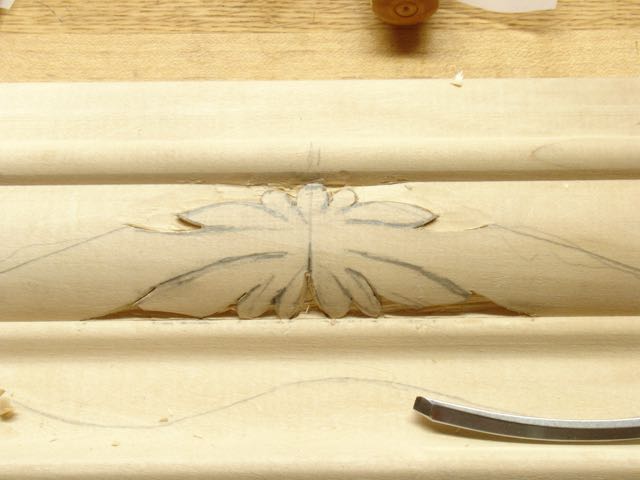
Here you can see it set up on the bench in poor light but you can make out the corner motif and the connecting ribbon.  The design is from a picture frame we saw in a museum that caught my eye.  Love being able to take pictures and manipulate the size but more on that later in the “tutorial”!  When working on the bench and checking the progress in the raking light things looked pretty good and in this picture the bottom half seems to show good detail.
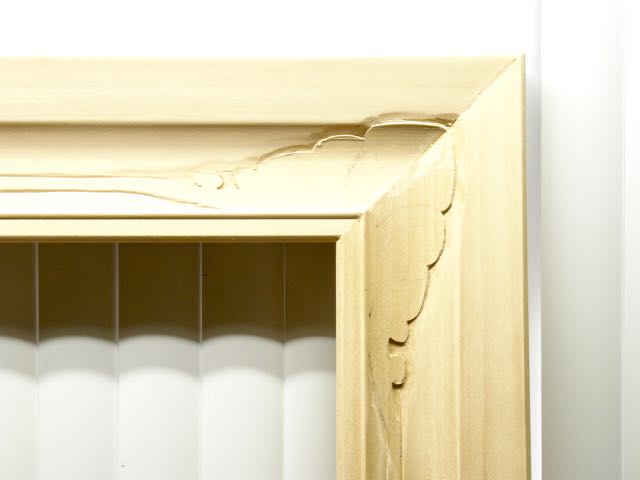
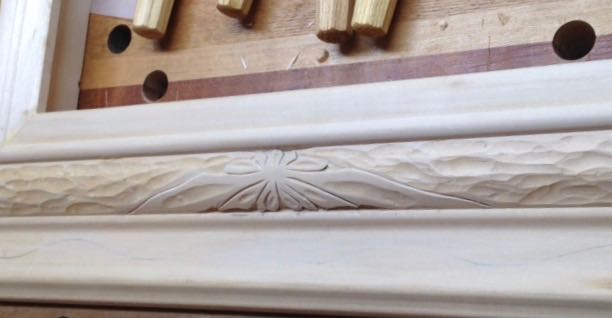
Corner Detail -- needs refinement.

Corner Detail — needs refinement.

That being said, on closer inspection I see that the transition from the concave panel to the corner needs to be improved.  Note in the large picture how the transition looks good on the bottom, not so much on top.  Flip the frame over and it appears the same.  I’ve found that a long bent gouge works well in these places, now I need to teach myself how to make that transition seamlessly!
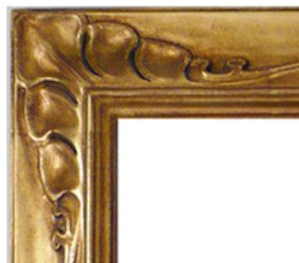
Frame Pattern

Frame Pattern

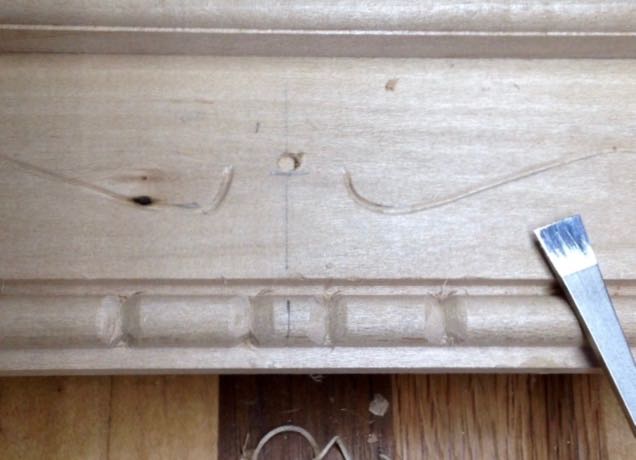
This frame is 16″ x 20″ and the last of the modified molding Diane had made at Foster Planing Mill.  Every scrap has been used so with nothing to practice on I had to just go for it.  The pattern is from a frame I photographed some time ago, can’t remember where I saw it though.  When I taught, the way you’d copy, reduce, or enlarge a pattern was to draw a grid over your design, then plot points where the design crossed the grid.  Next up was drawing a larger or smaller grid as required, re-plotting those points and then sketch everything in freehand.  Lots of fun teaching that to junior high school students.  Now all that’s needed is to put it on your scanner, drag it to the size you need and print it out! The size of the panel area is about 2″.

Materials to get design onto frame.

Materials to get design onto frame.

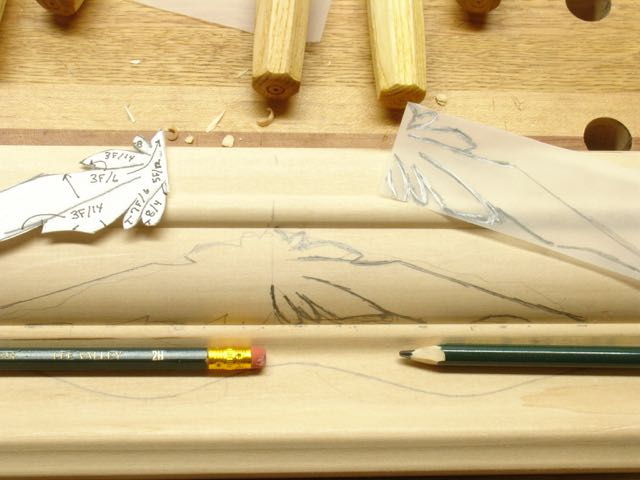
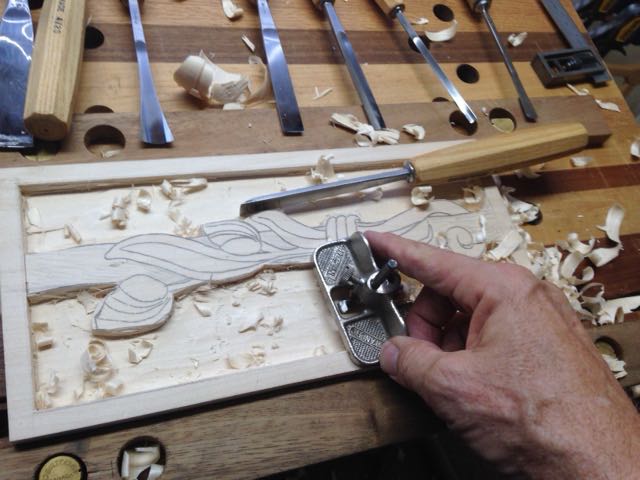
Although you can make a tracing of the pattern on tracing paper and then use that to get the design on the frame I definitely prefer to make a more substantial pattern from common plastic materials such as a salad container.  The advantage to is  that it’s stiff and can be anchored while you draw around it.  Tracing paper tends to slip around so isn’t as precise.  Once the size is correct, the pattern is glued to the plastic.  Making only a half pattern ensures that both halves similar.  Notice the tracing paper pattern to get the interior details?  Decided it’s better to do that after the design is completely carved out, too many lines lead to confusion!

For the design to be consistent each curved section needs to be cut with the same chisel.  The first corner took the longest and to keep myself straight the chisel sizes are written directly on the wood.  A picture was taken of that for reference to lay out the seven, remaining corners.  The picture comes in handy too when grounding out the design and needing to clean up the edges.

#2 Skewed Spoon

#2 Skewed Spoon

After the first corner is set, it’s fairly easy to follow the picture and I found that after 3-4 of them I knew which gouge to use where but having the paper for reference saved a lot of guessing.  Grounding it out was done mostly with various #3 gouges, the connecting ribbon is done with a parting tool.  An area that was hard to get at is between those two small leaves at the ends.  Years ago I bought a pair of #2, skewed spoon gouges that really work well here.  They’ve been modified a little and are a kind of awkward to use but they allowed me to get into those tight corners.

Almost done

Almost done

Working one corner at a time around the frame was my method, that way I could try to duplicate each design to stay as uniform as possible.  I thought it was pretty well done until the final pictures showed otherwise!  Smoothing the transition is the next step prior to modeling the leaves.  That will be the next “tutorial” on carving a closed cornered frame.  Hope this was informative, let me know if you need anything clarified.


Posted in Carving, Picture Frames, Tutorial | Tagged , , , , , , , | 4 Comments

Mary May Carving Project: Rose & Lily

Carving, let’s talk about it!  My main focus in carving at this point is for picture frames.  That means they need to be fairly low relief and able to be gilded without the leaf faulting too much and showing the sealer undercoat.  A little of that is good as it replicates age but too much of that is crude.  All that being said, when I carve my goal is to keep the carving low relief while still trying convey a lot of depth.  Here’s a recent example taken from a Mary May Carving School lesson:

The depth on it is about 1/4″ and I’ll be the first to admit that it wasn’t easy — stressful actually.  Some of you may remember my artistic endeavor of carving when I decided to attempt carving a life size sculpture of my shorts.  Compared to this, that was fun because it was a free flowing form with really no right or wrong to it, check out this blog link and you’ll see what I mean.  This rose and lily had to look authentic!

Rose & Lily Carving Complete

Rose & Lily Carving Complete

For starters, I really enjoy the way Mary May presents her lessons.  I subscribe to another woodcarvers online school and one thing different is that Mary puts the size of the gouge used on the screen and leaves it up for quite some time.  Maybe it’s aging and short term memory loss but that seems to work in my favor as I rummage through the tools to find the one needed.  I’m also “blog buddies” with the man who does her video’s, Bob Easton, so when I see his name at the end of each lesson it feels more personal — silly I guess but that’s how it feels.  Bob and I often make comments and ask each other questions on our blogs so there’s a connection.  Mary did this carving on a piece of Maple, mine is Basswood since that’s what most of the frames I carve are too.  I’ve learned that not all Basswood is the same, some is very stringy and hard to cut cleanly.  The molding stock I get from Foster Planing Mill has always been excellent material.

Rather than go into a lot of boring details here’s a slide show of the lily being carved:

This slideshow requires JavaScript.

Between slides #3 and #4 there was a lot of work that took place.  This is where gouges of a specific size are matched as closely as possible to the curvature of the design.  Mostly sweep numbers 3,5, and 7 of various widths.  My choice was to create an oval area for the design to sit in and a #5/12 accomplished that. The final slide shows the lily pretty much completed so it was on to the rose.

Getting all the Help I Can!

Getting all the Help I Can!

The rose was much more difficult then the lily!  I needed all the help I could get to outline the petals.  Thanks goodness for a lap top!  I was able to set it on top of the carving bench, listen a bit, and then immediately make the cuts that she did.  Even at that, there were a few mistakes.  Once most of the outlining was done it was time to model the rose.  At that point I removed the laptop, not too sure how well it’ll hold up to all of the chips being made.

The project was a good learning experience.  Through Mary’s teaching I have an understanding of how the flower flows and then trying to carve the wood to show that.  My preference is to simply apply a coat of wax (Liberon Black Bison) to protect and seal it and allow the wood to show through.  With a light colored wood like this the depth and undercuts give nice shadows, hopefully you noticed how I attempted to undercut the stems and leaves to enhance that effect.  You can see there is a slight chamfer planed on the edges but no sandpaper was used on this project.  My preference is for the tool marks to show through and authenticate how it was crafted rather than create a smooth look that a CNC machine could have done.  Once we return to Las Vegas I may decide to rabbet this piece and inlay it into the lid of a box.

Posted in Carving, Scottsdale Adventure | Tagged , , , , , , , , | 2 Comments

Final Frame for The Show

Stepping Out by: Diane Eugster

Stepping Out
by: Diane Eugster


This is the final frame for the upcoming show at the Meyer Vogl Gallery in Charleston, South Carolina. Diane was invited to participate in this show a few months ago. This frame is the one from my previous blog called the Water Lily Frame.  This picture shows the painting “Stepping Out” in the frame.   I have to apologize for the quality of the picture, we just don’t have a good spot in our temporary Scottsdale apartment for taking them.  I’ll talk more about the final steps leading to the completion of this frame but first let me tell you about this show.

I have no problem admitting that I’m Diane’s biggest fan!  A couple of months ago she was contacted by the Meyer Vogl Gallery and invited to be part of their upcoming show.  Besides being Diane’s framer, photo shoot aide, and fan club I also get to be her artist representative to get her work into galleries.  Although I’ve had success with that it’s much nicer when the gallery contacts her because they’re aware of her work and have been following it on various websites.  So, this is quite an honor for her having her work recognized by her peers and invited to be part of a show in their gallery!  The title of the show is She: A Celebration of the Female Figure.  The show opens on June the third and runs through June the fourteenth.  There are 6 paintings she’s sending them and they will be in the gallery for several months after the show.  The other artists invited to the show are Dan Beck, Quang Ho, Kate Long Stevenson, and Anna Sims King.  Although we’d love to be at the opening of the show Adam and Kim are getting married on the first of June so, needless to say; that takes priority.  Any of you that read my blog and live close to Charleston are more than welcome to go to the gallery and give me a first person report, actually we’d appreciate that a lot!

Lets finish up the work on the frame.  You may recall from the last blog post how the water lily motif and random carved pattern were designed to compliment the brush work of her painting.  My concern was the composition gold faulting over that random carved area but as these picture show, as usual my worrying was needless!

Once the frame has been carved, sealed, and gilded it is time for final toning to change the garish brassiness of the composition gold to a warm golden glow of a frame that’s seen a bit of history.  There are a number of ways to go about it and I’ve taken a liking to using casein paints for this process.  Here’s a slide show, perhaps you’ll notice the subtle differences from one step to the next even with the poor lighting conditions.  Once we get settled in our new shop situation, making a better tutorial on this process is on my list.

This slideshow requires JavaScript.

All except the first of the pictures in the slide show were taken out on the balcony.  That’s turned into my spray booth for the shellac — so far; no complaints!


Posted in Carving, Gilding, Picture Frames, Scottsdale Adventure | Tagged , , , , , , , , , | 2 Comments

Yet Another Frame In-Progress

At this point, over half the frames made prior to our Scottsdale Adventure have been carved and gilded.  You may recall that before Diane and I left Las Vegas I had prepared about a dozen frames from the moldings we bought at Foster Planing Mills seconds area.  They are a minimum of 3-3/4″ wide with a rabbet suitable for a canvas.  We’re enjoying our adventure here and are even considering a move from Las Vegas!  There is a thriving art scene here that is centered around the Scottsdale Artist School where Diane has made many connections with like minded artists.  Although my first love is designing and creating one of a kind furniture pieces, carving and gilding frames is great as well and a bit easier on the body!  Could I do both?, well; I think so!

As for framing, there is a wide gap between the $1,000.00+, 22kt. gold frames and the $75.00 imported ones available at the big box art supply stores.  My goal would be to fill that gap with hand carved, composition gold frames and keep them in the $350.00-$600.00 range.  There is a lot of truth in that expression “starving artist” and I’d like to work with other artists just as I do with Diane.  She’s recently been invited to show her female figurative work at a gallery in Charleston and of course, she needs gallery quality frames.  Having  a retired school teachers’s pension and combining that with hers pension doesn’t allow us to spend the money needed to buy frames that would be considered as “gallery quality”.  Establishing myself here as an affordable framer for other artists who find themselves in that position is a goal I’d like to pursue.

Water Lily & Water Flow

Water Lily & Water Flow


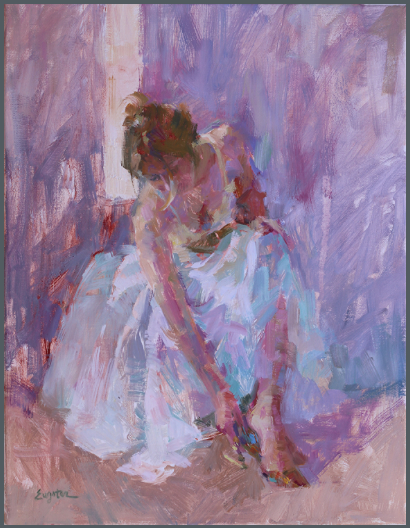
Here’s the latest one, ready for final inspection and then the gilding process.  The title of the painting is “Stepping Out” and features a woman in a flowing dress, putting on her shoes and getting ready for the evening.

Stepping Out by Diane Eugster

Stepping Out by Diane Eugster


You can see in this image of that painting what I mean. There are a lot of flowing lines in her dress and the background so Diane suggested some sort of floral motifs surrounded by a flowing texture to compliment the brush strokes in her painting.  Although it doesn’t show up too well in the photograph, once this frame has been gilded and toned I’m hoping the contrast between the center floral carve and the textured panel will be what she envisions.  The size of this painting is 14″ x 18″, it’s on stretched canvas.

I believe we’re always learning about our own work.  Being somewhat anal (still not sure I like that shortened version of analytical) and having a tendency towards trying to achieve perfection, carving has moments that it just can’t be attained!  For example, the area between the lobes of small leaves is virtually impossible to get smooth.  It’s a struggle for me to leave well enough alone even though I realize the burnisher/sealer used to prime the frame prior to gilding will fill in that area and it’ll never be noticed!  Even after that phase, the toning may seep in or rottenstone will fill the area.  And lastly — it’s really about the painting and such a small area no one (other than me or another anal woodworker) will ever notice so give it a rest man!!!

Transferring Design

Transferring Design

Consider it rested, here’s a brief explanation/tutorial of the process.  It all begins with getting the design onto the frame.  As a rule, Diane refines the designs I come up with as her artistic abilities and vision are much better then mine.  My preference is to make 1/2 of it on paper which is glued onto a piece of  salad container plastic.  It provides a firm pattern to follow and allows me to write down sizes of carving tools used.  That’s on the left of the picture.  On the right is a piece of tracing paper used with a soft pencil that allows me sketch inner details of the design as shown on the right side of this picture.  By flipping it over to do the opposite sides you essentially create your own carbon paper.

Outline set in

Outer Design Defined

Next up is outlining the main shape.  Using the same sweep and width tool for certain elements is what results in similar designs on both sides.  Various tools were used to remove the waste depending on their size and location.  This part of the frame is convex in profile which adds to it’s difficulty.  The tool laying in the panel is a long bent 3mm V-tool.

Leaves Separated

Leaves Separated


That long bent shape is used to cut the outlines between the leaves.  It’s easiest to start at the bottom and work your way up and into the convex profile.  Although the lobes may vary a little bit, doing those first is wiser since you can start the separation where they meet and free form into the leaf interior.


Modeling the Leaf

Modeling the Leaf


The final step is to model them which is accomplished with a #8/13mm and also a #8/8mm.  This is the only part of the carving that gets a light sanding after all of the chisel work is done.  This area needs to be smoothest so the gilding needs to have the smooth substrate here.

Texturing

Texturing


The final step in the carving phase was to texture the remaining convex portion of this molding to complement the brush strokes and subject of Diane’s painting.  Besides working on that rounded surface, the changes in the grain direction resulted in some tear out.  Even though the burnisher/sealer will fill some of the minor tear-out the plan is to go over it very lightly with a freshly honed gouge.  Then it’s time to use the burnisher/sealer; for this frame I’ve decided to go with a yellow.  Burnisher/sealer dries thoroughly and is then buffed with 4/0 steel wool.  Then comes the gilding process which will be the next blog.


Posted in Carving, Picture Frames, Scottsdale Adventure, Tutorial | Tagged , , , , , , | 1 Comment

Accepted into Fine Woodworking #254

Fine Woodworking Magazine

Fine Woodworking Magazine

Fine Woodworking Magazine —– the very mention of it among woodworkers brings recognition and I think, a certain amount of respect.  Since it’s first issue in 1975, it has been the bench mark of fine woodworking and a cut above the other publications that have come and gone since then.  I remember seeing my first issue while I was going to San Francisco State University pursuing my industrial arts teaching credential.  Those early issues were black and white only!  I graduated from SFSU in 1977 and began my teaching career in Las Vegas that year as well.  Like so many others at that time, subscribing to and keeping all of the issues of Fine Woodworking magazine was high on our lists.  Expensive as it was, it was a permanent item on my Christmas and birthday wish lists.  I did sell my collection for close to $400.00 about a dozen years ago after packing them from one house to another and deciding that I no longer needed to do that.  All that being said, getting a piece of work I made into that magazine seemed to be a crazy idea to say the least!  Imagine my feelings when they accepted the pictures of the armoire that Diane took — I was blown away.

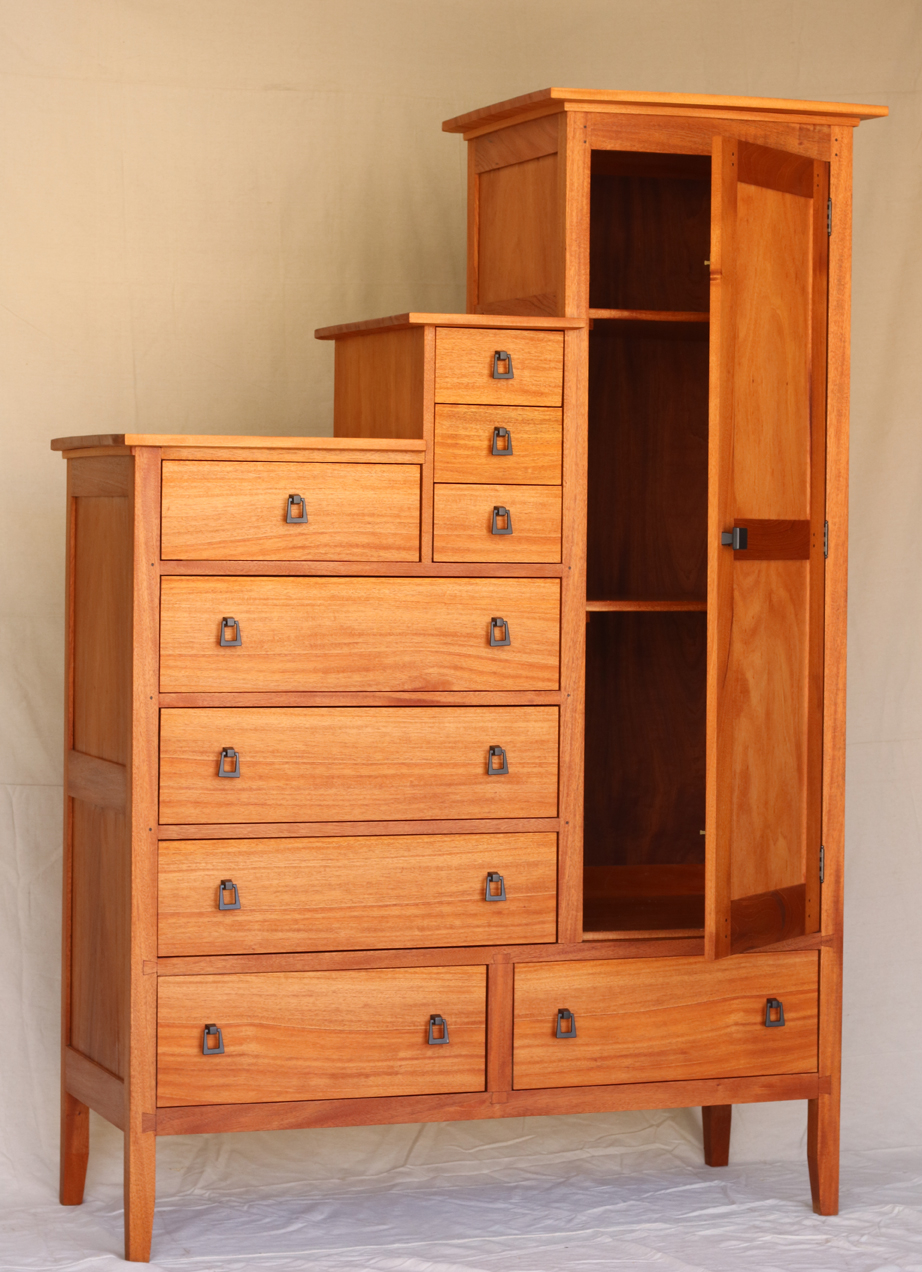
John's Armoire; Door Open

John’s Armoire; Door Open

Here’s a photo showing the door open rather than being closed as it is in the magazine.  Diane took the pictures in our garage.  She sewed some drop cloths from Harbor Freight together that were previously used to cover our tables during art fairs.  Then those were hung from the ceiling and allowed to curve gently onto the floor.  This creates a floating background and eliminates that hard line where the back meets the floor.  She took some amazing shots if you ask me!  Here is a link to the Gallery Section of the magazine.  The issue is their number 254 and it’s dated June 2016.  If you’ve been following my blog for a while you’ve probably been bored to tears as I went through the process of building this — my dream armoire.  But, if you would like to know more about this piece you can get a listing of each blog post about it by clicking on  Johns Armoire from the categories list on the right side of this page.

This project is one I’ve had in my mind for many years and am really humbled that the editors of Fine Woodworking selected it for publication from the hundreds of pictures they receive monthly.  Inspired by Thos Moser’s armoire titled Dr. Whites Chest I found myself sketching different ways to break up the monolithic appearance of his Shaker inspired chest.  Constructing the three different levels was a huge challenge.   All of the drawers feature hand cut dovetails, there are several large carcass dovetails, and the rest of the frame is draw bored, mortise and tenon joinery.  Being accepted into the magazine is a definite highlight in my woodworking career and I am humbled by this honor.

Posted in Uncategorized | Tagged , , , , , , | 11 Comments

Modeling Career vs. Woodwork Career

The final painting that David Kassan did of me can be seen in his Facebook post.  This class ended on Easter and I didn’t get to take pictures of everyone’s paintings.  Several left the day before, probably to be with loved ones for Easter.  A few others left during breaks and by the end of the 5 day session it seemed all were eager to get home and putting all of their stuff away so making the rounds and getting pictures of their work didn’t happen.  This “modeling gig” has been quite an addition to our Scottsdale Adventure.  With David Kassan I used the same pose in the morning for his demonstrations, then a slightly different pose in the afternoons for the workshop participants.  Twenty minutes on and five minutes off over the course of eight days did a number on my lower back which has seen lots of stress and injuries during 6+ decades of living and construction work!  I’m convinced that my contribution to the art world will be easier on me making the carved and gilded frames surrounding an artist’s painting rather then being the subject of that painting.

The day after Easter (4:00am) Diane, Ali, Brandy, and I took off to Las Vegas to do some needed maintenance around the house, doctors appointments, and shop time to build 5 of my wet panel carriers that I had orders for.  It was really nice to get back to the shop and make some sawdust once again.  Had visits with a couple of friends and neighbors and then on Thursday headed back to Scottsdale once again.  I had talked to the school about having an Artist helping Artists sale in their courtyard to sell off my inventory of frames and they agreed to donate the space and time to do that.  We brought back close to 50 frames which I couldn’t have gotten together without Diane’s help.  She took out paintings as needed, decided which ones she could do without (knowing I’ll make new ones), and priced them all.  The sale will be next Thursday – Saturday at the Scottsdale Artists School.

Tulip Carving on Basswood

Tulip Carving on Basswood

Pinterest Picture

Pinterest Picture

Finally, some woodwork and carving to share!  Many months ago there was a really cool carving on a mirror of this tulip.  It wrapped around the frame and so I put it on my Pinterest board for future reference.    Over time this particular pin has been re-pinned over and over so the appeal must be there for others too.  I decided I’d challenge myself and see if I could pull this one off!  It was a challenge for sure but I’m happy with the results and being able to figure it out.  The grain gave me some difficulties but that’s why we do these things isn’t it?


The piece measures 5 1/2″ x 12″ and is carved out of Basswood.  This particular piece seemed to be rather grainy compared to the material I have for picture frames but that’s just made for another learning opportunity!  After scribing lines for the borders and transferring the design the first step was removing the background.  I have a good carving friend who advocates using a router to accomplish that and; in a way, I followed suit — with an old Stanley #271 rather then his corded model.  My plan was to set texture the background after bringing it down to a fairly uniform depth; 5/16″.

Lowering the Background (Old School Method)

Lowering the Background (Old School Method)

This was the stress relief project during the modeling gigs.  I tried spending time each evening to work on it.  The finish is a couple of coats of Liberon wax, when it comes to wood finishing my preference is to keep things natural rather than stained or painted.  You can see in the picture on the right all the graininess of the wood fibers, not sure how to deal with that — any suggestions?

Now that this challenge has been met it’s time for another picture frame carve and gild.  Diane has been invited to be part of a show in Charleston, SC this June.  More details on that as it happens, I know the that the show’s title is She so will feature Diane’s beautiful figurative work.


Posted in Artist Model, Carving, Scottsdale Adventure | Tagged , , , , , , | Leave a comment

As Others Saw Me!

For the last three days I’ve been the model for David Kassan at the Scottsdale Artist School.  David is a very well known artist and he and his fiancé are opening an artists school in Albuquerque, New Mexico.  His work falls into the category of realism and if you check his website you’ll see why.  The way he structured his workshop is that he demonstrated each morning using me as his model.  This workshop was a three day drawing session and the shading and detail of the work is amazing!  Then, in the afternoon I had a slightly different pose that the workshop participants used for their work.  Here is the progression of his work:

It is customary at these workshops that the demonstration work is auctioned off to the participants.  This began as a light hearted “bidding war” to put food on the table for David’s son at $5.00.  As we went from day one to day three, things got a bit more spirited.  The auction ends at the last drawing session of the final day (Monday) and quietly and determinedly reached $2900.00!  What an honor to not only have David create this drawing of me but also that someone has now purchased it and I’ll be hanging on their wall!  I’m scheduled to pose for his painting class that begins tomorrow (3/23) and finishes up five days later on Easter Sunday.

As mentioned before, sitting for these workshops is quite an experience.  I make e very attempt to stay focused on and return to the exact same position after each break.  Listening to how he plans the work to create the drawings is really pretty fascinating and much of it relates to the sculptural aspect of drawing.  As he teaches line work, some of what he says is applicable to carving work.  One advantage for his though is that mistakes can be erased and lines put back in — with wood, once it’s gone that’s it!

The skill level of the participants in this workshop is evident by the work they produced.  I apologize for a few pictures here that came out a bit blurry — my excuse; 6 hours of sitting and holding a pose!  There were two other artists that drew me as well but they had to leave the workshop early to catch flights back to where ever they came from. Keep in mind that they are positioned around me in a semi-circle so each has a slightly different profile to draw.

This slideshow requires JavaScript.

It’s always a fun experience posing for these workshops.   The artists so talented and interesting to talk with during the breaks.  They come from all over the country and one of the participants came all the way from Dubai to attend this workshop.  Needless to say, he got the furthest traveled award!  Looking forward to the painting workshop starting tomorrow, the way David approaches his work is that he gets to really know and understand the planes and features of the models face.  As you can see from his completed work, he’s captured it!

Posted in Artist Model, Scottsdale Adventure | Tagged , , , | 2 Comments

Inspiration for a Frame Design

So, one of the things that’s been difficult in my pursuit of carving frames is finding specifics of the craft.  There are a number of shops that have YouTube video’s of their frames being carved and gilded, many examples of traditional designs that could be copied  (maybe!) but nothing that walks you through a step by step, logical sequence about creating your own designs.  Well, just like most of my furniture work and skills have developed it’s time to strike out and write my own “book” about this subject.  Much of what we all do as artists, furniture builders, etc. is self taught through trial and error isn’t it?  I’ll share my dicoveries on the blog and am always open for comments or suggestions.

Painting by Diane Eugster

Painting by Diane Eugster

Diane recently completed the painting you see here at the left.  She’s been told that nudes aren’t a style of painting that’s in high demand.  Apparently, people aren’t that comfortable having nude art displayed in their homes!  When I saw this in her studio I was immediately drawn to the flowing, graphic design of this painting.  At first glance it comes across as an appealing flow of contemporary colors and then all of a sudden you discover that it’s a nude figure, seemingly suspended in mid-air!  The color palette and the way your eye is drawn through it captivated me from the start.  That was  the inspiration for a frame, I needed to come up with a design that flowed as beautifully as the figure Diane had captured on canvas.

Bougainvillea Leaf

Bougainvillea Leaf

Many frame idea’s come from doing a search for clip art, these were all too willowy and would be very hard to carve into a frame with any consistencey.  Most could work as a single, incised line essentially chip carved into the frame but that’s not my style.  This painting needed something with more body and impact to it.  Leaves and flower borders were my next search but these left me cold as well.  Walking Brandy in our apartment complex, I noticed all of the flowers in bloom and spied some gorgeous Bougainvilleas.  A year or so ago I’d taken a leaf from a Fig Tree and used that for a frame so I thought why not a Bougainvillea leaf?  I took a stem, found a leaf that fit in the area that was to be carved, scanned it and began the design process.  I liked the natural flow of the leaf and felt it mimicked the flow of the nude.  The first attempts had the leaves all lined up the same way which didn’t give me the flow I was after.  It’s so easy to flip an image when you scan it so that’s what I did which lead to this final design.  All of this process took a number of hours to complete, many sketches, and several practice carves on the remaining pieces of scraps from the profile.  Do you get the same sense of motion in the leaves as seen in the painting?  In the left hand picture you can see the notes I made to remind me of which chisel to use so that the curves had a consistency to them on each of the eight corners.

Having the pattern be consistent is important.  It’s not like anyone will ever do a line for line comparison of the work, after all it’s the the painting that’s the star.  That being said, if the pattern is obviously inconsistent from one corner to the next it will stick out like a sore thumb!  After drawing the design I’ll glue it to a piece of plastic from those salad containers I keep talking about.  They’re stiff and easily reversible.  That takes care of the outside, for the inside I’m using transfer paper and a soft pencil.  This creates its own form of carbon paper and gives enough outline to follow with chisels.

This slideshow requires JavaScript.

I choose to do all of the outside work first and then layer and model the leaves after that to establish some sort of rhythm.  There’s always concern about the direction of the grain at the miter and since I wanted to keep that crisp I held the pattern away from it.  Once all was complete I didn’t like that!  Seemed to be too much space at the corners which needed to be solved.  Here’s what I did to tie them together:

This slideshow requires JavaScript.

Ready for the Gold!

Ready for the Gold!


The concern was splitting out the grain when the chisel got to the miter, fingers crossed, freshly honed tool, and slow work led to success.  Here’s the frame with a coat of burnisher/sealer on it ready to be gilded Saturday.  Although those small details don’t show up much in the corners it’ll add a shadow line once gilded.


Posted in Carving, Hand Tool Woodworking, Picture Frames | Tagged , , , , , , | 2 Comments

Faux Sgraffito

CJ Frames Sgraffito Frame

CJ Frames Sgraffito Frame

Maybe I better explain this blogs title before I go to far!  Faux is probably familiar enough as a word meaning false or phony.  Here’s a link to the definition of sgraffito and it’s used in several art forms, especially painting and pottery.   For picture frames the design is scratched onto the frame after it’s been painted over the gold leafed surface.  Here’s a screen grab from a video by CJ Frames that illustrates that.  This can be done free-hand or with the use of stencils.  I really like effect but since my hands aren’t all that steady or artistic decided to try and come up with a different way of achieving a similar effect.  Here are the results, I’m happy with how the design is faintly there, you have to discover it.  Also the age and patina makes it seem as if  the frame has been around for many years.

The frame used is one that was made the same time I created the frame for Diane’s picture titled La Nina Mariachi .  Here’s a link to the Blog Post about how the frame was constructed.  The frame for Diane was made out of Tropical Walnut and since the machines were set up to cut the profiles and I had some Basswood available in the shop I choose to make two, additional 12″ x 16″ frames.

Knowing this would be difficult to carve due to the profile the design needed to be kept simple; that’s when the sgraffito inspiration hit me.  Searching through web images yielded a design I thought would work.  By experimenting with the size I decided two different sizes were needed to make a pleasing layout and the best tool to get there was this long bent V-tool, 6mm.  Keeping focused on the size of  the piece curling out from the tool is what I used to gauge the depth of the cut.

Sausages on the Sight Edge

Sausages on the Sight Edge

Once the designs were carved in, small circles were cut to add to the flow of the over-all design.  These were done with a #9/3mm gouge followed up with a flattened punch to smooth out the wood in the bottom of the circle.  That’s a technique used on the Waterleaf Frame recently completed here in Scottsdale as well.  Lastly, a few sausages were added to the sight edge for some additional design.

The next challenge was how to lay the leaf and in the 90 degree corners of this frame.  They start at the sight edge around the bead but the most challenging is the one where the panel meets the rim.  I found that by tilting the frame towards me and using a piece of cardboard to very gently push the leaf into the corners I had success.  Going in I knew there would probably be some faulting but decided to celebrate the patina and aging affect this could bring.

Toning of the frame followed my usual procedure.  First the brassiness is knocked down with 4/0 steel wool and some of the red clay sealer was exposed to replicate years of being handled.  This is the first time using Titanium White Casein only as the toner for this frame.  I find that the way it really cooled down the gold and got into the carving is pleasing.  The name given to this toning process will be Iced Gold and since I have one more frame with this profile it’ll give me an opportunity to experiment with it some more.  Toning is a constant unknown which is what sets one frame apart from the next.  So many variables in the process but that’s the beauty of hand craftsmanship versus production products.


Posted in Uncategorized | Tagged , , , , , , , , | 2 Comments

Artist Model for Rose Frantzen

If you’re a reader of my blog (first of all, Thanks!) you’ll know that Diane and I decided to celebrate our anniversary with a 6 month adventure rather than a cruise or trip abroad that would only last a week or so.  She to really immerse herself in workshops and open studio time at the Scottsdale Artist School and me to devote time to developing my carving and gilding of picture frames.  Being in a 2 bedroom apartment definitely means I don’t have any power equipment so focusing on the carving is my main thing.  In addition though, I interviewed and was hired as a portrait model for the school.  This has been a really cool experience and although it isn’t my usual woodworking thing I’ll blog about it anyway.

For the past two days I’ve modeled for Rose Frantzen, a very well known artist from Iowa.  She has studied with artists that I’ve heard Diane talk about for quite some time.  In case you think modeling is just a matter of sitting there and “looking pretty” let me tell you it’s not quite that simple!  For this session there is another model, half of the class of 17 does me one day and the other half painted her.  The next day we’ll switch so everyone has the same models and experiences.  Rose goes from one to another and instructs them in her beautiful style of portraiture and listening to her gives me quite an education!  In keeping with my first post of How Others See Me I’ll put together a slide show of each days work.  Keep in mind that I’m on an artists stand, lit up, and the artists are around me in a semi-circle so each of their views is different.  The skill level of the workshop participants is evident in their work.  Keep in mind they only had 6 hours of time that is divided into 25 minute segments with a 5 minute break.  They all take photographs so they can finish the portrait at their own studios if they desire.  We take an hour for lunch.  Here are the results of Saturdays work:

This slideshow requires JavaScript.

As a teacher I really enjoyed listening to Rose as she went from one student to the next helping and encouraging them to learn and achieve what she has to show them.  The energy in the room is evident and infectious!  Like me, she’s a definite hands on teacher which I feel is the best way to teach.  Don’t ever put a paintbrush in my hand and expect something good to happen but between the conversations Diane and I have and listening to Rose explain the techniques of shading, edging, color, etc. I could be an “armchair artist”.  Really a great class and experience, here are the results from the second days sitting:

This slideshow requires JavaScript.

You’ll notice the stick that a few painted in today.  Rose had me hold the stick to create a curvature in my shoulders.  In case you’re wondering how the same pose is achieved after a break the chair and floor are taped the first day to show my basic position.  On the stick I marked where my hands were and then found a spot on the wall to focus my eyes on.  The artists would have me make very slight corrections to the tilt and angle of my head  so the shadows and highlights were consistent for the entire day.  I have a break in my modeling schedule until the latter part of this month so it’s on to more frames.

Posted in Artist Model, Scottsdale Adventure, Uncategorized | Tagged , , , , | 2 Comments