Vacation Fun & Back to the Shop

Beginning of HiawathaIt was great to take a week off and go to the cool northwest — Spokane, Washington plus time in Rossland, British Columbia and a fantastic bike ride that was in both Montana and Idaho!   The bike ride was on a portion of the Hiawatha trail that is part of the rails to trails program.  This is a picture of me at the start of it which features a 2 mile long railroad tunnel.  After 12 more miles of trail which included numerous tunnels and trestle bridges we reached the terminous where old school busses took us on a winding, rough road back to the first tunnel. This meant we had two more miles of wet, dark tunnel to go.  Great experience with my daughter and two grandsons.  She had them hooked to her bike the entire time in an off road carriage!  The only negative to the whole trip were the numerous forest fires currently ravaging the entire northwest.  The smell and sight of smoke was a constant reminder of the fires that are all over that area.  After celebrating the boys birthdays it was time to fly home and get back to work.

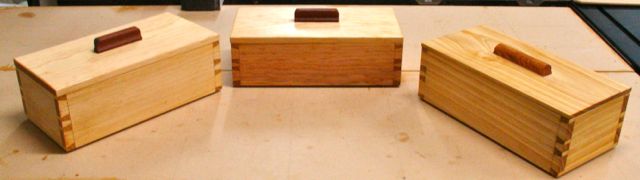
A few days before our vacation I received a convo from my Etsy store.  There was (sold now!) one of the hand cut dovetailed Pine box and they wanted to know if I had another like it or how long it would take to make another box just like it.  She was very understanding about the vacation plans and went ahead to order the additional box even though I couldn’t make her initial time frame.  Work began on it the day after our return from the vacation starting with the preparation of the Radiata Pine.  That’s the only machine process for the box and I’m always happy to get into the quiet, hand working phase of the projects.  The Pine has some very interesting grain pattern and like the link says, a faint, resinous odor — I like it!

Stanley 140 Trick

Stanley 140 Trick

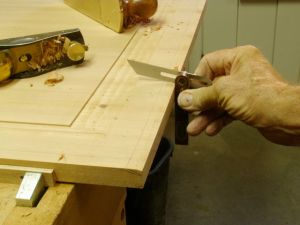
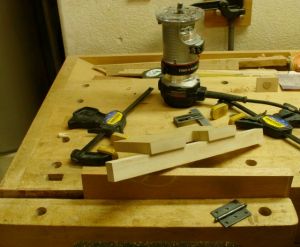
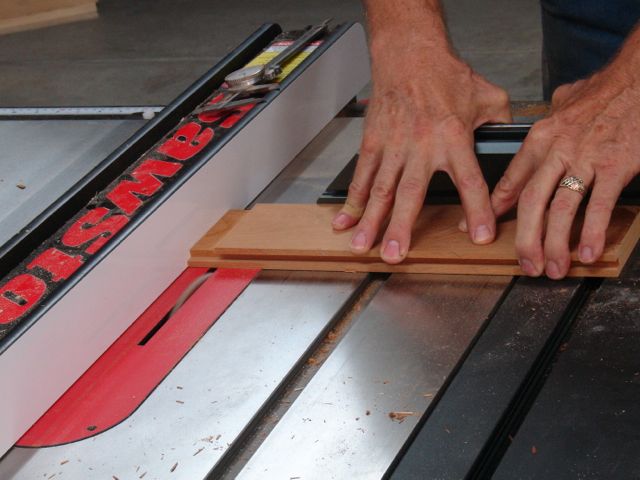
Those of you that have read my blog before know I employ my “Stanley 140 Trick” whenever dovetails are called for.  It’s done on the tablesaw and creates a rabbet on the tail edge of the joint.  I find that it leaves a cleaner junction on the inside of the corners.

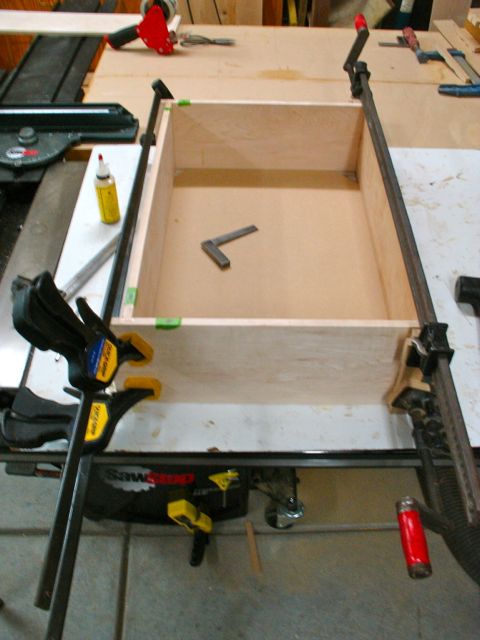
Once that rabbet is established the tails were laid out and cut using the original box as a guide for their layout.

I left it at that point last night as it was getting late and 101 degrees in the shop.  Better to chop out the waste in the relative coolness of the morning; 89 degrees!

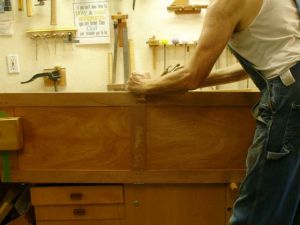
Tonight I’m hosting our monthly Sin City Woodworkers meeting.  We take field trips to other members shops so that is part of the purpose but also I’ll be discussing the design process I use in my work.  That meant the Armoire needed to be 100% complete and ready for its debut.  All that remained was installing the back panels and bottom dust panel.  They are the only pieces of plywood used in the otherwise traditionally constructed piece.  I chose to use small, brass escutcheon pins to hold the pieces for the drawers.  Each area has a 1/4″ x 1/4″ rabbet so they are flush with the back.  The bottom panels were attached with brass screws and finish washers.  All that remains is getting it upstairs — can’t wait for that.

There is some variation in the Mahogany plywood used for the backs which adds interest I can live with since it won’t be seen.

It is Finished!!

Posted in Current Commission, Etsy custom order, Hand Cut Dovetails, Hand Tool Woodworking, Johns Armoire | Tagged , , , , | Leave a comment

The End is Closer!

Tired but happy is the best way to describe how I’m feeling at the end of this long day. You can see in these two pictures that the Armoire is virtually complete, all that remains is the back and bottom dust panel.

Here are the remaining items on my “pick-up” list that were accomplished Saturday:

Drawers and Drawer Bottoms:  This began with the classic “wax in, wax out” as the shellac was rubbed out.  After sanding between coats, shellac usually still looks kind of rough.  My technique is to use Liberon Black Bison wax with a super fine, white scotch pad.  I like the finish it leaves behind and the smell of that particular brand of wax.

Once that was complete it was time to fit and install the drawer bottoms.  They are made of glued up panels of Alder.  First step was running a piece of 1/4″ MDF through the groove to make sure there weren’t any rough spots or glue.  Some adjustments were needed and easily done with a Stanley #78 rabbet plane.  The hole for the screw used to secure the bottom was made with a gimlet and the screw is tightened just enough to where the washer can spin freely.

Top Panels:  Both of these are secured to the cabinet through over-sized holes using brass screws and washers.  The front screws are fairly tight while the back ones are loose enough to allow for any seasonal movement.  Pretty straight forward but when it came time to locate the holes for the upper one the distance was too much between the bracket and the top to be accurate with a scratch awl.  Here’s a new marking tool I recently found during the AWFS convention here in Las Vegas.  It’s called a Pica Dry pencil and is available from Lee Valley.  A sales rep for Festool was using it and since it’s the same color green as their tools thought is was one of theirs.  He told me what it was so I added it to my hardware order.  What I like about it is that the lead is water soluble and also comes in colors.  It also has a built in sharpener.  The only thing I need to get used to is using less pressure as the lead is pretty soft.  It’s always been a problem erasing pencil marks but with this being water soluble that problem is gone!  They also have red and yellow colored leads which should be more visible on darker woods.

Thankfully my mind was working and I didn’t attach the top yet — I’ll explain later on in this post.

Drawer Pulls:  The hardware I chose for this piece was ordered from Lee Valley and it is their Blackrock series.  I like the somewhat Asian flare it gives to the otherwise Shaker inspired Armoire.   I know there are any number of hardware installation jigs available but the Dutch in me always has me making my own.  Really pretty simple, I use a piece of 1/4″ MDF centered between two other 3/4″ pieces that have been grooved to accept it.  There are 4 different sized drawers but with this set up you simply flip it over to mark the two sides of the drawers, the picture below should clarify what I mean.  Does take some math work but that’s easy enough!

Armoire-WoodworksbyJohn-CustomFurniture-Door

Hinge installing tools

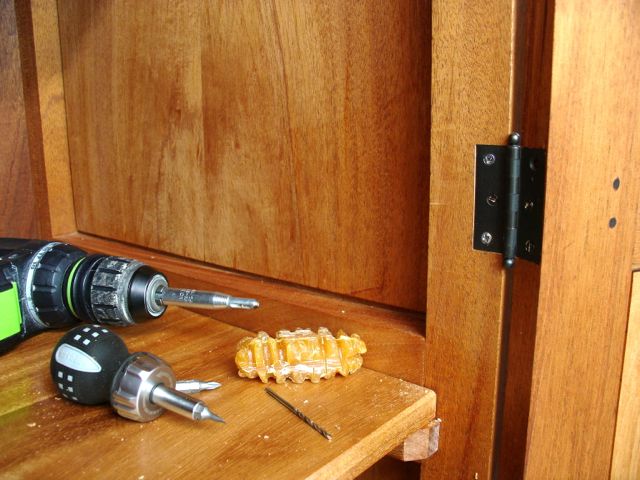
Hanging the Door:  I covered this in my previous blog post so won’t go into too much detail.  I was very careful and ended up using all the tools you see in this picture.  Horton Brass supplies you with steel screws to fit the hinge and then brass screws for the final installation.  To keep a period look to the Armoire I specified slotted screws.  I needed to first locate them carefully with a Vix bit, then drill the hole deeper with another bit, finally beeswax to make things go without breaking the tiny brass screw.  One screw at a time, then check to make sure the door swings freely.  Definitely not a mass production process!

Double Ball Catch:  I really like to use these, again; these were ordered from Lee Valley.  Remember I was going to put the top on earlier but thankfully, my brain was still engaged and I stopped myself.  I’ve used these on double doors where you can get into the interior of the cabinet to position them — hmm; only one door here!  What I did was install the top catch first since I could get in and mark the locations.  Once installed a small combination square was used to transfer that location to the lower latch.  Also used the technique illustrated on page 94 of Taunton’s book on installing hardware.  They used  double back tape to position the catch on the door.

That’s it for now, all that remains is the backs and bottom dust panel.  I think it’s now officially wine time!!

Posted in Uncategorized | Tagged , , , , , , , , | 5 Comments

Is the End in Sight?

John's Armoire Plan

John’s Armoire Plan

It does seem as if I’ve been working on the Armoire for a very long time.  It has most definitely come a long way from the drawing but when I add two large projects for clients, a couple of Etsy custom orders, and a picture frame or two to the equation it has been a long process!  I’m reminded of when I built my house in Boulder City in the early 80’s.  At that time there wasn’t such a thing as a blog and since I thought only girls wrote diaries I chronicled the process thinking of possibly turning that into a book.  I carefully kept track of the number of hours I spent on each phase of construction and there was one category; Pick-Up that took a lot of hours.  Basically it was taking care of the little odds and ends needed to complete the house — that’s where I feel I’m at on the Armoire now.  Here are the ones I can check off of the list now.

Door Panel, Flattening with Scrub Plane

Door Panel, Flattening with Scrub Plane

Door Panels:  There were a few pieces of the Mahogany that had some birdseye characteristics to them so they were reserved for the door.  Initially they had a thickness of 5/8″+ but during storage in the bathtub one developed a bit of a cup.  I needed to bring it flat and then re-surface both panels to roughly 7/16″ thick.  By now they are finished and assembled into the door.

Corner Brackets:  A seemingly minor item you don’t think about until you need it.  If you refer to the drawing you’ll see that the section with the door has a top.  I needed to make angled brackets with over-sized holes to attach the top to the cabinet.  Seems like it should be a quick process but first comes sizing the lumber, then cutting the angles, then going to the drill press to drill and countersink the screw holes.  One more large hole for attaching the top and finally climbing up on the ladder with drill, screws, beeswax, screwdriver, etc. to get them installed.

Planing and checking top bevel

Planing and checking top bevel


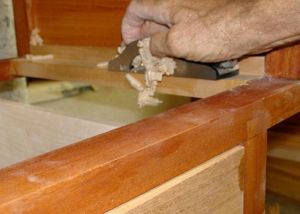
Top Edge Detail:  The bottom edge of each top is beveled slightly to create a small shadow line and give a sense of uplift.  These were done with hand planes and much of it involved end grain since the grain on the top runs from side to side, not front to back.


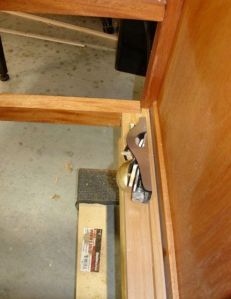
Molding:  My first design concept was to not have any moldings between the cabinet sides and the top.  Since there are some inconsistencies with the flatness of them, I could see that a molding was needed to disguise that.  I choose to make a very simple,  5/16″ x 1/2″ molding with a bevel on one side.  Trying to hold that thin of a piece while planing an angle on it was difficult to say the least.  It’s so flexible the pressure of the plane moved it every which way!  Here’s how I solved that problem.  I clamped a planing stop in the vise, laid the molding next to it and then planed the edge by using the stop edge as a guide for the plane.  By tilting the plane on the bench I could get a consistent angle.  Once the cut began, it was easier to hold the plane stationary and pull the molding under it.

Jig and tools used for Hinges

Jig and tools used for Hinges

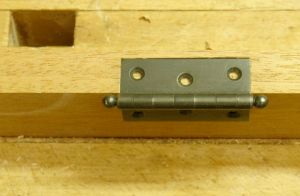
Door Installation:  This is an area where all of your work can go down the tubes.  This is my first piece that has three, mortised in butt hinges so I was pretty cautious.  First off, decided to go with Horton Brass since their quality is well worth the expense.  It took the better part of the morning to install them starting with making a jig to insure the depth would be consistent.  For many of my boxes I’ll do this operation without a jig, just chisel and marking gauge but for this project I wanted to eliminate any inconsistencies.
Practice hinge installation

Practice hinge installation

The jig is made of a piece of MDF and Poplar and I’m using a 1/2″ pattern bit with a top mounted ball bearing.  The  picture  at the left shows the hinge installed in some practice material.  I really like the looks of this hinge and the Horton quality can’t be beat.  There’s just no comparison to hinges made of rolled brass at one fourth the price of these.


Door hinge installation

Door hinge installation

Now that the practice was done it was time to take a deep breath, put the door in the vise and do the real thing.  They were located at the inner edges of the top and bottom stile and centered on the center stile.  The door was done first.  After the router removed the bulk of the material I carefully chiseled the corners square and mounted each hinge with the center screw only.

The next problem to solve was how to route the cabinet side, at this point the cabinet is upright on the dollies.  I figured that trying to work sideways with the chisel and routers would be precarious to say the least so padded two sawhorses and Diane and I were able to lay it on its side.  To set the reveal around the door I used nickels.  The top and bottom hinges were installed first (center screw only) then the center hinge.  I hope it doesn’t come back to bite me but I did need to apply some pressure to the center of the door to get the hinge to seat properly in its mortise.

Adjusting strike edge of door

Adjusting strike edge of door

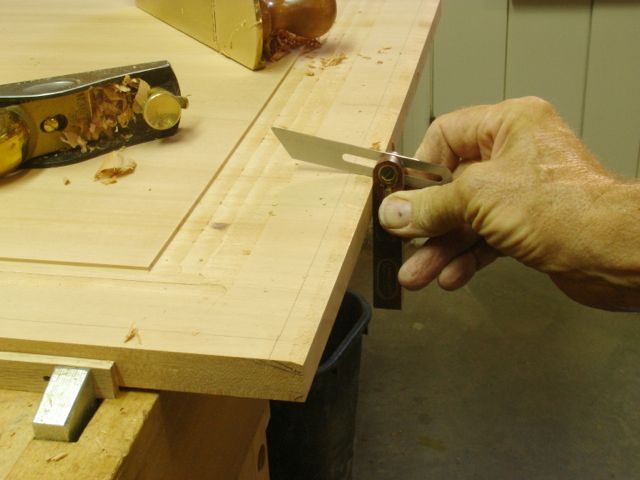
Now came time to establish the reveal on the strike edge of the door.  This was a trial and error process where the door was installed, reveal eyeballed and marked, door uninstalled, and then planing the edge.  Once the reveal seemed correct I planed about a 5 degree angle on the strike edge of the door.  So far so good, hopefully things won’t change too much as we have some monsoon moisture coming in.  I’m learning there is quite a bit of movement with the Mahogany when our humidity levels swing from the usual 8-10% up to 50-55% when the monsoons hit.  Since the Armoire will be in the house with the central air conditioning the humidity levels should stabilize.  Hey, it’s always a learning experience!

Day's End

Day’s End

At the end of the day, we’re looking like this picture in the shop.  All of the drawer sides (in and out) now have two coats of blonde shellac on them.  That goes for the pile of drawer bottoms you see on the assembly table as well.  I make my own shellac with flakes purchased from Shellac.net which is in California.  I’ve been dealing with Ron there for many years and he’s always available for advice and shipping from him is quick.  Just a side note here, I’ve found that a good way to clean brushes used for shellac is after you’ve used denatured alcohol to clean them, follow that with a bit of Murphy’s Oil Soap and warm water and your brush will be soft and clean for the next time.

Time to call this a blog so you don’t get bored.  Drawer bottoms, wax, and installation seems to be all that remains — Alleluia!


Posted in Johns Armoire | Tagged , , , , , | 1 Comment

Drawers One More Time and a Door Too!

I’m just about done working on and talking about drawers for this project.  I’ve learned a lot which is always a good thing!  The first thing on the list was to clean up and level the dovetail pins.  Here’s where using the Old Brown Glue has an advantage as far as I’m concerned.  You can see in these pictures that even after drying for a day or so, all it took was a wet, paper towel to get rid of the dried glue:

Set up to plane drawers

Set up to plane drawers

By attaching a piece of MDF between the bench dogs plus the bench hold down screw I was able to secure the drawer to level the sides and front.  This method works well for me.

After they were all cleaned up it was time to fit them to the openings.  If you recall, the drawer runners were built so they were slightly proud of the frame.  This was to provide a bit of clearance and achieve (hopefully) an even reveal around the drawer front.  These are inset drawers.  Although not perfect, I’m pleased with how they fit.  The runners were adjusted as needed by using a rabbet block plane:

One side note  though, the desert with it’s usual single digit humidity can cause a furniture maker forget about the effects of humidity on wood.  The two bottom drawers, which I thought fit well; now need to be planed due to our week of monsoonal humidity!  The bottom reveal is good but they are snug at the top.  I may wait a day or two to see if they will stabilize on their own.

Drawer bottom expansion slot

Drawer bottom expansion slot

That means all that’s left are the drawer bottoms.  These were made by laminating 3-4 pieces of Alder together that were resawn from material previously used for teaching a plane seminar.  Appoximately 3/8″ thick, they were rabbeted on the router table to fit the 1/4″ dado in the drawer bottom.  To cut the expansion slot at the back I found another benefit of the sliding table as the picture on the right shows. Don’t think I’d try this with a standard miter gauge for sure!  This has been done using a shop made tablesaw sled but this felt pretty safe and secure.  The drawers have now been oiled, bottoms shellacked, and it’s time to move on to the door.

Cutting tenon with sliding table & dado head

Cutting tenon with sliding table & dado head

When I picked out the Mahogany at Woodworkers Source in Phoenix there was one board that had what appeared to be some birds eye figure in it.  This was set aside for the panels in the door.  They have been planed and rabbeted so they will fit into the mortised and tenoned door.  Like the rest of the piece, they are draw-bored using 3/16″ Walnut dowels.  Since I had a 1/4″ dado head set up in the saw for cutting the grooves in the door stiles and rails, thought might as well try using it for making the tenons.  Usually I do this with a tenon jig.  Once again, the sliding table proved to be an advantage over a standard miter gauge and also a shop made tablesaw sled.  The action is unbelievably smooth!  The dado head cuts slightly more than 1/4″ so some minor fitting was required to make a good fitting joint.  To draw bore it I use my customized punch — a piece of 3/16″ brass rod fit into a golf ball that works great to locate the center of the hole.  I decided to try using a Japanese razor saw to fit the haunches for the tenons too.

Clamp just fits between pegs!

Clamp just fits between pegs!

I showed how to make the punch in this previous POST.  One thing that I didn’t consider was that on the door, the pegs are fairly close together, about 5/8″ center to center.  Since they are driven completely through the joint that means, obviously; that they exit on the other side!  When I hammered the second one in the sound told me that I had hit something hard — yep, the clamp.  Luckily the clamps are about 1/2″ wide so by driving in the two top pegs, loosening the clamp and moving it against those pegs, I then had enough clearance to drive the second set of pegs through.  Technically I probably don’t need the clamps since the offset hole will pull the joint tight anyway but I’ve been known to use overkill.

This project has been, and continues to be a great learning process.  Very glad this is for my personal use as some of the things I’ve done to get to this point have been questionable, we used to refer to it as “jury rigging” in the Corps.  The next challenge is hanging the door with three hinges, something I’ve only done on house sized doors where a couple of whacks with a hammer can make all things right — that’s on the list for next week plus the tops and shelves.  Wish me luck!

Posted in Hand Tool Woodworking, Johns Armoire, SawStop Sliding Table, Uncategorized | Tagged , , , , | 2 Comments

Drawers Yet Again! — Sliding Dovetail Dilemma

Some of you that are following the construction of the drawers have left me comments and likes which I really appreciate. Not having made a unit with this many drawers in quite some time makes me cautious so I enjoy sharing this process with you. Nine drawers of four different sizes is keeping me on my toes and it’s helpful putting my thoughts down on paper. Earlier I mentioned that I would use a sliding dovetail for the back piece on the drawers. The assembly worked well on the smallest drawers that go into the dog house but I had some concerns about the larger ones. I noticed that cutting the pin board (male ends on back pieces) that there was some inconsistencies due to some minor cupping. Lesson learned, minor cupping equals a major problem!  I decided to take the piece used to set up the dovetail bit in the router table and use it as a guide to make sure things fit all the way.

Well, good idea in theory but I found out the hard way that it wasn’t quite good enough!  Let’s just say that one drawer now has a two piece back and leave it at that!  Although things went together well for the first couple of inches it soon became apparent that no amount of pounding with the dead blow mallet or using a clamp was going to get the drawer back all the way in position.  To make a long story short, the solution was to let it dry then cut off the part that didn’t fit off carefully on the tablesaw.  Next that surface was planed smooth and flush with the drawer sides.  The part cut off had some trimming done to the dovetails so that I could insert it from the bottom and re-attach.  I was able to bring the two pieces together and edge glue so that it’s barely noticeable.  Whew, not wanting to do that again I came up with a solution: taper the sliding dovetails — something I probably should have done in the first place!

You know I consider myself a hybrid woodworker so I just may have come up with a hybrid version of a tapered, sliding dovetail.  Tapering can be done on either the socket or the pin board, I chose to use the pin board technique since the inconsistencies were apparent on them.  Here’s how I went about it:

The glue used is Old Brown Glue which I talk about all the time, long open time, and easy clean-up.  For this application the most important feature of  liquid hide glue is that it does not swell the wood fibers like PVA glues do.  If you’ve ever struggled to clamp up dovetails or finger joints with PVA glue you’ll appreciate that property for sure.

To aid the clamping I always make customized cauls to put pressure on the tails and fully seat them into their corresponding socket.  I’ve read and tried using soft pine scraps that will give way (usually) to the harder pins when clamped but honestly; I don’t have many pine scraps laying around so resort to the MDF method.  This begins by laying out the tail locations on a piece of scrap MDF.  I’ll usually cut this area out with a series of passes on the table saw but still had a 5/8 bit in the router table from the previous drawer work so used that.  Anything to remove about an eighth of an inch or so.  After that, packaging tape keeps the glue from sticking.

One of Nine

One of Nine

As of now, 7 of the 9 drawers have been assembled.  Work has proceeded on those pieces of Alder that will be used for the drawer bottoms.  Hardware has been ordered; hinges from Horton and knobs from Lee Valley.  The to do list is getting shorter!  Door still needs to be built, shelves need to be glued up, drawers need to be fine tuned to achieve a uniform revel all around and then,  top and moldings need to be formed, and of course comes finishing.  It’ll be done soon and then Diane says I’ll need to buy a new wardrobe to put into all of the new storage space we’ll have!

Posted in Hand Tool Woodworking, Johns Armoire | Tagged , , , , | Leave a comment

BlogLovin Experiment

Follow my blog with Bloglovin

In an effort to increase my blogs presence in the “internet world” here’s my experimental writing to see if I can be picked up on the BlogLovin’ web engine. There should be a follow me on bloglovin icon on this post. I’ll be curious to see if it will now appear on all posts!

Posted in Uncategorized | Leave a comment

Drawers Continued — Side Hung in the “Doghouse”

I’m not exactly sure when or why I began to refer to the 3 drawer section of the Armoire as a “doghouse”.  Since it is my original design I suppose it can be called anything I want!  In any case, these drawers need to be side hung with shop made wooden slides. This was  my first attempt at doing this with flush fit drawers.  With a 5 piece drawer that has an overlaid front it’s pretty simple since you can make the drawer narrower than the opening, make your wooden slides, and the drawer front will conceal them.  Hadn’t really thought this out completely so much of it is designed on the fly.

Obviously, the first step to this process was to assemble the drawers.  This began with cutting a 1/4″ x 5/8″ dado into each of the sides.  After sanding the inside surfaces of them they were assembled with Old Brown Glue, clamped and allowed to dry.

In the right hand picture you can see the cauls used to put pressure on the tails only.  I also use a piece of MDF sized to fit the bottom to help the drawer stay square.  The corners are cut off to prevent any glue from sticking to it plus the edges of that piece are waxed.  Now that I have the drawers assembled it’s time to begin making the runners.  They’re made from a piece of quarter sawn, White Oak which should prove to be stable over the years.  The middle upright is a panel and frame construction which means there are only two places to attach the right-hand side drawer runners, that’s easiest to understand by looking at the pictures.  These are slightly more than an inch wide with a mounting tab at each end which yields a runner of approximately 1/4″.

To ensure that the bottom of those tabs was square I remembered something from Fine Woodworking magazine called a speed tenon.  They removed all of the material by holding the board against the miter gauge and slowly advancing it while sliding it across the blade to the rip fence which was set for the tenon length.  There was some controversy about the safety of that operation so cutting the bulk of the wood by hand seemed like the prudent thing to do.

Positioning first right-hand drawer runner

Positioning first right-hand side drawer runner

Essentially, you only have one chance to get these in position correctly because of the way they are mounted.  After drilling and countersinking the mounting holes a spacer was made to install the runners.   The width of it was the distance of the bottom of the drawer to the bottom of the dado plus 1/16″ for clearance.  Since the dado runs the entire length of the side, the drawer front will act as the drawer stop — this is 1/4″.  After clamping the spacer to the right-hand side of the cabinet, that 1/4″ distance was set with a combination square, mounting holes pre-drilled and runner secured in place.  So far so good!

The drawer was then inserted from the front to fit the left-side runner.  This can only be accomplished from the rear of the cabinet.  To fine tune it, the backside of the runner is planed until there is a nice fit between it and the drawer.  Once I was satisfied with the fit it was attached the same way with spacer to establish the distance from the bottom and the square to measure the set back.

The same process was used to install the other two drawers.  Knowing that the dado is in the exact same location on all of the drawers it was a matter of placing the spacer on top of the installed drawer and repeat the process.  I purposely lowered the dovetail on the top of the upper drawer so it could be trimmed to fit the remaining space at the top, good pre-planning because it needed trimming!

This slideshow requires JavaScript.

After all of this the shop was pretty messy as this panoramic shot shows so it’s time to clean it up, try to get organized, and call it a day!  I’m sure I’m not the only one that has tools, wood, screws, etc. strewn about the shop.  Don’t know about you but I have a hard time functioning when the shop looks like this, hate to waste time trying to find things.

Time to organize!

Time to organize!

Posted in Johns Armoire, Tutorial | Tagged , , , , | Leave a comment

Drawers Continued — Bottoms and Sliding Dovetails

The previous posts on the drawer construction included the word sensible, notice it’s left it out this time?  I still think the approach is sensible but some may question that because of the way I’m going about making the bottoms.  It would of been much easier to use plywood for the bottoms of these drawers.  They’re all about 18″ deep and vary in width from 8″ to about 27″.  These will be Alder instead of plywood to keep a more traditional approach to the construction of the Armoire.

Towards the end of last year I did a weekend seminar on setting up and using planes at Woodworkers Emporium here in Las Vegas.  I purchased what I hoped would be enough 5/4 Alder for the students to use as they learned how to set up, sharpen, and use their planes.  Knowing they were destined for these drawer bottoms I selected boards that were at least 6″ wide.  After the seminar I took the boards home and stored them until needed for the drawer bottoms and that time has come.  Pretty straight forward process that began with planing a working edge, setting up the bandsaw to resaw before running them through the thickness planer to a uniform thickness.  Here’s where I’m glad to have a 15″ Powermatic rather than a bow saw and lots of hand planing!

This slideshow requires JavaScript.

Once they were uniform in thickness I ripped them to the widest possible size and then chose boards to equal 18+”.  By the way, in case you’re wondering, the glue I use for all of my panels is Gorilla Glue.  I’ve never had a failure and I really like how easily it cleans up.  The drawer bottoms will be protected with shellac and need to be flattened by hand.  Probably a combination of a block plane to even the joints if needed and then a finish sander.  My concern with these is warping/cupping so made sure to alternate the growth rings rather than direction of the grain as I would if they were completely hand planed.  After all, they’re just drawer bottoms!

GarageDoorInsulation3Just an aside, living here in the desert I sometimes comment/complain about our weather extremes.  The shop isn’t climate controlled and although I’ve tried swamp coolers on more than one occasion, they take up valuable room I don’t have plus the noise and blowing dust make them less then desirable.  I took a break from the Armoire and insulated the door which should help things slightly.  We recently had a hot spell with temps hitting 110+ so I’m anxious to see how this will help.  Now we have a spell of unusually cool weather (for July) with temps staying below 100 and actually cooling down to the low 80’s at night!

SlidingDovetail-WoodworksbyJohn-RouterTable-FemaleA woodworking skill that’s on my list to learn to do by hand is cutting a sliding dovetail.  In Tage Frid’s’ book on joinery he even shows how to make the saw.  After all of the dovetail work on the fronts of the drawers I just didn’t feel up to using this project to learn that technique so reverted back to the tablesaw and router.  Before removing the dado head used for the drawer grooves from the saw, each side received a 1/4″ x 1/4″ groove for the back.  The dovetail bit I have is 14 degrees, this was then cut with the router table set up I made into the SawStop table board.  Here is a LINK to that post if you’re interested.  Although you should run the longest surface of the board against the fence I find that if you wax the table and apply pressure against it this is a safe process.  Once all of them were cut is was time to do cut the pin (male) part of the joint on the ends of  the drawer backs.  After making a few practice cuts to get the depth set right it was time to do the back boards.

My wife keeps asking me this: “what percentage of the Armoire have you completed?” I always have a tough time giving her a straight answer!  I have begun glueing up the bottoms and assembling drawers so I’ll blog that next.  Then there are two more tops to edge and finish, that’s not to mention the door, backs, shelves, and hardware —– so what do I say?  My best guesstimate is about 60%; this is a challenging project to say the least.

Posted in Johns Armoire, Uncategorized | Tagged , , , , , , , | 1 Comment

Dovetailing Drawers — A Sensible Approach: Pin Boards

Before I get into the process used for the pin boards, let me show you how things turned out at the end of this phase.  lt’s always nice to see your work taking shape(click on picture for an enlarged view):

My previous post went through the tail procedure so now it’s time for the pin boards.  These are the drawer fronts and just like the side pieces they are cut to the required height but left longer than required just in case of a major problem.  In the slide show you’ll see the fixture that I use to correctly position the two boards together.  It’s a simple L-shape with a fence on on one side.  The rabbet cut on the drawer sides (Stanley 140 trick) registers against the drawer front and the fence holds them in alignment.  In Tage Frid’s book on joinery he recommends using a piece of a scraper blade to sever the fibers that the saw can’t reach on half blind dovetails.  This method is works quite well!

This slideshow requires JavaScript.

The method for cutting these pieces begins with transferring tails to the pin board with a marking knife.  After sawing with a rip cut, dovetail saw I use a thin piece of metal as in picture #2.   Next, I’ll refine the shoulder cuts be removing a small chip on the scribe line.  When chopping the mortise I stay 1/32″ or so away from the scribed line.  Removing the bulk of the mortise for this Mahogany took about three passes to get close to the web line.  In picture #3, the shoulder is chopped squarely on the scribed line.  When I set the dimension for the web I use a piece of 1/4″ MDF as my guide.  In pictures #4 you can see how that supports the chisel and allows you to pare a flat surface.  If your scribed line is slightly off like mine was you can add shims under the MDF to fine tune it.  I needed to add a couple of pieces of paper to it but this certainly makes getting a uniform depth on the web easier.  The inaccuracy was probably caused by my marking gauge being somewhat worn out.  A number of years ago I made my own marking gauge that was featured in Highland Woodworking’s newsletter.  If you’re interested in seeing my blog on it, here is a LINK to it.  I’ve considered buying one of Hamiltons marking gauges but I really like the feel of the one I made and must admit it makes a good conversation starter and fits my hand just right.

Having the difficulties with the marking gauge resulted in using my caliper to set and check the markings.  In a recent magazine article about them I learned something I never knew before so thought I’d pass it on.  They even referred to it as a “secret measuring technique”!  You can see in these pictures that there is a step on the backside which can be placed against a rabbet and then the jaw is used to make your measurements.  I’ve been using calipers for many years and never knew this:

Cutting the dovetails took somewhere in the neighborhood of 8-9 hours and I’m pleased with most of them.  I think this is probably the most drawers I’ve created for one project.  Nine drawers all told.  I still need to put in the backs, these will have sliding dovetails cut with machines rather than the traditional method of through dovetails.  I also need to resaw, surface, and laminate the 5/4 Alder for the drawer bottoms so even though the pictures I put at the top of the blog have this project starting to look like something — there’s a way to go.  Oh yeah, forgot the tops, door, and shelves.

Posted in Hand Cut Dovetails, Hand Tool Woodworking, Johns Armoire, Tutorial, Uncategorized | Tagged , , , , , , | 6 Comments

Dovetailing Drawers — A Sensible Approach: Tails First

I must admit that my Armoire project is quite a challenging one — I see that as a good thing!  Those of you following my blog know that it was started last year but a couple of paying jobs put it on hold for quite a while — also a good thing!  In any case, I’m now working on the drawers, there are nine of them.  My “sensible approach” is due to my frugal, Dutch nature plus I’ve run out of Mahogany, at least not enough for another drawer front so mistakes cannot be made.

Drawer Beginnings

Drawer Beginnings

I didn’t want this to become a mass production process but did want to be as efficient as possible.  For me, this begins with cutting all of the drawer sides (soft Maple) to the required height for each opening. They had previously been surfaced to 1/2″ thickness. At the same time the drawer fronts were cut as well.  My “sensible approach” is to leave everything longer than needed just in case I totally blow the joinery on the end of the board.  The next step was to cut the 1/4″ groove for the drawer bottom on all boards.  That’s what’s shown in the picture here.

The drawer sizes vary from the three in the center section that are about 5″ tall, then one at 6 1/4″ next to them.  The other drawers are 7 1/4″ for the three and the bottom two measure 8 1/4″.  Arbitrary measurements determined by the overall size of the Armoire and the available material.  To make sure the plan I had in mind was sound I used the single 6 1/4″ drawer as my test subject.  Layout of the dovetails can be done in so many ways, I just wanted a fairly uniform look to all of the drawers that was sure to be seen as hand cut.  A reason to cut the grooves for the drawer bottom first is so you can lay out a tail to conceal it.  That meant I started the first tail at 1/4″ from the edge which was then duplicated at the top of the board.  Whatever was left between those measurements was divided by 3 and set off with dividers.  The only exception was the smaller drawers, they have one less tail.  Here’s a slide show of the process, sorry about the quality; I changed the settings for some other work and forgot to change back.

This slideshow requires JavaScript.

Ready for Pin Boards

Ready for Pin Boards

If you’re not familiar with the Stanley 140 trick shown in the first picture allow me to explain it.  I’ve found that cutting a step on the inside of each drawer piece results in a much cleaner joint.  Traditionally this was accomplished with a pair of skewed, rabbet planes.  Stanley made these and they were designated as #140. Although not OSHA approved I use either a rip blade or in this case the dado set to accomplish the same thing.  I wax the fence and saw table to reduce friction and hold tight.  That being said, I wouldn’t allow a student to do it free hand like this but it is an effective way to accomplish this without spending a small fortune on a set of planes, although the Lie-Nielsen  could be on my wish list!  At the end of this step things looked like the picture at the right.  The top drawer is complete and the others are ready to go.

At this point each drawer side has their tails cut so next up are the pin boards.

Posted in Hand Cut Dovetails, Hand Tool Woodworking, Johns Armoire, Tutorial | Tagged , , , , | 2 Comments