Berea, Kentucky Souvenir

Diane and I had a fantastic time when we visited Kentucky last week.  We were based out of Lexington and traveled out each day from there.  The focus of our trip was to check out the Longest Yard Sale in the World, something we’d seen on HGTV.  If you’re interested, here is a LINK to their official website.  We spent one of our days there exploring it to the  south and another day heading north — great fun.

One of our favorite areas to visit was Berea because it’s in the main area to find a variety of  Appalachian Arts & Crafts.  Here’s a LINK to their welcome center.  What a treat for us that the state of Kentucky has an official location to honor their crafts people.  Something we’d like to see in Nevada but chance for that type of attraction would be slim to none!  It was so fun talking to the artisans who had their shops in Berea and see them actually making what they specialized in.  Jewelry makers, weavers, potters, artists, and even a dulcimer maker who moved me to buy a dulcimer of my very own — should  be delivered next Monday!  What really left an impression on both of us was the chance interact with other folks who have the same outlook as we do as to how to spend their time.  Diane and I often kid each other that we both enjoy doing things that take an unbelievable amount of time to produce yet bring very little revenue to the table.  But you know what, this is what we enjoy and the people we met in Berea and also the craft show at the Shaker Village were of the same mind.  What better way to spend your time than being creative.

At the craft show held on the grounds of the Shaker Village we bought an assortment of hand carved, wooden spoons.

Berea-Spoons-CurlyCherry-3These are made of Cherry and as you can see, the grain is pretty spectacular.  I wish the man had a business card and website but he didn’t so I can’t share it with you.  These will remind us of our vacation every day as we use them and I didn’t want to just put them in a tupperware container.  Naturally, had to make something special to house these in.  As you can see there are a couple of spoons, the largest being called a chili spoon.  The second one down is actually designed for icing so Diane will use that on cupcakes but I may have to use it to stir fry as well!

Berea-Spoons-CurlyCherry-1

Here’s what I came up with for a container.  I happened to have a small piece of curly Cherry left over from another project so that’s what was used.  The finish is mineral oil, same as what is used on the spoons.  It almost seems to be a matched set.

Making an eight sided container isinteresting.  The process began by cutting slats with  22.5 degree edges to make this octagon shaped vessel.  I experimented with some MDF to see what size they needed to be so they would hold the spoons without a lot of slop around them.  Turns out that 1 3/8″ was what I needed.  These are 5/16″ thick and the grain was arranged to creat an interesting pattern.  Assembly was with packaging tape.

Berea-Spoons-CurlyCherry-4

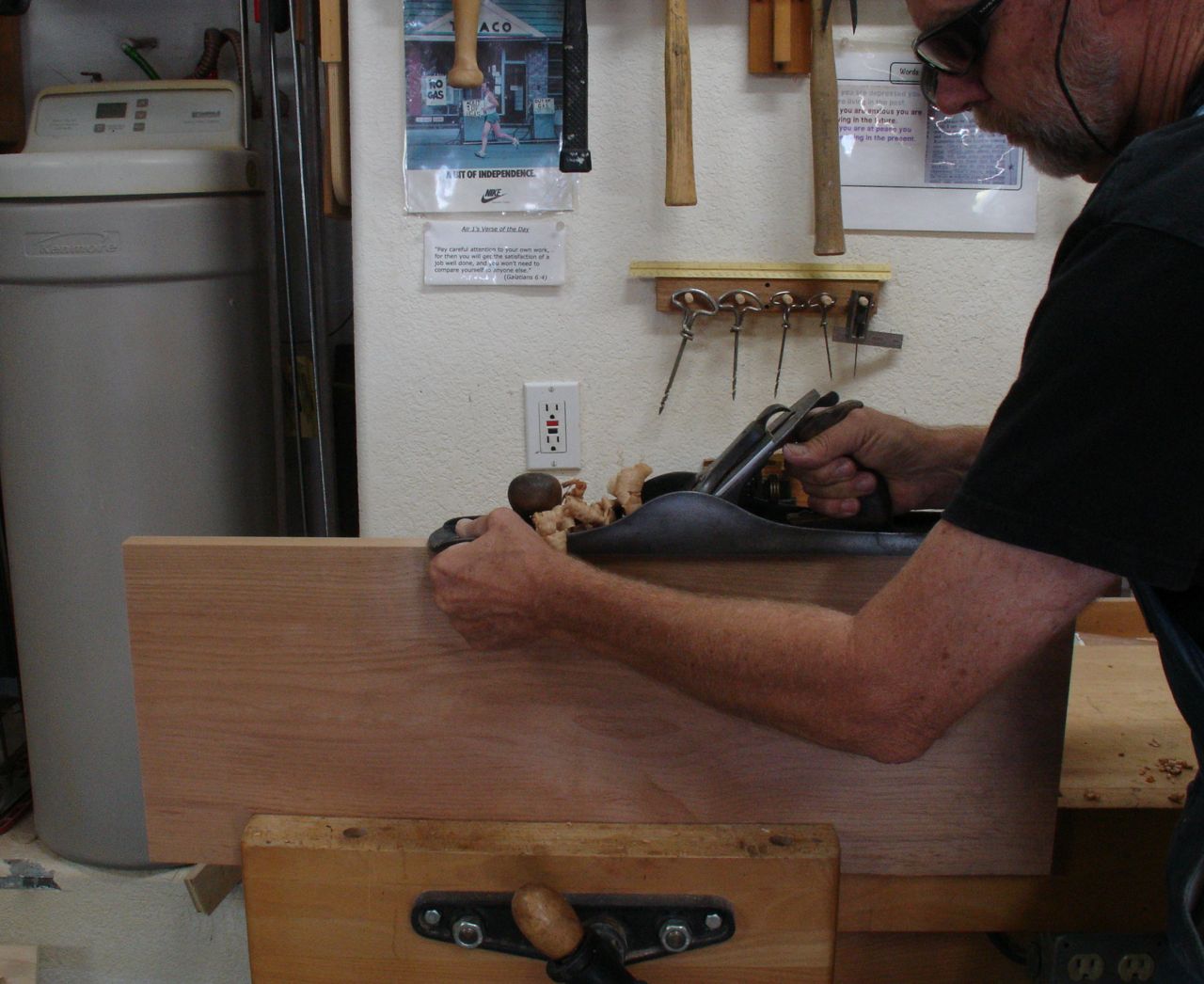
After laying them out and applying the tape a bottom piece had to be made.  This is the tricky part.  Partially cut with a chop saw and then by hand to finish it off.  The trick is getting it the correct size.  When you take material off one of the edges it changes the size of the two edges next to it.  Here’s how I worked that out; by marking a reference point I gradually planed each surface until I had an acceptable fit.  This doesn’t have to be water tight so a little gap didn’t concern me.  To trim them I found that using a shooting board with a block plane worked well.

Berea-Spoons-CurlyCherry-2After sizing the bottom, liquid hide glue was applied to the edges and the entire piece was wrapped with the packaging tape to dry overnight.  All that was required was a light sanding and then several coats of mineral oil to protect it.  I used 400 grit wet/dry paper to apply the oil while creating a smooth finish at the same time.  If you have cutting boards or any other wooden item you use around food mineral oil is your best way to preserve and protect it.  Here’s one additional picture of the completed project.

Posted in Uncategorized | Tagged , , , , , | 1 Comment

Stools are Finished

After our trip to Kentucky last week, I’m now back in the shop and the stools are finished.  It’s interesting that although it’s great to get away from home to explore and see new things both Diane and I missed being in our workspaces doing our creative “stuff”.  In any case we’re blessed to be able to do both of these things and enjoy our life.

At the risk of sounding like an optometrist, which looks better to you —- exhibit A:

Exhibit B

Exhibit A (for after)

Or do you prefer Exhibit B?

Exhibit B (for before)

Exhibit B (for before)

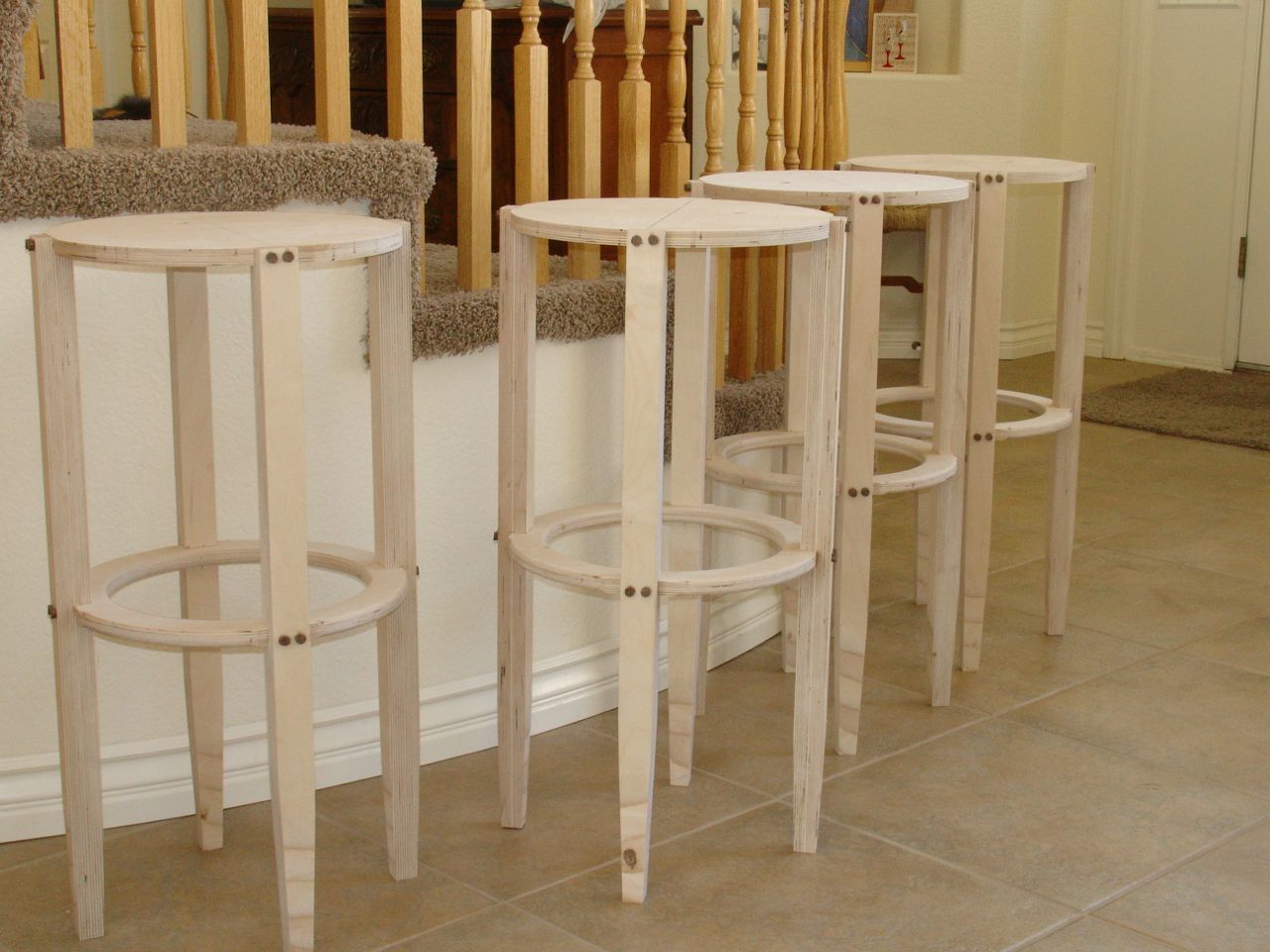
Although there isn’t a right or wrong reply I’m hoping that Exhibit A is the preferred one.  You may recall that the original stools (Exhibit B) were a bit short and didn’t pivot to make entry easy for everyone.  Also, the base is so large and flashy it just didn’t seem to fit into our over-all design.  The new bases fit into our decor more and I feel the use of the Baltic Birch plywood to make them blends well with the Zebrawood of the seat.

The design and construction process of them has been blogged but here are the final steps.  The Baltic Birch was wiped down with Watco, Dark Walnut to tone down it’s natural, blond look.  I wanted to make the finishing process as easy as possible with these so figured it was a good project to improve my spraying skills.  Once the Watco dried for about 3 days, the stools were top coated with General Finishes Enduro Var.

WoodworksbyJohn-CustomFurniture-Barstools-finishingThis is a finish that although it’s water borne, will impart a warmer tone to the wood much like an oiled finish would.  Water borne finishes have the advantage of drying quicker so you minimize the dust bunnies drying on them and clean up is much easier.  Especially when you do not have a spray booth, the world is my spray booth!


Since it dries so quickly in the desert I was able to apply the recommended three coats  before the sun came over the peak of our roof.  This is the west side of the house and the sun is in full force on that side by 11:00 am.  I used a satin finish, sanded between coats and the results are great for this application .  It doesn’t compare to the hand rubbed finish I put on most of my solid lumber work but for this application it’s excellent.  They had plenty of time to cure while we were enjoying ourselves in Kentucky.  We came home late last night and the first thing I wanted to tackle was putting them together.
That seems easy enough but have you ever played that game at a party where you attempt to drop clothes pins into a milk bottle?  Just dawned on me, some of you may have never seen a milk bottle or clothes pin!  Guess you’ll have to take my word for it but it was a popular game for get togethers “back in the day”.  Here’s why that game came to mind, attaching a lazy susan bearing requires locating a pre-drilled hole through another hole in the base of the stool.  Let me illustrate:

In the first photo you can see the bearing is attached to the stool base.  Above it (on the bench) is the chair section with a platform already attached to it.    In the second photo the scratch awl is pointing to the pre-drilled hole I need to locate while looking in the 3/4″ diameter hole at the bottom of the stool.  This is where I felt like I was dropping those clothes pins into the milk bottle!  I simplified the process by putting a small piece of tape there and then trying to sight through it.  Once I started one of the four screws it was a matter of pivoting on it to locate the others.  As you can see, the job was completed and I’m sitting on the results while I type out this blog.

Yesterday was a pretty long day with much of it spent in airports and airplanes so I’m off to a slow start.  Plus after spending a week in a different time zone I’m really not sure what time it is!  Have two meetings with potential clients to set up for some new work so better make those phone calls.  Hope you enjoyed design and construction process of these new bases.


Posted in Uncategorized | Tagged , , , | Leave a comment

Bar Stools Continued — Legs and Seat

There has been lots of process these past few days.  All of the work culminated in being able to assemble the bases this morning before I went to the AWFS show that’s held here in Las Vegas every other year.  I have to admit that it’s over-whelming in terms of computer controlled everything, you know I tend to prefer hand work.  There’s a definite distinction between the way I view my artistic functional approach to furniture vs. the “gotta make a buck” with wood that commercial woodworkers need to pursue.  In any case, started about 6:30 this morning and here is what I had completed before leaving for the show around 9:oo and 93 degrees!

Glued, Screwed, Plugged, and Drying in the House

Glued, Screwed, Plugged, and Drying in the House

This is about as close to production furniture making I want to get but must admit I’m very happy with what I’m seeing.  It’s one of the thrills I tried to have my students feel.  That moment when the design you had in your head and maybe sketched onto a piece of paper is now in front of you in 3D form.  Hopefully what you see is what you visualized in your mind.  So far — so good!
WoodworksbyJohn-CustomFurniture-LasVegas-BarStool-BalticBirchLegs-2The legs (all 16 of them) required many steps to complete.  After sizing them I shared how they were grooved to accept the foot rest and top in a previous blog.  Next up was to taper the bottom 12″ of so.  This was accomplished with the table saw and a taper jig made years ago.  It worked well for this and even though you usually need a center point when cutting four sided tapers I was able to do it on these legs without that center.  My guess is that since less than  a third of the total was tapered there was ample support.

WoodworksbyJohn-CustomFurniture-LasVegas-BarStool-BalticBirchLegs-3


I really like the appearance as the plies are exposed at the bottom of each leg.  It’s almost like putting a contrasting piece of wood on the bottom of a leg.  Anxious to see how this will finish.


Each leg has four screws that will attach to either the foot rest or the top piece.  The easiest way I can thing of to explain that is with this photo tutorial.

Keep in mind that there are 64 holes that needed to be drilled and counterbored!  Adding this quick jig to the process insures that every piece is interchangeable.  The brush was used to keep the chips clear from the fence so that every leg would seat properly.  Oh yes, before I forget there were also 64 Walnut plugs to make, probably had closer to 84 but they won’t go bad!

WoodworksbyJohn-LasVegas-BalticBirch-BarStools-Legs-3

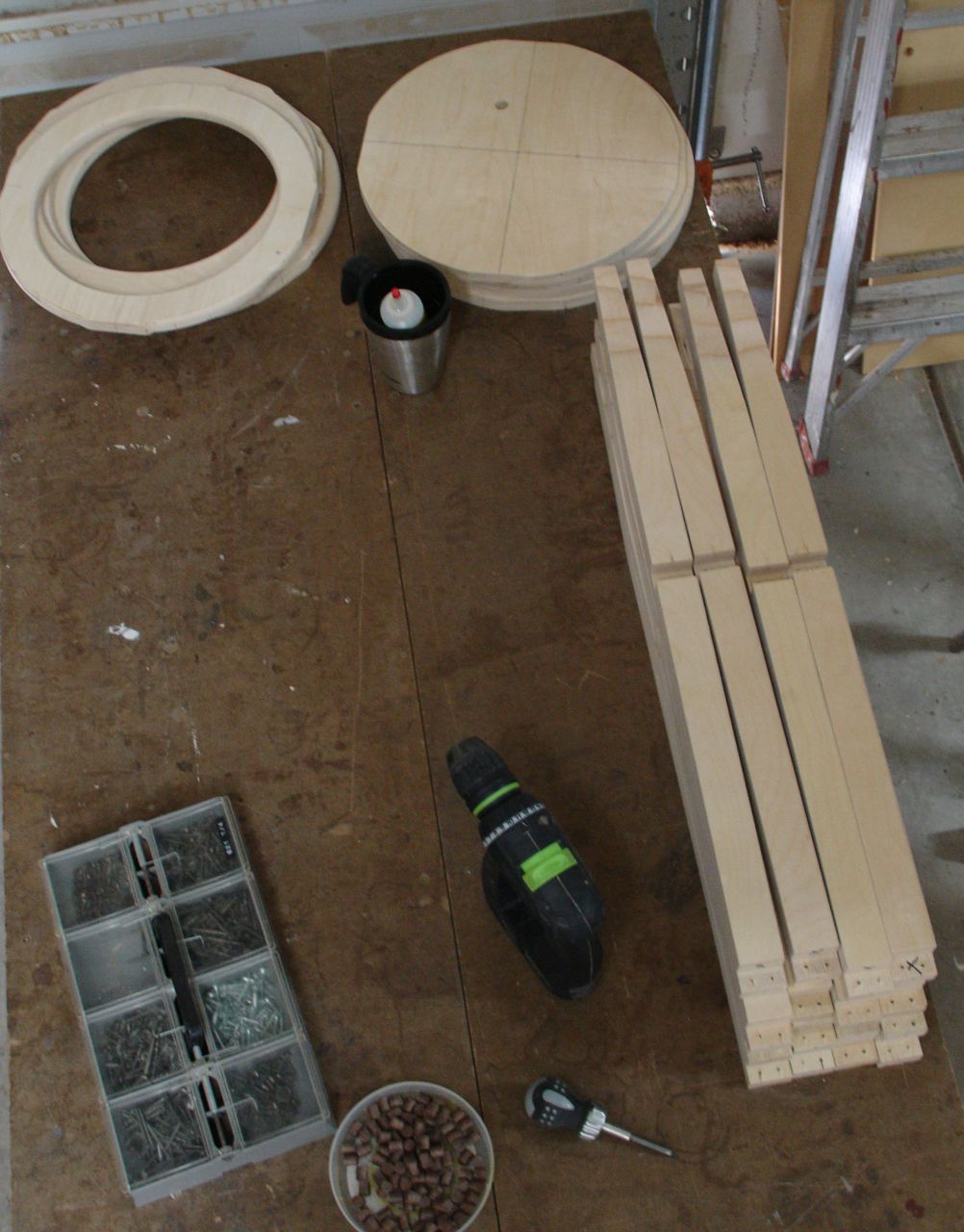
Next up was to assemble all of these pieces together.  I used Old Brown Glue which is a liquid hide glue.  I prefer it for a couple of reasons.  It has longer open time than regular wood glue,  the wood fibers don’t swell up making assembly of tight fitting joints difficult at times, and also it cleans up easier.  Here we have everything in place for the assembly work.  All of the parts have been semi-sanded, especially the inner surfaces that will be hard to get to once things are together.

A major concern  is lining everything up.  These stools are not square or rectangle — they’re circular!  The approach I took was the same way most of the other process were tackled; from the center lines.  I left them on because I knew they would be the only way to locate legs evenly on the discs.  Here’s an example of the marking I used:

WoodworksbyJohn-LasVegas-BalticBirch-BarStools-Legs-4


This is the inside of the leg and the bottom of the footrest.  I figured that was the best place to mark them in case the pencil was difficult to remove.  Doing one stool at a time began with holding the footrest in position then pre-drilling for the #6 x 1 1/2″ screws.  After pre-drilling  the top disc the same way, one leg was glued and screwed on at a time. WoodworksbyJohn-LasVegas-BalticBirch-BarStools-Legs-5


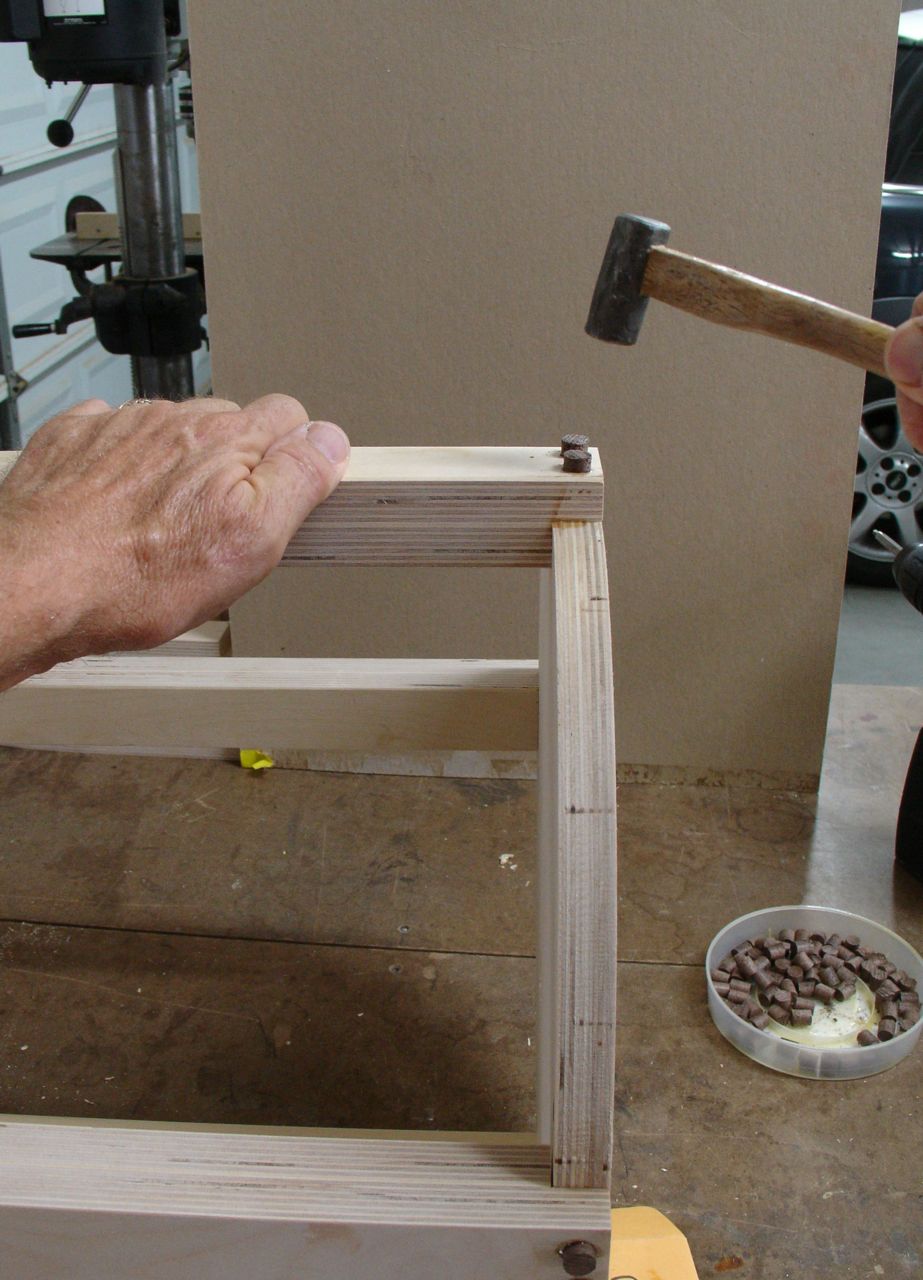
Then, each of the holes were plugged and the process repeated until all four stools were done.  Love this little hammer, just the right size for plugging holes.


Attaching the existing, formed Zebrawood seat to the new bases will be done with a lazy susan type bearing.  These are 9″ in diameter and rated for 750 pounds!  The seat is formed in such a way that the bottom is convex to anatomically conform to your body, that’s why these seats are comfortable.  This began by making a base of the Baltic Birch plywood that has an additional 1/4″ x 2″ glued to three sides.  Everything is referenced to the center line so a pattern was made that matches the contour of the seat.  Although it takes some trial and error to get this pattern to fit, it’ll insure accuracy for all four of the stools.  This pattern is temporarily attached to the seat blank with screws for shaping.  Not a real exciting process but here’s a gallery of photos explaining it.

Can’t wait until tomorrow to see how my  new design will hold up!

Posted in Tutorial | Tagged , , , , , , | 1 Comment

Bar Stool Continued — Design Evolution

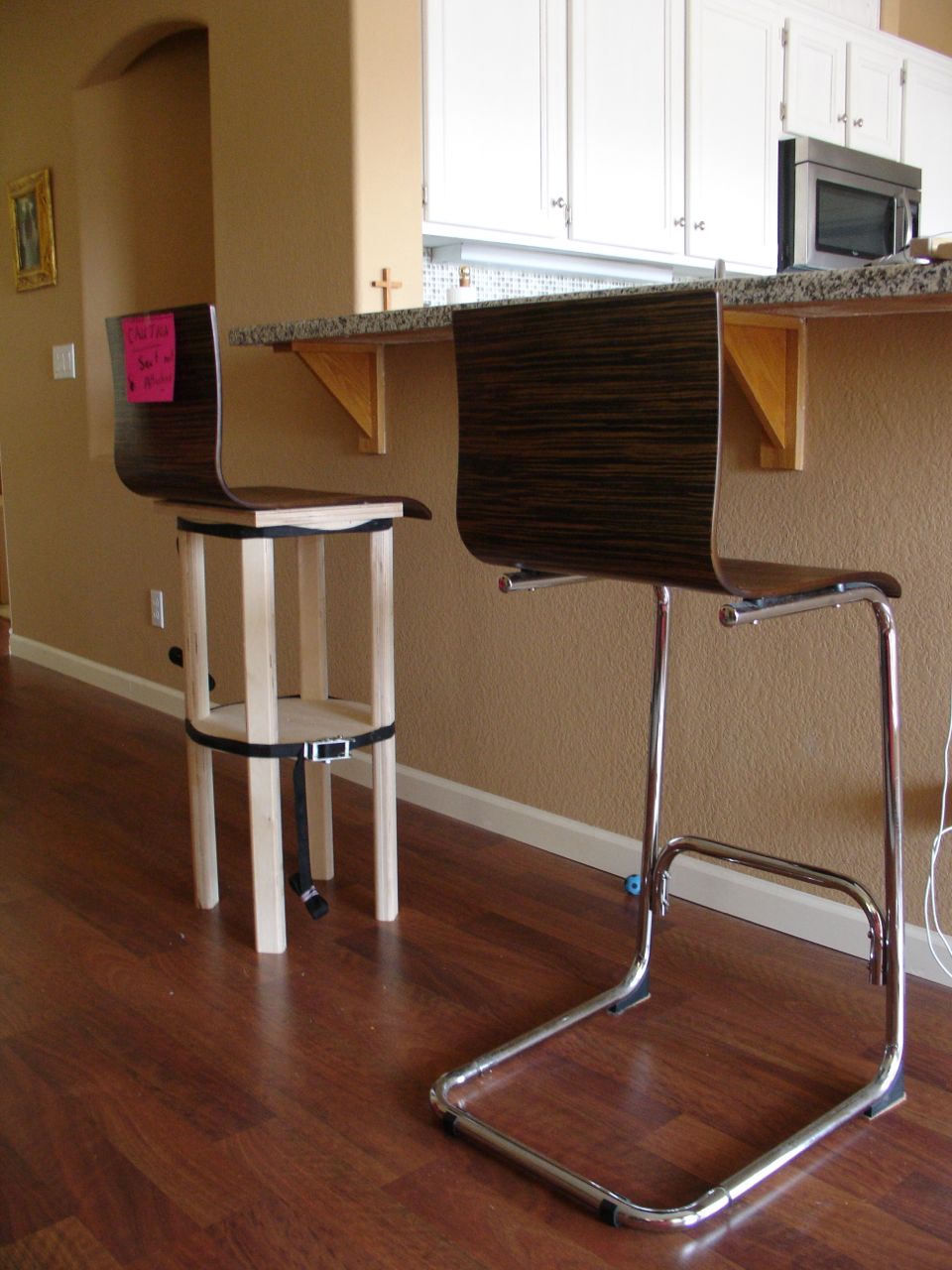
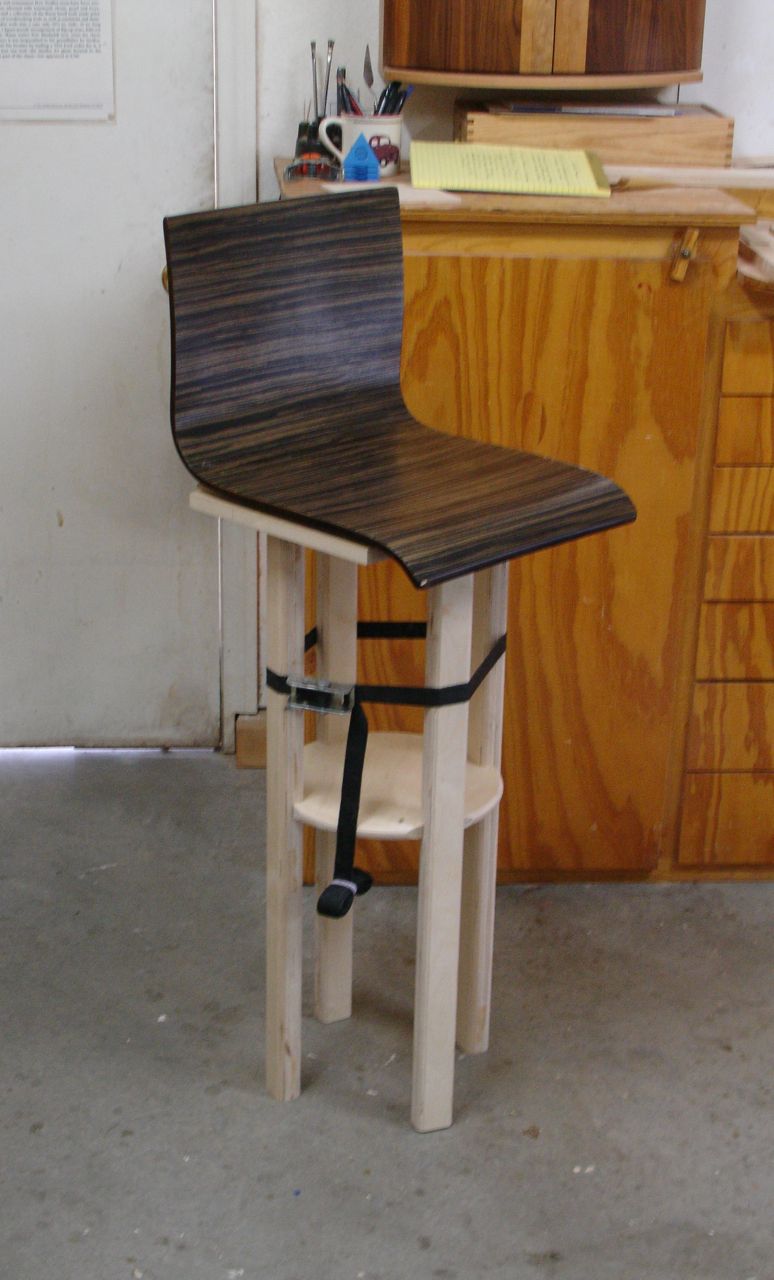
WoodworksbyJohn-CustomFurniture-LasVegas-BarStool-Design-1Designing a new project from scratch is a wonderful albeit frustrating process.  Making mockups from cardboard, foam core, masonite, etc. is a great way to supplement scale drawings but sometimes you don’t really see what you have until you have it.  Now if that sounds convoluted it probably is!  You can get the gist of a design from all of those methods but until you get the first prototype built those little details don’t surface.  This picture is what I believed would be the final design.  If you’ve been following along you’ll recall that this is the second mock up.  The first one had too small of a tipsy footprint so I increased the diameter of the discs from 12″ to 14″.  With this example the height has been determined, it’s just under 2″ taller than the original.

When creating a project it’s always wise to put it together and in its’ environment so you can study how things look.  A few things weren’t exactly right to my and Diane’s eye.  First of all, the legs are too bulky and the radiused edge gave an appearance that was,  to quote Diane “too much like the sixties” and although that’s when I grew up the retro look isn’t what I’m after.  The legs are now closer to square at 1 1/2″ and will taper to something like 7/8″ square at the bottom of each leg.  Making the discs was a time consuming process.

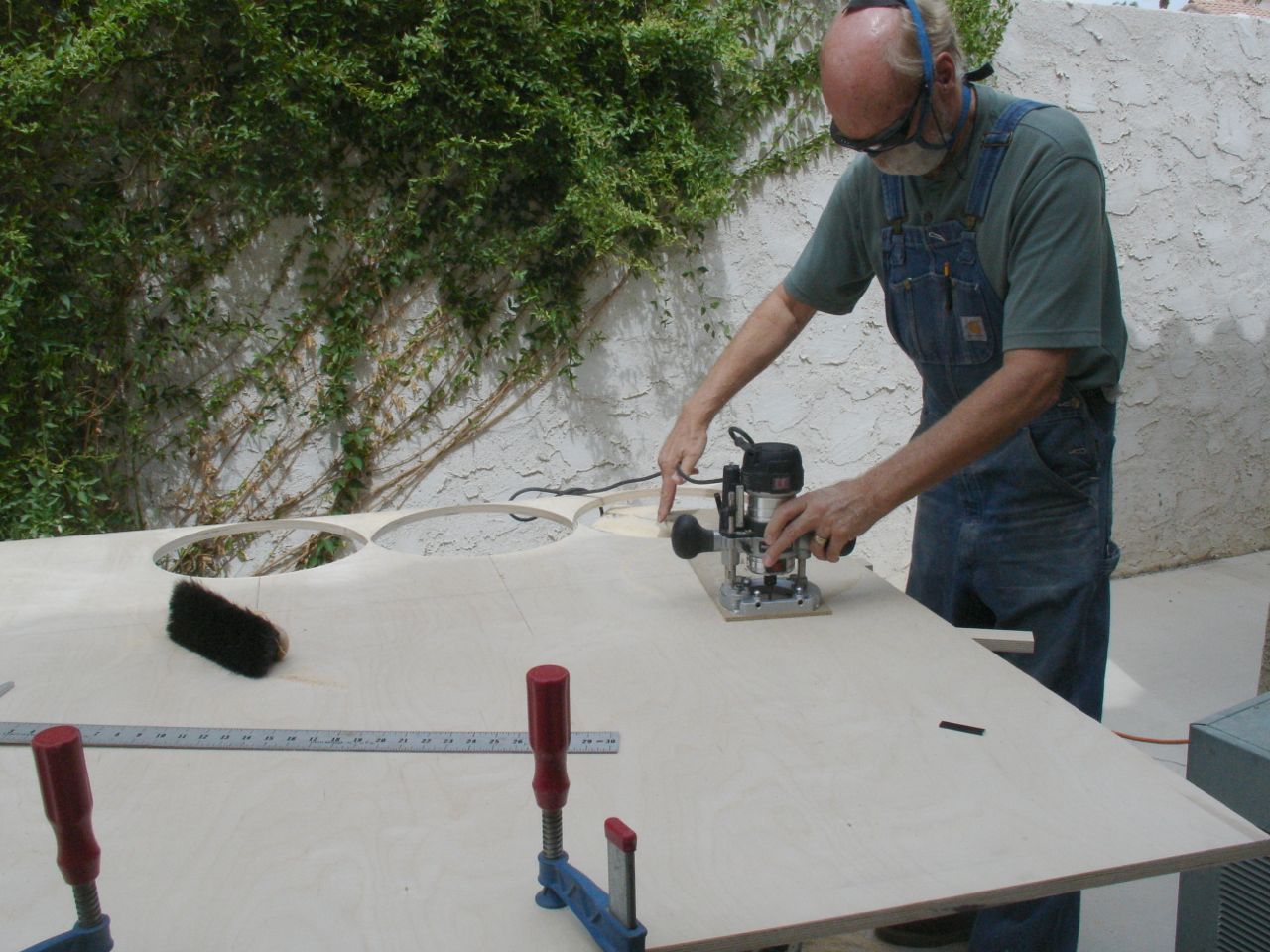
To make them I used a small plunge router with a 1/4″ upcut spiral bit.  This process makes an enormous amount of dust!  I discovered that after making just two of them for the prototype.  Luckily it was garbage day so I had two, empty cans to use as supports for half of my assembly table.  I set it up on the side of the house.

WoodworksbyJohn-CustomFurniture-LasVegas-BarStool-Design-2Dust mask, ear plugs, and safety glasses a must for this process.  The turret on the plunge router has 1/4″ steps but that was too much of a cut to take in one pass.  Instead, I used a 1/8″ set up block from Veritas so that each pass was only 1/8″ deep.  May take longer but there is less wear and tear on not only the router but also the bit. That means that each disc took 6 passes to cut out — I needed a total of 8.  Next up was to cut flats on the outside of them that are 90 degrees apart.  They’re needed so that there is a flat spot on the disc to seat into the leg.  A bit of a head scratcher but here’s the solution.  Each disc has a 3/16″ hole in it so that was incorporated into a jig that rides against the rip fence on the table saw.  The first cut is lined up with the center line and then the disc is rotated 90 degrees until is is square to the side of the jig.  These pictures will help to explain that, you can click on each image to enlarge:

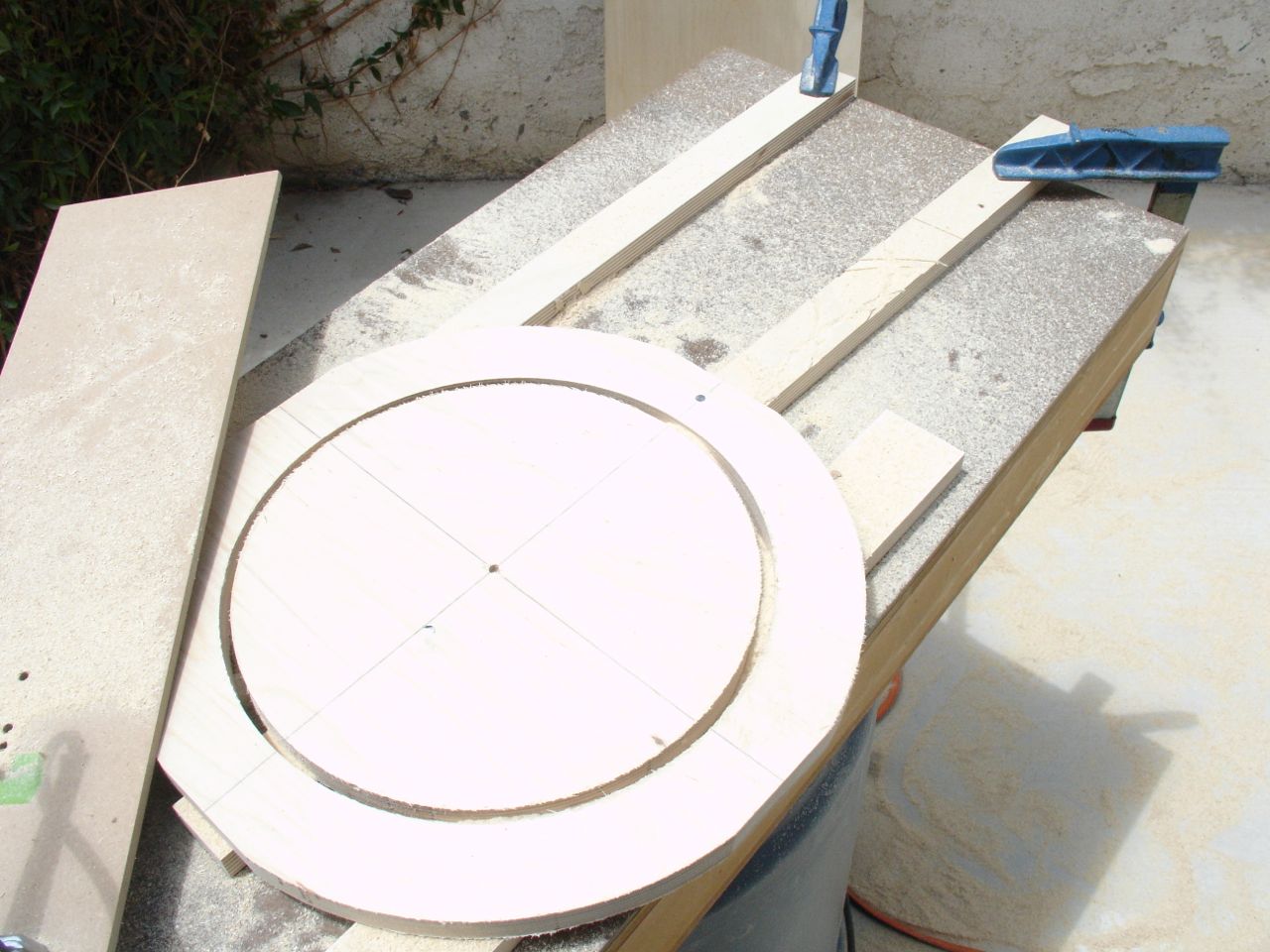
The final step for the discs was to remove the center of the bottom ones.  These will become the footrest for the stool.  Another hole was drilled into the circle cutting jig about 2″ smaller to create this ring.  The thing to keep in mind is that now, when the cut is all the way through, there’s the possibility of moving the cutter into the ring when it breaks free.  To avoid that problem you should nail both of them to a piece of scrap like this:WoodworksbyJohn-CustomFurniture-LasVegas-BarStool-Design-5

See the nail at the top of the ring and also close to the center point?  Since both pieces are anchored to the scrap below you minimize the risk of cutting into the ring.  All that remained was to put a slight radius on all exposed edges.  Since this is the “foot rest” it needs to be eased slightly to avoid splintering.

WoodworksbyJohn-CustomFurniture-LasVegas-BarStool-Design-6

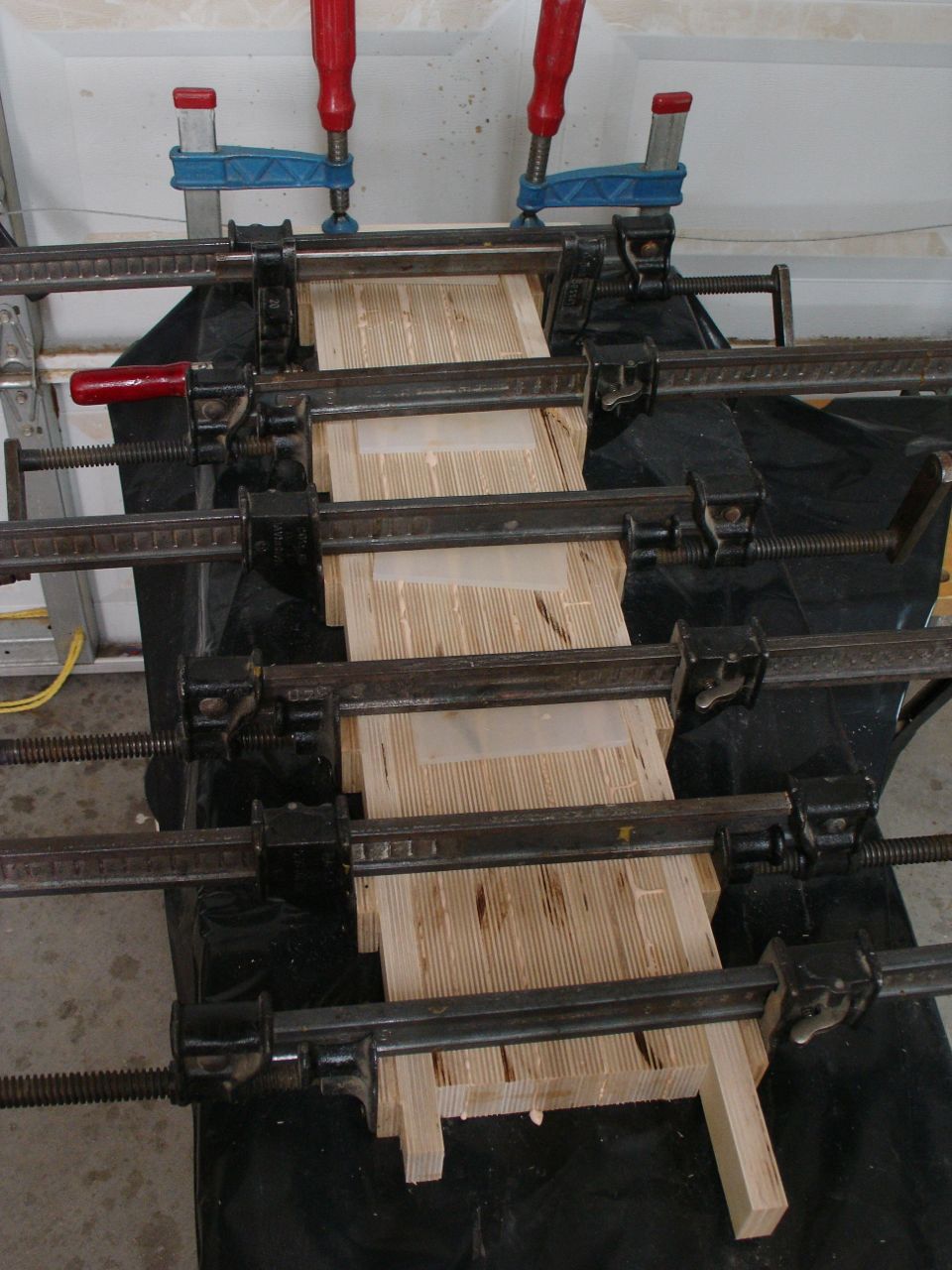
The remaining time was spent on laminating the rest of the leg stock together.  I could do 4 legs at a time and used this set up to hold them square.


Posted in Tutorial | Tagged , , , , , , | Leave a comment

Bar Stool Makeover Continued

WoodworksbyJohn-LasVegasFurniture-BarStool-Makeover-1

Well, here you have it and all I can say is “so far, so good” but it took some doing to get to this point.  There’s a reason you make prototypes for items such as this and the journey has been interesting.  This is the second base made so far and this may be a keeper! Just in case you ever want to try this let me talk you through some things to be concerned with.

First off, my plan is to have two, circular discs between the legs that have several functions.  They will be the stretchers so sit inside of a groove at the foot rest portion and are inset into a rabbet like cut at the top.  They fit snugly and will be glued/screwed in place.  The plan is to conceal the screws with Walnut plugs adding to the over-all look of the piece.

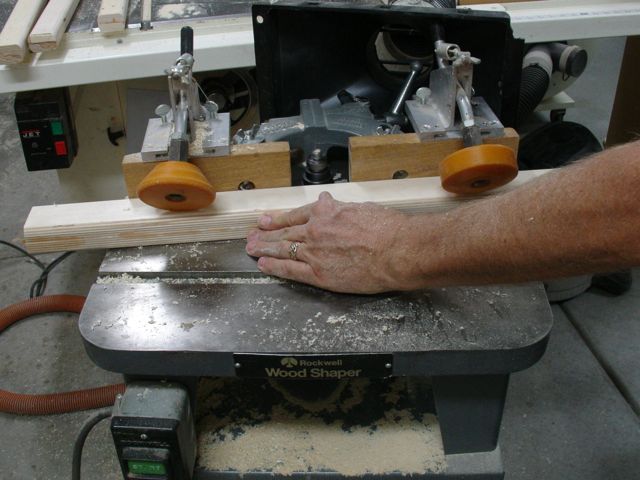
WoodworksbyJohn-CustomFurniture-LasVegas-BarStool-Makeover-8Before slotting the legs though they needed to have their edges radiused.  To do that I used my almost antique Rockwell shaper with a 3/4″ radius cutter.  Not sure why so many woodworkers shy away from this tool although it does have a reputation for shredding your finger rather than a nice, clean cut from a tablesaw!

Once the the dado head was dialed in to match the thickness of the Baltic Birch plywood, a stop block is attached to the fence and the upper rabbet is cut.  After those were cut I used the rip fence with another stop block on it to establish the distance from the seat to the foot rest.  Click on the pictures to get a larger, more detailed look at how this was done.

That distance can be difficult when you’re designing something that needs to be used by a leggy 6′ 2″ man and his 5′ 3″ wife!  Something you don’t consider until you go out shopping for furniture and compare things.  It’s going to be a compromise as everything else in life is.

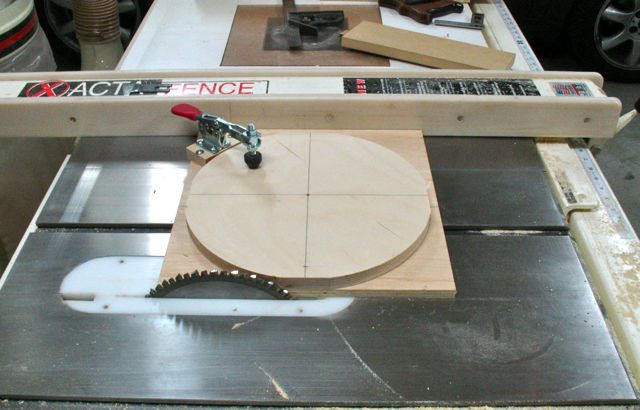
Now the concern is getting a round piece to fit securely and seat completely into a square dado or rabbet.  To accomplish that I devised this jig for the table saw:WoodworksbyJohn-CustomFurniture-LasVegas-BarStool-Makeover-7

It is a plywood platform that rides against the fence.  The disc is held in place by a 3/16″ dowel at its center point.  After doing the first cut it became apparent that there is a tendency for the disc to rotate so I added the clamp to counteract that.  To make sure things line up properly it’s important that each cut is 90 degrees from the previous one — still need to perfect that.

Here’s what the first mock up looked like:

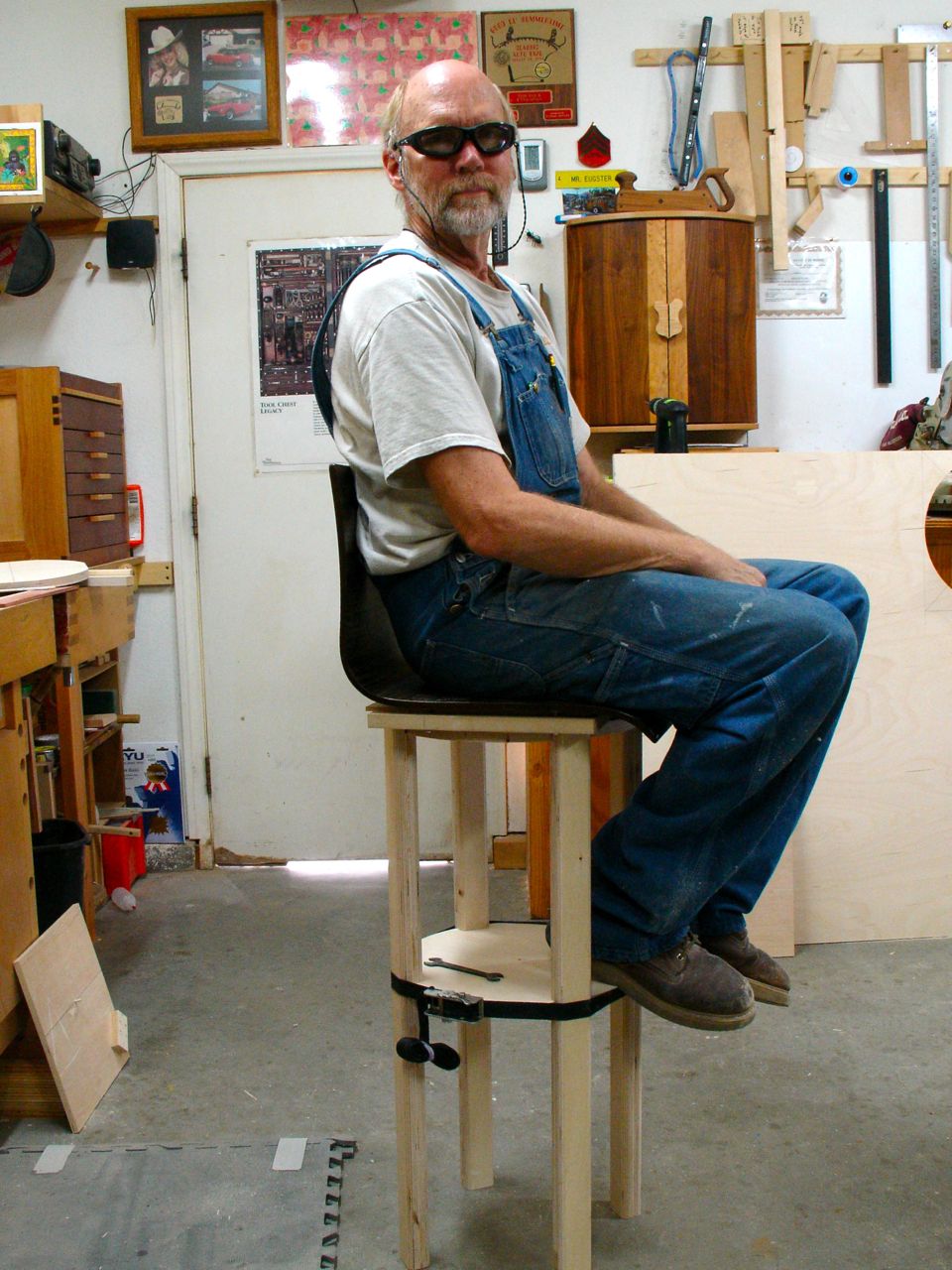
WoodworksbyJohn-LasVegasFurniture-BarStool-Makeover-2It has a couple of problems with proportions.  Not only does the base look too small it’s also a bit unstable.  For this one the discs were 12″ in diameter while the one you see me sitting on at the beginning of this blog has been increased to 14″.  Not only is stability an issue, in this prototype you can’t fit both of your feet on the foot rest portion.  Two, adult sized heels are too wide.  The final foot rest will have the inside removed so it’ll be a ring rather than a disc.  To lighten up the over-all appearance of the legs the bottom 5-6 inches will be tapered.  A spokeshave will be used to match the radiused edges all the way to the floor.  Also need to work on a more attractive way to mount the seat to the stool.  There’s no way to change the mounting location as they are threaded inserts that have been molded into the seat.  Adding to the difficultly is the fact that the seat isn’t flat on the bottom, rather it is curved to anatomically cradle you.  What the heck, what would life be without a challenge or two!!

Posted in Tutorial | Tagged , , , | 1 Comment

Bar Stool Makeover

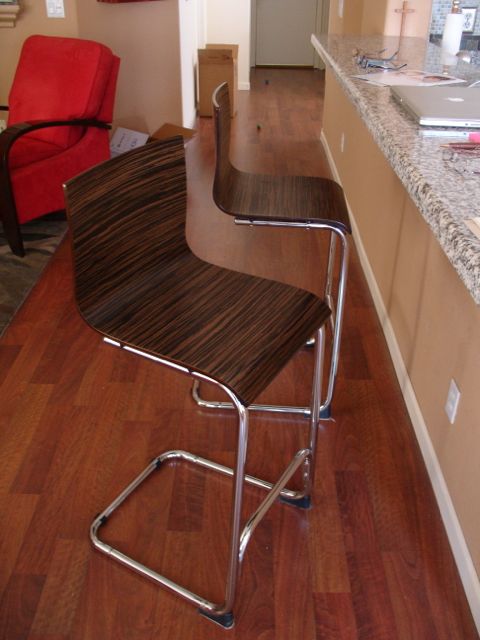
WoodworksbyJohn-CustomFurniture-LasVegas-BarStool-Makeover-1Well, yes we do have a set of bar stools and they really are pretty nice.  Matter of fact, we’re always asked if we made them because they appear to be a laminated Zebrawood form but; must admit, they’re not my work.  So, you may wonder what’s wrong with these?  Basically not too much but just enough to make a change.  We bought them several years ago from Overstock.com for something like $120.00 per pair.  Here’s the issues, first of all they’re about 1 1/2″ too short for the counter.  Diane made some nice cushions for them but after some years of use they needed to be replaced.  They also don’t swivel so getting in and out of them is problematic for some.  The large, chrome base (besides not fitting into our decor) is a great dust collector.  We have been on the search to find replacements but after going all over town and the internet haven’t been able to find anything we like better.  You know the story, I’m a furniture builder who can always use a challenging project so like my byline says on the heading of my blog:  “Journey with me through the fascinating world of woodworking.”

This project will find me doing techniques I’ve never done before and am hesitant to throw it out there for all the world to see but come on — let’s start the journey and build a prototype first!

Issues:

  1. Seat height is a bit low.  No problem there, since we have a floor lamp and a coffee table I’ve made of Baltic Birch plywood, that’s the material chosen for this project. The first step was to rip and laminate two pieces  3/4″x 2″ x 33″ of the plywood for the legs.  The final length will be determined once everything else is planned out.
  2. No swivel action.  Ordered 4 lazy susan bearings from Lee Valley that are 9″ in diameter and rated for something like 500-750 pounds.  I don’t have any friends that heavy!  This did present a slight problem though as I began to plan it out.  My initial thoughts were to stick with tried and true mortise/tenon joinery.  However, notice that the chair is rectangular so if you swivel two rectangular pieces together there will be a time they are diagonal to one and other creating a great place to pinch your hand or leg between as you sit on the stool — not a good option!
  3. Pinch Points.  After making some mock-ups from cardboard and foam core I can see that the top of the stool needs to be round which would make mortise/tenon joinery pretty complicated.  I could have made a small, square base and then placed the 9″ bearing on top of that but I felt a base that small wouldn’t be very stable.

The Solution (I think)

Instead of mortise/tenon creating the framework I will use the four legs together with two discs.  I think that by cutting a dado in the backside of each leg and then gluing/screwing a disk to that the structure should be sturdy but won’t know until I actually do it.  The bottom disc will have its center cut out so it will do double duty as a foot rest as well as the stretcher.  The solid disc on top will be the upper stretcher and is designed to support the bearing and chair.  If I dial in the dado to achieve a snug fit it seems to me that’ll work.  The joint would be reinforced with two screws per leg that will be concealed with a Walnut plug.  I love the look of the many layers that are the trademark of the Baltic Birch.  I believe the 3/4″ has about 13 plies.  When the corners of the legs are radiused the plies will gradually be exposed and give that decorative look I really like.  Walnut plugs will accentuate that, the finish will be a light wipe of oil to bring out the color and highlight the layers followed by several coats of sprayed on , water borne lacquer for durability.

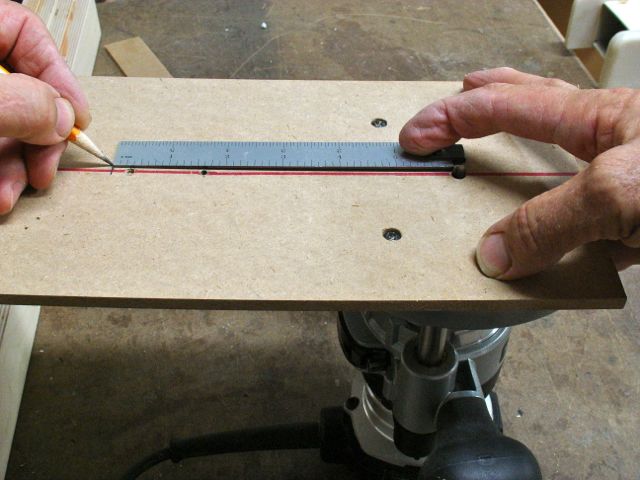
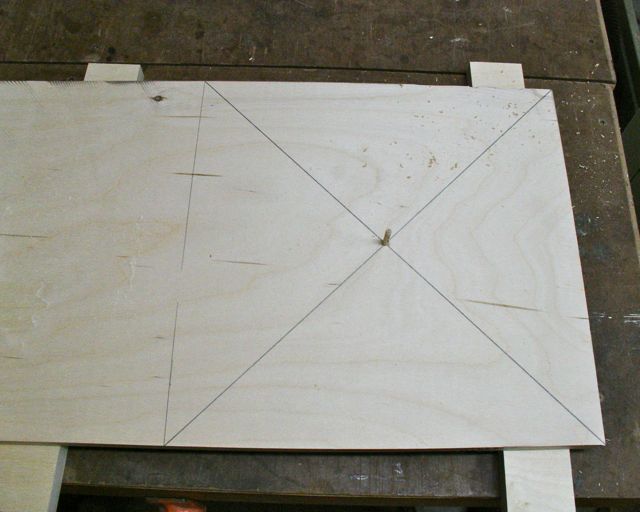
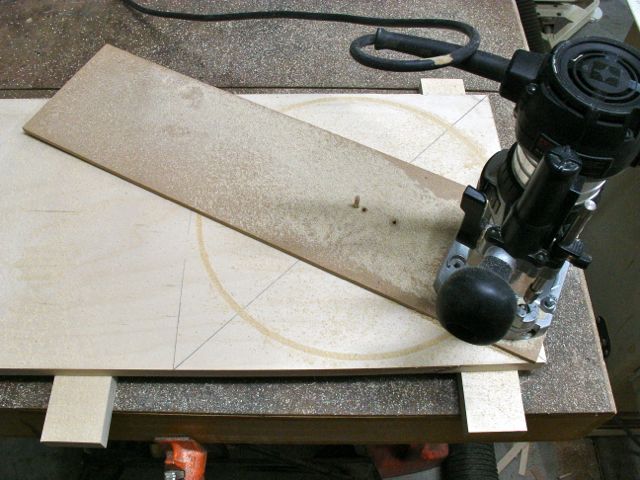
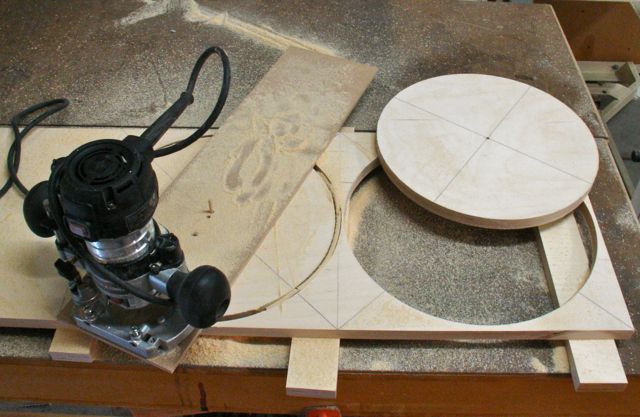
WoodworksbyJohn-CustomFurniture-LasVegas-BarStool-Makeover-2First up was to make the discs.  Started with making the trammel base for a small, plunge router.  After attaching the router to the end and running a 1/4″ upcut bit through it I measured to make a 12″ disc.  Notice I drew a straight line (red sharpie) to center the bit and the hole for the pivot point.  I draw this line the entire length of the base to ensure the cutter and pivot point will always be aligned.  After drawing out a 13″ square on the plywood I marked the diagonals and a 3/16″ hole was drilled completely through.  A short piece of dowel will be the pivot point.

WoodworksbyJohn-CustomFurniture-LasVegas-BarStool-Makeover-3

Initial Pass about 3/16" deep

Initial Pass about 3/16″ deep


After elevating the piece with some scrap to prevent cutting the table, the trammel point was placed over the dowel, the piece was securely clamped, and the cut was made in 4 passes.

One disc cut and only 7 to go!

One disc cut and only 7 to go!


Here you can see the first disc is complete and I’m starting on the second.  If the prototype works that’ll mean 6 more to go.  This is a definite time to use a dust mask and ear plugs.  Router is pretty loud!

The next step will be cutting four flat spots that is exactly 90 degrees around the disc.  This is where the legs will be attached.  I’ll save that for tomorrow.

Posted in Tutorial | Tagged , , , , , , , , | Leave a comment

First Peek, but not like at the Movies

WoodworksbyJohn-LasVegas-CustomWoodworker-RemoteControlBox-a

One of the marketing things I’ve learned about is to show what you’re marketing with an intended use.  Perhaps this will expose a potential client to something they didn’t even know they needed!  For the most part I’ve been letting the beauty of the wood and the craftsmanship of my work be my selling tools.  I’d like to increase sales so here’s something that will be on the Etsy store soon.  An excellent use for my boxes that are of sufficient size is a place to store your remote controls.  With the influx of video systems out there you can hardly go into someones house and not see a collection of remotes scattered around their television area —- messy!  This will be an elegant solution for that.

With the addition of dividers that can be removed if not needed, this beautiful box takes on a new purpose.  The dividers themselves are made of maple and simply slot together.  As I was making them the teacher in me started writing this blog.  It’s interesting to me that things folks of my generation learned are not known by younger generations.  During a recent handtool class I taught we needed to divide an odd sized piece of wood into equal sized divisions.  Many of the students, who for the most part could do things on their smart phones, tablets, or ??? that I can’t even imagine they were somewhat stumped.  I showed them this technique:

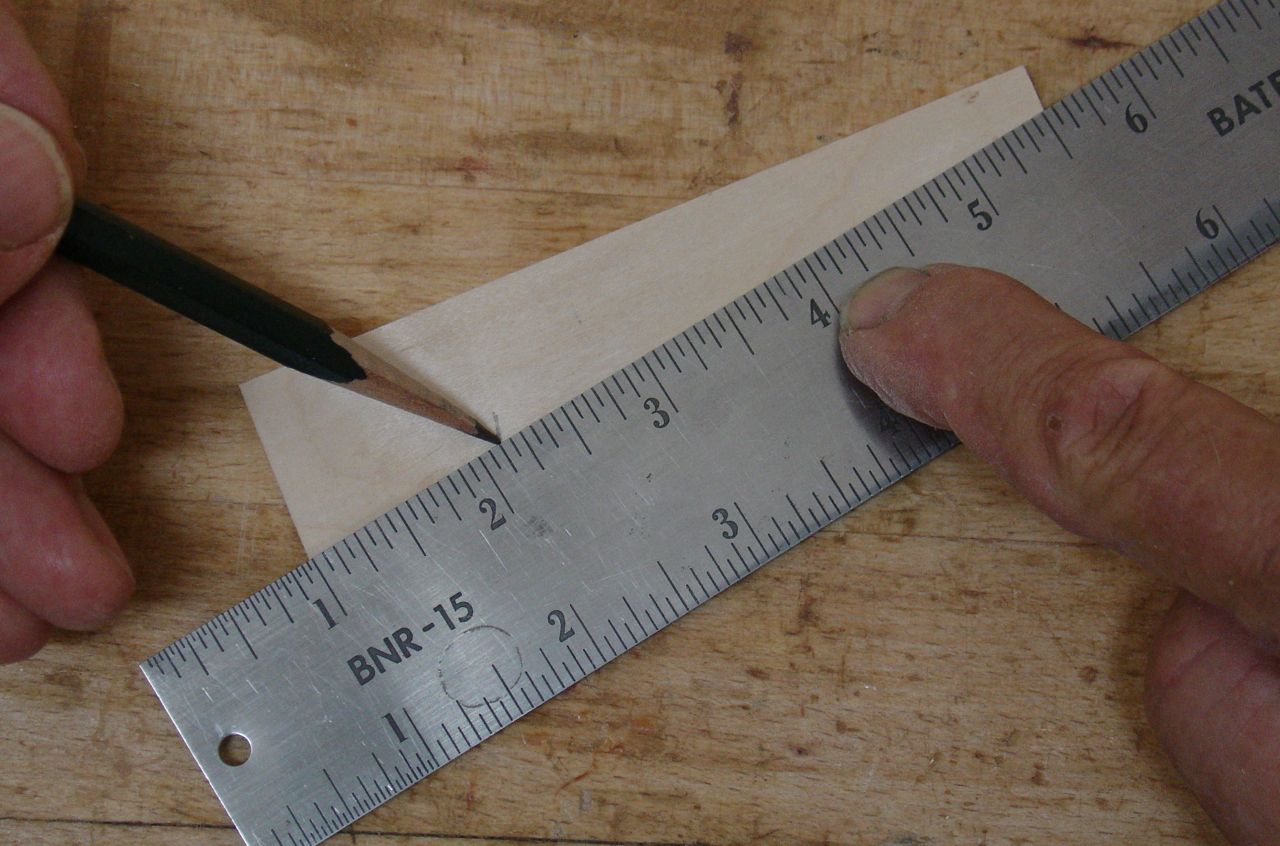
WoodworksbyJohn-LasVegas-CustomWoodworker-RemoteControlBox-1

This board needs to be divided into four, equal sections.  The trick is to angle a ruler across the wood until you have a measurement that is divisible by 4.  I was able to lay out       4 1/2″.  At first glance you may say that it’s 5 1/2″ but it’s always good to burn an inch on a ruler.  Four and a half  divides by 4 easily (1 1/8″) so that’s what you lay out using a little bit of math, marking the board at 1 1/8, then 2 1/4, then 3 3/8 and you’re done.

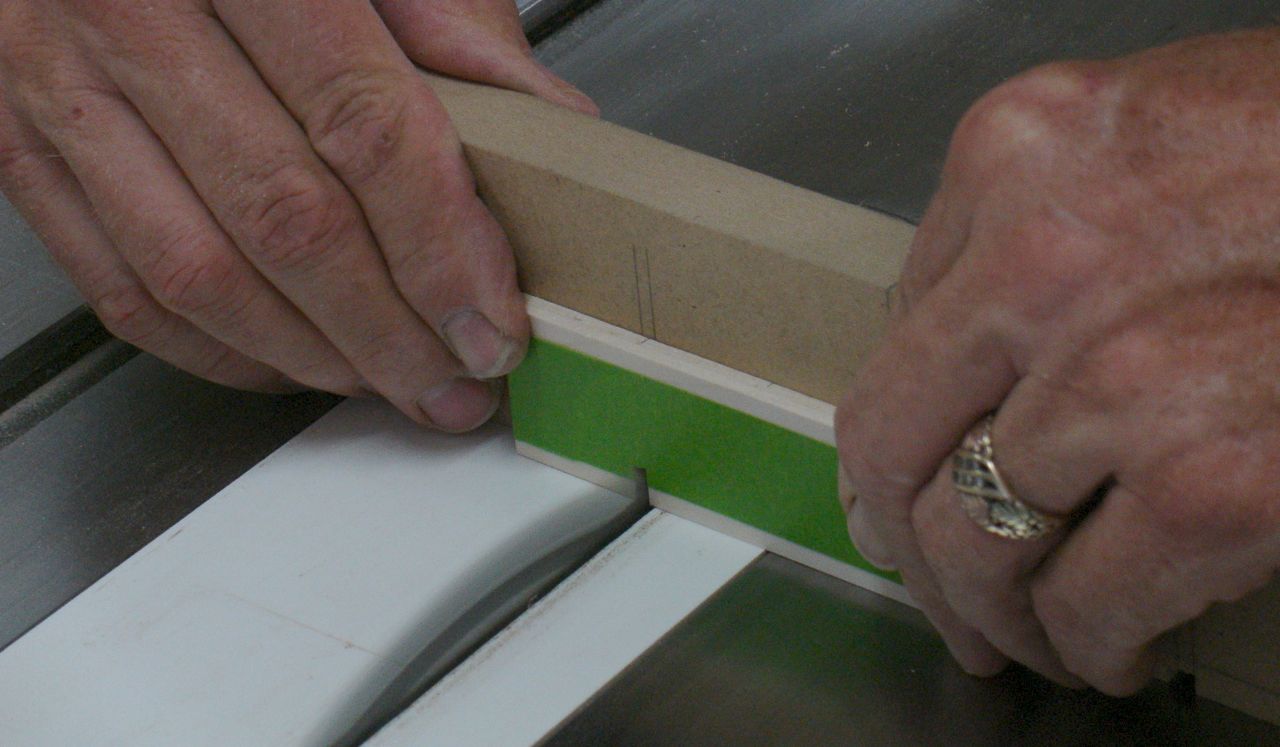
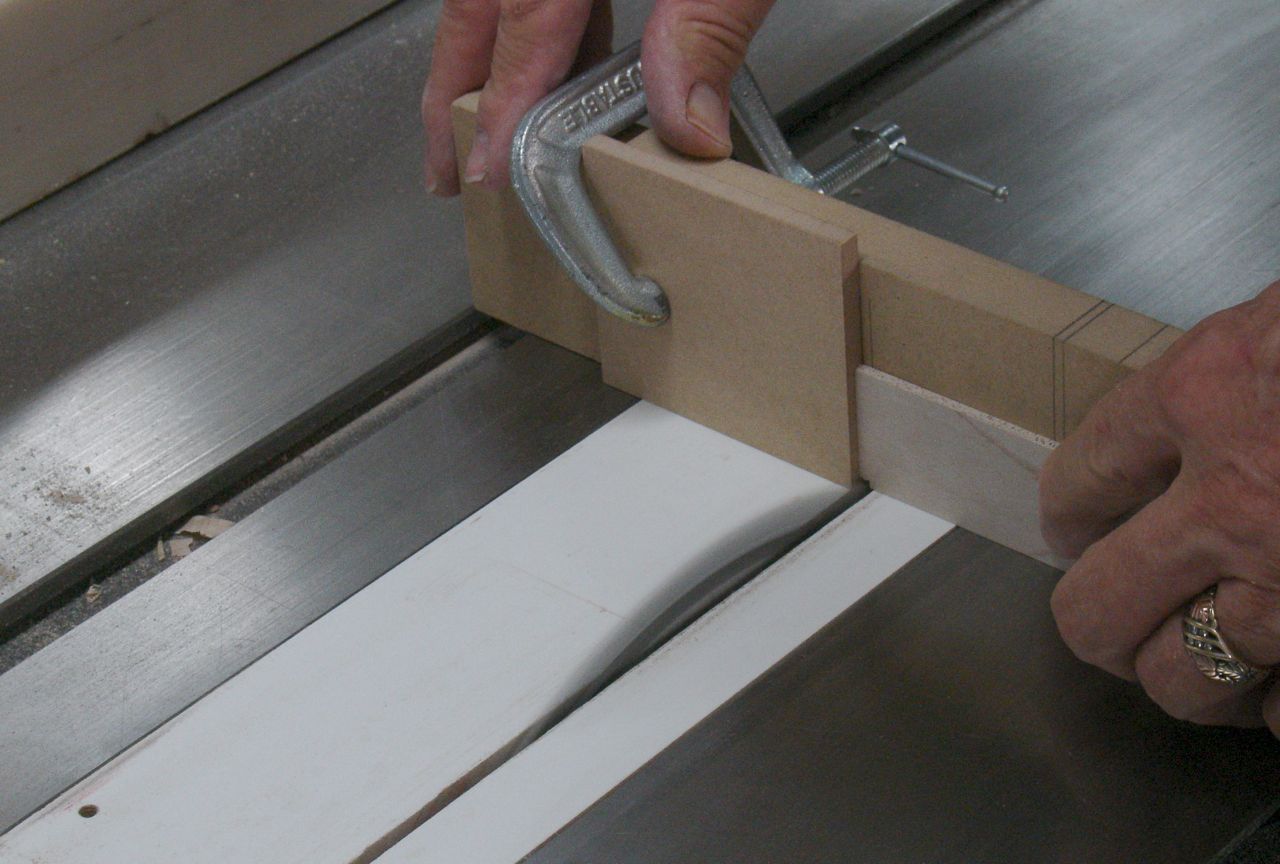
WoodworksbyJohn-LasVegas-CustomWoodworker-RemoteControlBox-2Those markings were extended to the top edge of the board, both ends were taped together and the slots were cut on the table saw as shown.

WoodworksbyJohn-LasVegas-CustomWoodworker-RemoteControlBox-3Next, the ends of each divider were cut using the same set-up.  It did take some trial and error to have the blade cut exactly half way up the dividers.

Last of all, they were all treated to some light sanding and a coat of my favorite Liberon Black Bison Wax and inserted into the box.

The box shown above is made of Lacewood and Sapele.

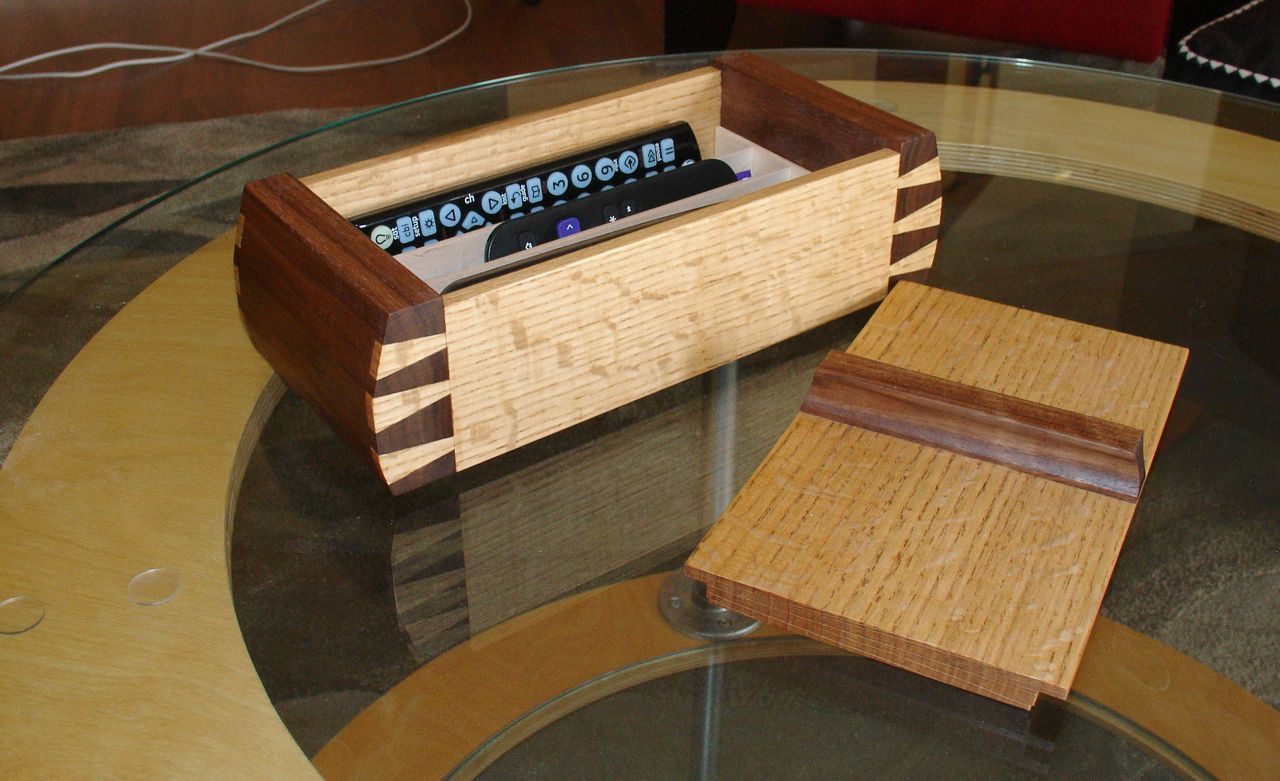
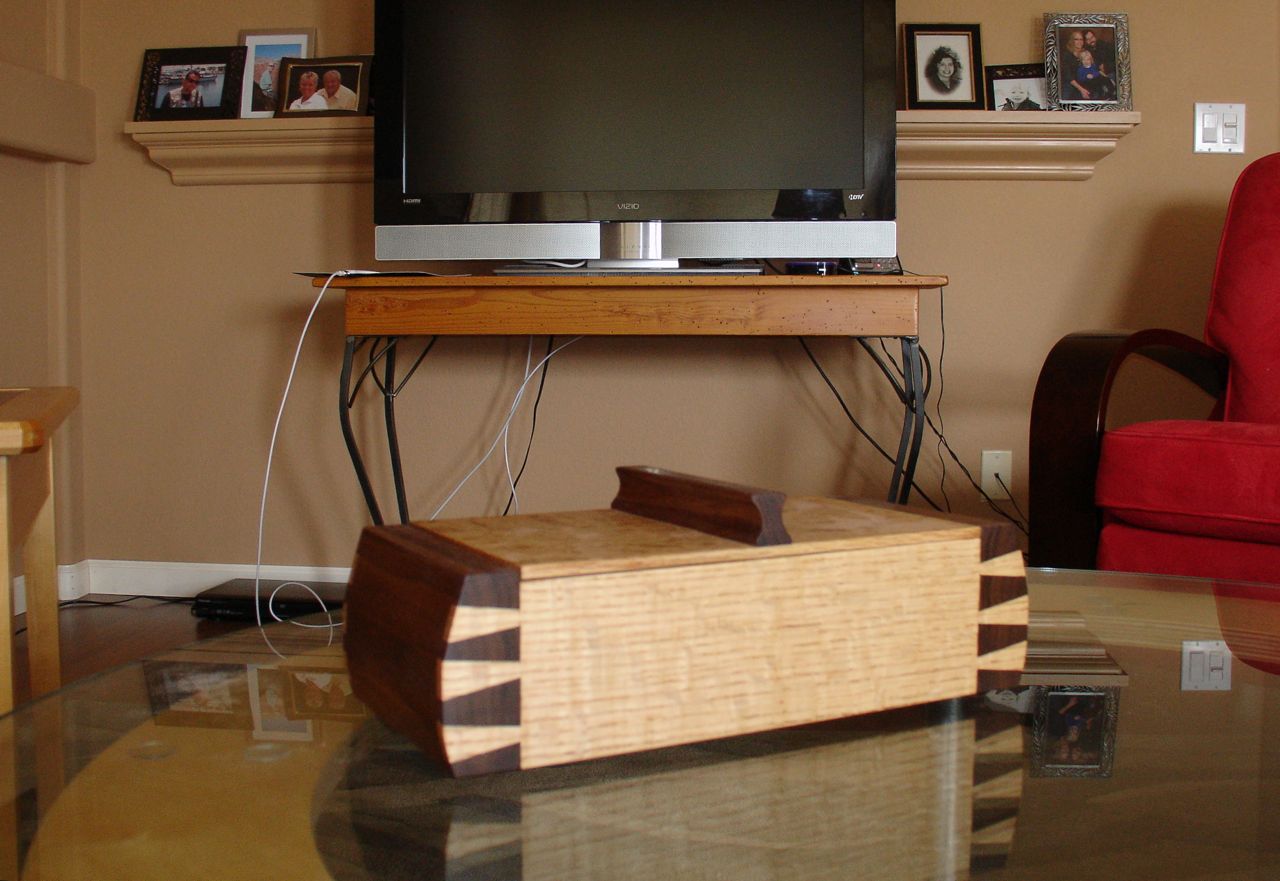
My opinion is that adding this function to my work will increase sales, at least I hope it does!  This box on the table is made of Quarter Sawn White Oak and Walnut and seems to fit quite well in our home; what do you think?

WoodworksbyJohn-LasVegas-CustomWoodworker-RemoteControlBox-b

Posted in Slanted Dovetail Box, Tutorial | Tagged , , , , | 4 Comments

Will Miss this Box!

DSC09975


This was one of my favorite boxes out of the Slanted Dovetail series.  It’s about 6 1/2″ tall by 6″ wide and is close to 11″ in length.  Why this box was special is the stunning grain pattern of the Curly Cherry used for the sides and lid.  This box features a sliding tray and was lined with some dark brown deer skin.  I always thought it was the perfect combination of elegance and wood to be used as a mans’ valet box.

It just so happened that one of my neighbors was walking his dog and stopped by to see what I was up to in the shop.  I was working on another set of boxes made of Lacewood and he was really admiring their grain pattern and talking about “he should buy one”.  Well, my sales guy persona kicked in and I told him if he liked the Lacewood I could show him one that would “knock his socks off” — go get was his reply!  I did and 30 minutes later I had his check.

DSC09976This Curly Cherry was a rare piece I picked up at Woodworkers Emporium here in town.  They had some miscellaneous boards they were selling, kind of like an estate sale.  The grain on this piece was stunning and lent itself to a beautiful project, only problem is I’m going to miss being able to admire it.  That’s the way it goes, one sale leads to my never ending quest to feed my wood addiction.  Here’s one last look at this beautiful chunk of wood.

Posted in Slanted Dovetail Box | 8 Comments

Traveling Time — Me and a Box!

Yesterday, the day after Independence Day was one for traveling.  The easy traveler was this box that I sold to a customer in Colorado.

This was the first order I’ve ever been requested to send via USPS Express Mail and I’m amazed at how quickly and easily it went out.  Once I figured out how to work the extra charge into my Etsy store things went smoothly.  Printed the label right here at home and dropped it off at the post office when it opened.  Technology is pretty amazing, I requested email updates and received about 8 of them, here’s how that looked:

uspsjpegThe print is pretty small but you can see that it was accepted here in Las Vegas at 8:42 am and arrived in Colorado before noon as promised.  I’m guessing that this was a special present for someone and am flattered that they selected my work for whatever occasion it is.  Had some very interesting internet dialogue with the lady about the box and other things!

The other traveler was me.  Since the Design in Wood show ended at the San Diego County Fair it meant time for a 10 hour, very hot, road trip.  The line of people trying to get into the fairgrounds was unbelievably long but once you got past the gate to the Design in Wood area things were very well organized.  Even found a little time to dip my toes into the ocean!  Parking was at a premium anywhere close to the water but decided I needed to do that to break up the trip.  Just as I was about to give up on finding a spot and make a U-turn a car was pulling out of a spot.  Felt good to wade in the ocean and cool, 70 degree or so weather.  I was anticipating the usual chaotic Friday drive home to Vegas but since this was a longer weekend the traffic was comparatively mild.  Once home, Diane had figured out a way to arrange the dining room to showcase the table.  She had emptied out the hutch so it could be moved and had it all planned out.  We tackled that this morning and this photo shows the results.  I really appreciate her design sense and the way everything is arranged.  People jokingly tell us our house is like a museum with all of her beautiful paintings and then the furniture I’ve crafted for us to enjoy.  Just wonderful!!

HallTableHome-1

Posted in Uncategorized | Tagged , , | Leave a comment

Ah, but it’s a dry heat!

WoodworksbyJohn-LasVegas-SlantedDovetail-Walnut-quartersawnoak

This is one of the boxes currently being built.  It’s made in my signature style I refer to as Slanted Dovetails.  The materials on this one are quarter sawn White Oak and Black Walnut.  Tried a  different technique for the handle by running it opposite of the way you usually think a handle should run.  When it’s on the box you see three bands of the Walnut separated by two panels of the Oak.  We’ll see how the public likes it!

WoodworksbyJohn-LasVegas-SlantedDovetail-Lacewood-Sapele

The other box I managed to finish today is this one, it’s made of Leopard Wood and what I think is Sapele.  The Sapele is lighter than most but pretty sure that’s what it is.  Love the grain pattern in this wood.  On this one, the handle is oriented in the expected way.

Temp6:30:13 Do you wonder what the dry heat notation is all about in the blog title?  Well, here in the desert southwest we’re experiencing quite the heat wave.  I applied the first coat of Danish Oil on these two boxes this morning around 6am and it was 95 degrees in the shop already!  Here’s a shot of my thermometer with the maximum temperatures for yesterday.  The upper number is from a sensor I have outside.  It’s located on the backside of a shed between it and the house and never gets direct sunlight, yep, that’s 122 degrees!  The lower number is the max it reached inside the shop.  Needless to say, my day’s out there have been shortened even though I’m drinking at least 100 ounces of water daily.

Posted in Slanted Dovetail Box | Tagged , , , , , | Leave a comment