Tablesaw Conundrum

What's Missing?

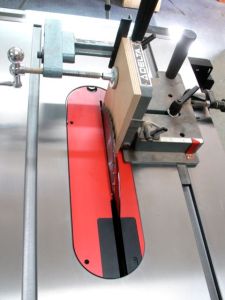
So what’s missing?

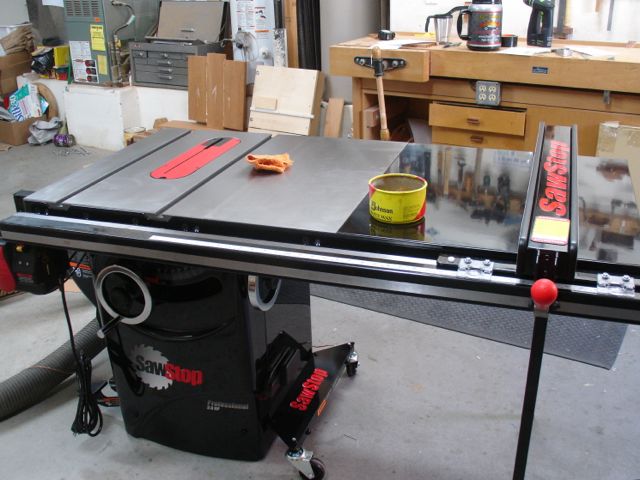
Not a good time for a quiz but my shop certainly looks a bit different now — seems much larger without my Jet cabinet saw with the 52″ out feed table!  This is the first time I’ve been without a tablesaw since my first Craftsman, 10″ tablesaw purchased back in 1977 as a graduation present to myself.  That is when I earned my teaching credential from San Francisco State and began my career of teaching.  The Craftsman was a quality piece of cast iron equipment, if you’re old enough to recall those days that was probably one of the main brands for homeowners to buy.  I used that saw until replacing it with the Jet in April of 2000.  Since I tend to keep receipts and owners manuals those dates and prices I mention are valid.  That Craftsman followed me to Las Vegas and Boulder City and was used to build my house there plus countless furniture pieces for myself and others that sparked my passion as a custom furniture maker.

Jet sold in 2 Days on Craigslit

Jet sold in 2 Days on Craigslist

Since I was becoming more involved with building furniture and projects for others, it was time to upgrade the contractor style Craftsman with a more powerful, cabinet style of saw.  I don’t recall the price of that saw but do remember that after listing it on Craigslist it sold within a day’s time.  I had two people at the house and another on the phone which resulted in a bidding war.  I sold it for what I paid back in 1977.  This was in 2000 and that price was under $500.00.  Enter the Jet Cabinetsaw, 3 hp, 220 volt, and 52″ table.  This picture is from the listing and it went to a young man that was very excited to take it home.  Since I rarely use sheet goods the long table served more time as an assembly table than it did to support wood being cut.  Besides, with a shop made sliding table long pieces were manageable.  Some of its accuracy has diminished over the years, bearings and belts have been replaced, and I thought it was time to purchase my last tablesaw.  Comparing the initial purchase price of the Jet back in 2000 with what I sold it for now (15 years later) showed me that it cost about $45.00 a year to own that tool — not a bad return if I do say so myself!

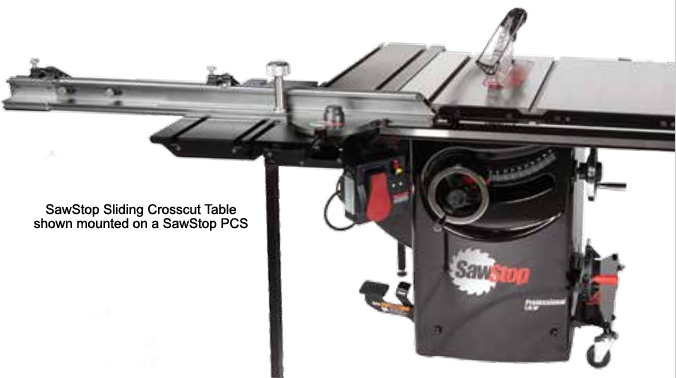
SawStop with Sliding Table

SawStop with Sliding Table

So, now what do I do?  This was more of a dilemma than I thought it would be. Some of me said that this was the time to really go back to all hand tool woodworking; something I truly enjoy but wasn’t quite ready to commit to.  As you know I consider myself a “hybrid woodworker”, one that uses the power tools much as the craftsman of old used their apprentices.  Let them do the heavy grunt work of roughly dimensioning the material and I’ll concentrate on the hand cut joinery and planed surfaces.  That decision being made, next was which saw to buy.  I considered the Powermatic brand, one that was used in all of my school woodshops and a proven workhorse.  Reviews on it weren’t all favorable and it was generally priced higher than the SawStop.  If you’re familiar with the SawStop, it’s been popularized as the Hot Dog Saw because of the safety feature where the blade automatically stops and retracts the minute it senses flesh:   http://www.sawstop.com/why-sawstop/the-technology

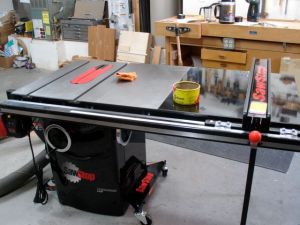
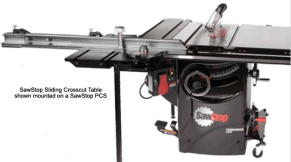
Admittedly, I had some negative feelings about this saw due to the way the inventor of it tried to have legislation passed that would require every saw to have this technology.  That just didn’t set well with me, I saw it as greed on his part which offset the obvious safety features this tool has.  Although I’ve been working with table saws for over 50 years and can still count to ten on my fingers — all it takes is one mishap to lose one or more of them!  I guess I’ve mellowed in my initial feelings about his attempts to legislate safety and after research discovered that this is a quality tool with nothing but positive reviews on the internet.  They recently introduced a sliding table which I’ve seen at Woodworkers Emporium and decided to go ahead with purchasing this machine.  I chose their Professional 3hp, 220volt model with a 36″ table but added the sliding table to it.  The saw will be delivered Monday but the slider is on backorder for 2-3 weeks.  As a service, Woodworkers will cut the rails to the needed length to accommodate the slider, install the mobile base, and deliver free to my shop.  I do prefer to  support local businesses rather than internet.  They’ve always been good to me, not only in sales but also by referring clients and students to me and arranging any warranty work when needed.

So, now I wait until Monday morning to have the saw delivered. They will install the mobile base and also cut the rails to the needed lengths for the sliding table.  That won’t be here for 2-3 weeks and I’m really looking forward to getting used to that feature.  If you’re unfamiliar with a sliding table, traditionally they are huge and take up an enormous amount of floor space.  SawStops version is compact and very smooth, they have one set up at Woodworkers Emporium that I’ve handled.  Here is a video about it:

Very anxious to see how this will all fit into my limited shop space and I’m sure I’ll need to do some reconfiguring.  The saw’s mobile base will make that easier, all of my tools are mobile which is a “must have” when your space is limited.  My hope is that with the dedicated sliding table I’ll be able to achieve more accuracy with mitered and bevel cuts and also with finger joint jigs.  Yes, I’ll need to re-make that but it’s time — they’ve served me well over the years and have been tweaked many, many times so it’s probably past time to remake them.

Posted in Uncategorized, YouTubeVideo | Tagged , , , , , , , | 4 Comments

Shop Happenings

Seems as if it’s been a while since I blogged and watching my wife, Diane being so consistent in her blogging makes me feel like a slacker so let me share what’s been going on with the woodworking side of the family now that the frames are completed for her work.

First off, after a series of convo’s back and forth with a potential client on the Etsy store she liked what our combined plans were and purchased her custom order.  Essentially it will be a finger jointed, hinged box made of Walnut.  It’s designed to hold surgical loupes so I’m including a piece of Kaizen foam for her to custom fit to the loupes.  Since the hardware she requested needed to be ordered I’ll wait until next week to begin on it, not a good practice to cut a box apart until you have the hinges and latches to make sure of their placement.

Another thing I was able to complete is this example of dovetailed simplicity in the form of a Pine box:

This box started out being the example of the box we were going to build for the recent hand tool class that I taught earlier this year.  Everyone decided they would rather build a tool tote so this was a “left-over” that needed to be completed.  The handle is, I think, a piece of Curly Cherry I had in my exotic scrap pile that I really liked.  Decided to go ahead and use the one and only proper mortise chisel I own to mortise the lid, good to utilize these hand skills and really it doesn’t take much more time than it would to set up the hollow chisel mortiser.

This slideshow requires JavaScript.

To keep things pure Tried and True Danish oil is the finish used which I wet sand into the surface.  The bottom of the box and tray will get a leather lining and then it’ll be placed on the Etsy store or taken to the Summerlin Art Fair in October.

John's Armoire Plan

John’s Armoire Plan

Next up I had the opportunity to do some more work on my personal project, John’s Armoire.  You may recall that it’s been stored in the bathtub and it’s been quite some time since I’ve had the chance to work on it.  My goal was to get the front and rear frame pieces assembled knowing that would take up a lot of space that I couldn’t afford to lose next week when work begins on the box.  This is a challenging project to say the least! Many, many things I’ve never tackled before but how else can you learn?  Luckily as I was getting things together I realized I needed the stretcher that will go from the top of the left leg to the section with the three drawers.  Also came to the conclusion that I don’t have enough material for that or the vertical divider between them so off I went to Peterman lumber hoping to find a piece of Mahogany that matched the color and grain of the rest of this piece — lucked out and the panel has been glued up.  The stretchers need to be dovetailed into the top of the leg which was accomplished before the glue up began.  You’ll notice in the fourth slide how I used a small piece of a very thin scraper to complete the cuts for this dovetail.  That’s the technique shown by Tage Frid that does work to cut down the material where your saw won’t reach.

This slideshow requires JavaScript.

Stage one of Assembly

Stage one of Assembly

That being completed it’s time to assemble these things!  Assembling the front and rear frames is a two step process.  First up was to assemble the drawbored pieces that are the stretchers between the drawers.  You’re seeing the left leg (from the front), the center vertical member, and the stretchers.  I used Old Brown Glue to give me ample working time and even though clamps weren’t required decided to use them anyway.  Just as a reminder, the frame is Genuine Mahogany and the pegs are 3/16″ Walnut.  Just enough width on the assembly table to get this together.
Assembly Stage 2

Assembly Stage 2

Stage two of the assembly was even more of a challenge.  The rear framework has a panel for the back of the right hand section which will have shelves installed.  That gave me some squareness issues that hopefully I can overcome and conceal!  The front is what’s shown here and by using the tablesaw and the assembly table I was able to accomplish it. It began glueing and pegging the top of the door section squarely into position.  For that it was Old Brown Glue.  The two, horizontal members at the bottom are dovetailed to the legs while a lap joint is glued/screwed from that center member.  For these Gorilla glue is my choice.  In my experience it cleans up really well and by placing a piece of polyethylene between it and the clamp the squeeze out is easily scraped off.
After cleaning up the joinery tomorrow they’ll probably head back to the bathtub while I work on the Etsy order and begin the process of planing down all of the panels for the sides and doors to size.  This will be a complete exercise with hand tools as they measure about 19″ in width and my planer is 15″.  Usually I like to let the planer do the grunt work and I’ll refine it by hand —- looks like I’m the grunt on this project!

Posted in Craft Fair, Etsy Store, Hand Tool Woodworking, Johns Armoire | Tagged , , , , , , , | 4 Comments

Carving and Gilding of Picture Frames

After the frames were carved and sanded the next step is to apply a coat or two of burnisher sealer.  This is the product you use in oil gilding that takes the place of multiple coats of gesso and then the actual clay used when you do water gilding with precious, 22kt. gold leaf.  As I’ve mentioned in previous blogs I used to use a product by Rolco but can’t seem to find that anymore.  The supplier I get my Dutch Gold from, L.A. Gold Leaf has their own line of the burnisher sealer available in red, yellow, and gray which is a good product.  After application you need to burnish it with 4/0 steel wool.  Oil gilding differs from water gilding in many aspects but one of the most important ones to consider is that oil gilding cannot be burnished like precious can — instead you need to burnish the sealer before applying the size and leaf. Another distinct difference between oil gilding with metal leaf and water gilding with precious leaf is that the leaf used for oil is much thicker.  The advantage that I see is that you can manipulate it with your fingers if you’re careful.  Precious gilding requires the use of a gilders tip to lay the gold on the frame.  A disadvantage is that it’s thicker so it’s difficult to lay in the recesses of the molding and tends to have more cracking issues.  I decided to go ahead and make a tutorial of the gilding process I use.  To lay the Dutch gold on this frame I found it best to lean it up and take advantage of gravity to lay it without having it stick before the gold was in the proper place.  Here’s the YouTube video: http://www.youtube.com/watch?v=Gb6Ntq09AjI After the oil size is completely dry (24+ hours) the toning and aging process begins.  I start with using Liberon 4/0, oil free steel wool on the freshly gilded surface to cut down the garishness of the Dutch gold.  This is followed by two coats of clear shellac applied with an air brush.  The purpose of the shellac is to seal the gold prior to toning.  I let that dry overnight and then worked these frames with a casein wash followed by waxing to add a layer of protection.  The casein is water soluble so can be completely removed if you don’t like the effect.  My technique is to mix it up with distilled water, apply to one leg at a time and wipe off immediately.  One of the challenges I face is making new work appear as if its been around for ages.

Oregon Sunset

Oregon Sunset

Here is a picture of the first frame I did with this molding.  For it, I took my collection on nuts, washers, cotter pins, and other hard metal items that are on a cable and just beat the “you know what” out of the frame.  The burnisher/sealer used on this was the red and with all of the cracking on the various steps it showed through a bit more than I’d like.  I followed the same toning schedule mentioned above and used the Payne’s Gray and Titanium White casein for the wash followed by an application of Liberon Black Bison wax which is probably my favorite of all waxes. To illustrate the difference between a frame that has just  been oil gilded with Dutch Gold and that same frame toned down with its artwork installed I’ll leave you with these images.  All the work is done by my artist/wife Diane Eugster The title is April’s Offering; On the left is the freshly gilded frame, the right it has been toned with Payne’s Gray and Titanium White.

The title is Mending Her Shoe; On the left is the freshly gilded frame, the right it has been toned with Ivory Black and Titanium White.

The title is Japanese Tea Garden; On the left is the freshly gilded frame, the right it has been toned with Burnt Sienna and Titanium White.

Posted in Gilding, Picture Frames, Tutorial, YouTubeVideo | Tagged , , , , , , | 1 Comment

Frame Carving and Gilding

I’m often kidded by my neighbor who tells me that if retirement means being as busy as he sees me all of the time he’s not so sure he wants to retire!!  Well, first of all; Diane and I don’t like the word retire because that sounds like you’re completely out of the game, sitting on a beach and drinking cocktails with little umbrellas in them — how boring is that?  It’s more that after 31 years of doing a “day job” now I have the opportunity to pursue all of the things I couldn’t get to before.  For me that’s primarily building furniture, picture frames, and boxes to support this habit.

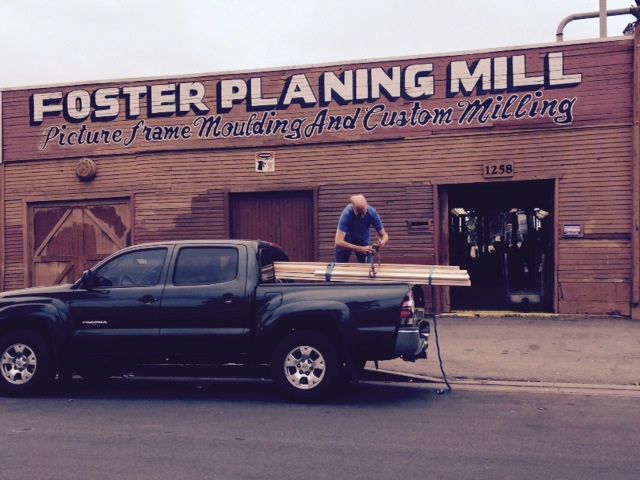
80 Feet of Seconds Molding

80 Feet of Seconds Molding

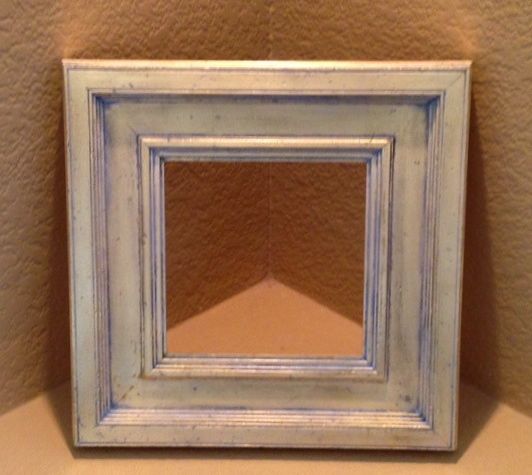
You may remember that towards the end of last year, we went to SoCal and bought a truckload of picture frame molding from Foster Planing Mills seconds selection.  I’ve begun work on one of the profiles from that trip so thought I’d share that with you.  Diane recently completed a painting activity referred to as 30 in 30 where she painted one painting every day for 30 consecutive days.  She did them on 8″ x 8″ panels so that was my incentive to make a few frames.  I had enough of one molding to make two 8×8 frames plus another 12×12.  That left me with about 6″ of molding to experiment with!

Distressed Frame 8x8

Distressed Frame 8×8

The first one to be completed was distressed using a bunch of nuts, washers, cotter keys, etc. that are on a cable.  Just wanted to beat up the surface a bit so that toning would show up.  I must admit that this is always a bit of a problem for me — beating something up to look old but that’s the routine for framing.  To tone this particular frame casein paint thinned with distilled water was used.  In this case, Payne’s Grey and Titanium White created the patina you see in the distressing and steps of this frame.  Kind of replicates years of accumulated dust.

The other two frames are carved.  Diane is pretty accomplished at drawing so drew aleaf motif into the corners of the 8×8 frame.  Now, if it were me there would have been a template to trace.  For me, carving is a challenge but on this frame there is only a small area to carve in, about 3/4″ in width.  Many ways to tackle this but I’ve found that using the customized, golf ball handled knife helps me maintain control over the piece.  I talked about it in this BLOG a while ago.

FrameCarving-WoodworksbyJohn-ToolsUsedHere are the tools used to carve the leaf motif, from left to right:

  • #7/14 gouge
  • #6 60 degree V
  • 2a/8 right hand
  • 2a/8 left hand
  • 3/6 Fishtail gouge
  • Golf Ball skew
  • #8/6 gouge

I’m a definite novice when it comes to carving but for the most part, enjoy the process.  Just like any other aspect of woodwork, you can ruin the entire project anywhere along the line with a slip up or incorrect measurement.  There’s a lot of truth in that saying “measure twice, cut once”.  That being said, it’s up to the craftsman to disguise whatever mistakes inevitably come into our work.  Without a doubt, few people are as critical of our work as we are!  Now that you have an understanding of the tools I used for this frame, here’s the process:

This slideshow requires JavaScript.

You probably notice the gap on the miter joint, that’s partially due to these moldings being in the “seconds” pile at Foster.  I noticed the profile didn’t always match up exactly and the backs were a bit uneven.  Clay should take care of that.  Also, just have to mention how much using that Black Diamond headlamp helps these old eyes see what I’m supposed to be cutting!

Next up is the gilding and toning process for these frames.  It’s a very difficult profile to leaf due to all of the steps leading to the panel.  I may attempt to make a YouTube video of that process — stay tuned!

Posted in Carving, Hand Tool Woodworking, Picture Frames | Tagged , , , , , , | 1 Comment

Off the Fence — Details, Details, Details !!

At the risk of sounding like a whiner I’d like to get this on the page.  It seems to be a natural instinct for people to think that a small size project is much easier and quicker to make than a larger one.  Those of you that create things just know that’s not true!  The only difference is in the size of the final outcome; techniques and joinery are the same.  Sometimes making small items can be more exacting and tedious.  I’m liking how this series of boxes is coming out even with the challenge of the small parts and brittle wood..

Media Cabinet

Media Cabinet

If you’re not familiar with them you can see the previous post but I had some reclaimed fence boards left over from a media table a commission at the beginning of the year.  The boards were ones I’d picked up from a recycler and are Redwood fence boards.  Since I had a few left over and couldn’t bear to just throw them in the trash I chose to make some finger jointed boxes showing the beauty of the surfaced wood compared to the weathered results after who knows how many years out in the environment.  Problem number one was the dryness of the wood along with its inherent splitting and cupping.  This limited the over-all size of the boxes.  You can read about it in this, the first post on the project.

Now that they were assembled and shellacked it was time to separate the lids from the boxes.  My method uses the tablesaw with the rip fence to accomplish this.  They were separated at the 5th finger joint which was cut at its center.  My process is to raise the blade so it just cuts completely through the long sides of the box.  The blade is then lowered to leave a 1/16″ piece connecting them.  Some box makers use the bandsaw for this but I find that this can leave a rougher and sometimes uneven cut.  The purpose of leaving that piece connecting the two parts prevents them from closing up, seizing on the blade, and possibly kicking back.

This slideshow requires JavaScript.

First of Off the Fence Series

First of Off the Fence Series

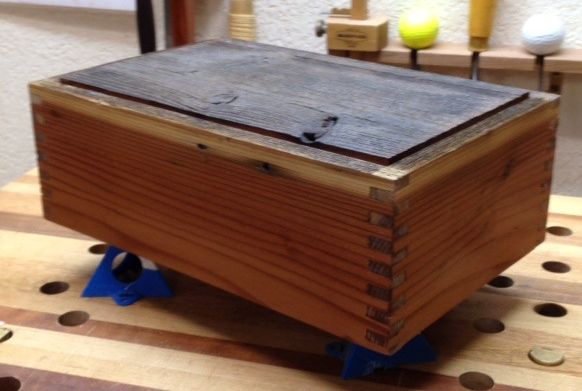
Now it’s time for setting the hinges and the hasp.  I bought these from a company in Canada called Small Box Hardware.  It took some doing to finally figure out the correct way to position the hasp on the front!  For the first box the flap was screwed to the outside of the lid which looks okay but I wasn’t completely satisfied with it.  Also, it needed to be bent slightly to get the little locking mechanism to latch.  I took this shot with my phone to give you an idea of how the rough, natural wood inlaid for the top contrasts with the surfaced wood used for the box — I like it!

Since I like using hand tools my first choice was to simply chisel out a mortise and recess the hasp into the bottom of the lid.  Without the mortise there was too much gap between the lid and bottom.  Being dry and brittle, the Redwood split rather than cut cleanly even with a sharp chisel and very light cutting pressure.  Luckily, this was fixable with a touch of glue and tape to repair the split on the inside of the lid — whew!  Enter a trim router with a 3/16″ bit to rough out the required mortise.

This slideshow requires JavaScript.

Here’s another instance of the advantage of adding one more tool to my arsenal, the Black Diamond, rechargeable headlamp.  My vision is showing the effects of six and a half decades of use and almost qualifies me for cataract surgery, using this headlamp allows me to see the lines as I performed the delicate operation of cutting a tiny mortise for the hasp.  A spacer (mat board) is used to offset the hasp, holes located and predrilled with a gimlet, cut out with the router and trimmed with a chisel.  The surface mounted hinges were located then installed two screws at a time, checking the operation as each pair of screws were tightened.  I took the precaution of waxing each of the tiny little screws to minimize any chances of splitting the wood or breaking the screw — did I mention this wood is dry and brittle?

Okay, time to give my eyes a break for now.  All that remains is to line the bottoms of each box using some denim material to complement the rustic style of these boxes.  I may add some dividers to the largest box.  Then it’s time to photograph and add them to the Etsy store inventory.


Posted in Etsy Store, Finger Joint, Off the Fence Box, Recycled Wood Furniture | Tagged , , , , , , , | Leave a comment

Off the Fence — A New Box Series

Some of you may recall my post dealing with the Cigar Presentation tray that was recently completed and delivered.  The construction of that featured finger joints cut on the tablesaw.  One thing I’ve learned while making boxes for the Etsy store is that it’s better to make a number of boxes rather than just one at a time as special orders come in.  This holds true especially on those that don’t feature hand cut joinery.  I had some of the recycled fence boards left over from Nicks Media Center that, even though they were inexpensive; I couldn’t make myself just throw them away!  Running them through the planer to create a flat gluing surface  and exposing the old growth redwood they looked  fantastic.  It crossed my mind that these boards could be good candidates for future boxes.

With that in mind, I selected the pieces that I thought might have some promise.  After weathering out in the wilds of California for who knows how many years there was a fair amount of cupping, warping, and cracking. Because of that, the width I could get was limited to about 4″ or so.  When I tried to make a taller box than that the warp in the boards prevented the finger joints from coming together without splitting the board — didn’t look too good so I’m keeping the boxes at a lower height.  Using 1/4″ finger joints and the accepted practice of an odd number of fingers will determine the over-all size.  As much as I dislike production line work, a project such as this benefits from it.  Once the finger joints were cut here’s a brief overview of the process:

This slideshow requires JavaScript.

Off The Fence

Off The Fence

Maybe you noticed how some of the boards still have a bit of the original “patina” to them.  The plan is to leave the top au natural just the way it came to me.  The only thing I’ll do to it is wire brush it to remove any loose materials.  I did one example (shown here) so you can get the general feel for how they will come out.  Diane suggested leaving the top completely unfinished, for this example I shellacked it which she thought took away from the character of the box.

Outdoor Spray Area

Outdoor Spray Area

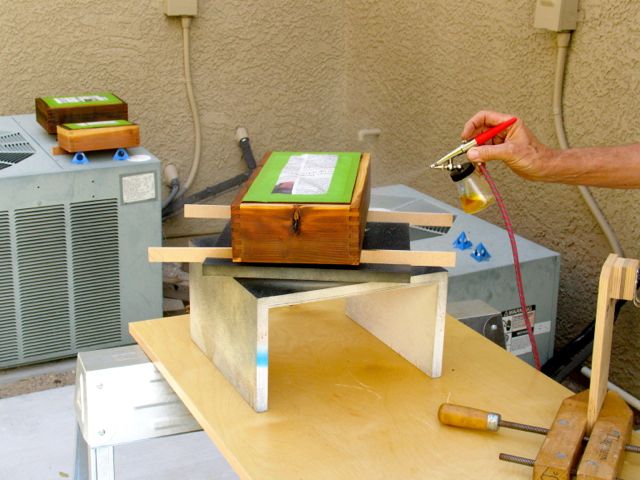
Since she has a design sense I really trust I’ll follow it, here are the assembled boxes being shellacked outside — notice the top is taped off to keep it natural.  These should be an interesting series of boxes.  When they’re complete they will have some decorative, black hardware and the bottoms will be lined with denim.


Just a couple of notes about this project.  There’s a company I use from Canada called Small Box Hardware that has quite an extensive collection of interesting hardware.  Another item I’ve mentioned before in my blogs is the box slot cutter router bit from Lee Valley that makes cutting the grooves so much easier.  As you saw in the slide show, it’s simple to use.  After clamping the box together you run the bit inside, I recommend going to the full 1/4″ depth in two passes and using your vacuum to keep things clean.  Using a 1″ belt sander makes quick work of rounding the corners of the top and bottom.  My glue of choice is Old Brown Glue as it gives me more than enough time to get glue on all of the fingers and clamped before things start to set up.  It’s made in the USA and works great.

After the shellac cures it’ll be time to finish them and list on the Etsy store.  I’m considering doing the Summerlin Art Festival again this year in October.  The entry deadline is June 1st. and I’d need to get juried in.  It’s a good way to get local exposure for my furniture work plus, hopefully, make a couple of bucks!  Now that we have the tent, tables, and shelving the expense won’t be as bad as our initial Art Festival.

Posted in Craft Fair, Off the Fence Box, Recycled Wood Furniture | Tagged , , , , , | 1 Comment

Cigar Tray Complete; Ready for Delivery

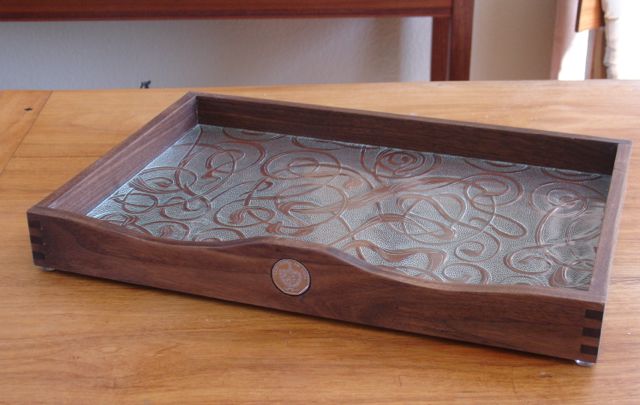
Finished tray of Walnut:


Cigar Presentation Tray

Cigar Presentation Tray

I doubt that I’m any different from other custom woodworkers in this, as the project reaches its final stages you often wonder if it will meet your clients expectations.  That’s especially true with these two projects I’ve made for the same client, the other being the Mechanical Cellarette.  The Cellarette was different though because there were many stages of the project that I shared with him via the blog so he knew how things were shaping up.  This is one of those fun challenges that basically started out with the proverbial “sketch on a napkin” and went from there!

We began by laying out the items that were destined for the tray.  The main feature is a genuine cigar box which is probably made of Spanish Cedar which I learned isn’t really a Cedar at all.  Rather it’s a species of Mahogany traditionally used for cigar boxes since the worms that like cigars don’t like it!  There will also be a cigar cutter and matches or lighter to go with the whole cigar experience.  Since the cigar box has finger joints it seemed the obvious choice for this tray as well.  Walnut was chosen for it’s dark, dignified appearance which will complement the over-all style of his office.  Thanks to the internet, he located something similar to what he had in mind, sketched in his vision of how he would like his tray to look, and then entrusted me with the coin that would be embedded into the front piece.  That too was a process; many times, seemingly simple projects usually are!  I mentioned that in the other post about this project but basically it had to do with the diameter of the Peso and finding an appropriate bit.  I tried using a slightly smaller bit and enlarging with a #7 sweep gouge.  Although the curvature was almost the same it just didn’t look right.  Then the forstner bit I did buy because they’re supposed to have a flat bottom left a slightly convex bottom.  The Peso rocked in the hole so it needed to be flattened with a small gouge.

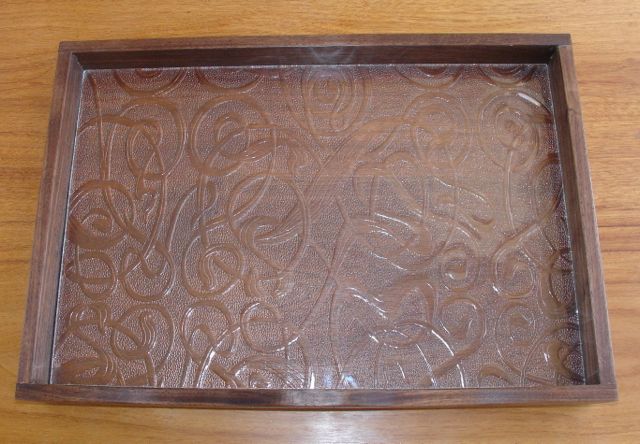
Close up of Glass

Close up of Glass

As things began to come together in my opinion, the plain Mahogany plywood bottom just didn’t convey the richness needed.  I recalled some previous projects that had glass doors.  There are many types of clear, textured and sculpted glass available from Glass Art Studio here in Las Vegas and since I used them for the doors thought they might have something to add a touch of elegance to this tray.  In my opinion, the picture at the left shows that — an elegant way with an Art Deco influence to present a cigar to your clients.


Posted in Current Commission, Finger Joint | Tagged , , , , | 1 Comment

Can Traditional Artists Skills Transfer to High Tech?

Tools of a Different Trade

Tools of a Different Trade

That was the question my wife and I asked each other recently and I’d like to share our experience with you.  Have to give you a spoiler alert though, there won’t be any woodworking or painting techniques anywhere in this blog!  If you already follow my work that’s where you can get my thoughts, techniques, and approaches to woodwork.  You already know that my preference lays with hand tool work and for me it’s all about the process not the speed at which I can accomplish things.


I’d guess that if you’re interested in my blog you may be interested in my wife’s work as well.  She’s a very successful artist and I’m lucky enough to be her framer, packing and shipping guy, and #1 Fan!  If you have the time and inclination you can check out her work at these gallery sites:

Okay, back to the computer high tech stuff!  In 2009 we decided that since our old PC had some issues and either crashed or picked up a virus it was time to replace it.  At the urging of our Apple infatuated son, our Christmas presents to each other that year were MacBook Pros.  Her’s is a 15″ while mine is 13″ but in any case; they are getting on in years, especially for electronics.  Things were slow and we got that constant, whirling beach ball of doom!  To replace both of them would have easily approached the $2500.00 threshold and I’m sure you’ve heard of the starving artist syndrome!

Once again, Adam came to the rescue with his solution.  Our MacBooks were outfitted with old style drives which create a lot of heat which equals slowness! He had replaced the drive in his girlfriends computer with solid state unit plus installed a new battery and said it made a huge difference.  Diane did what she does so well and started searching the net for parts and info.  A fantastic site she found was IFIXIT.  Not only did they have everything needed to update our laptops, it was very carefully laid out for each particular model.  Then, there are very clear video’s showing how to complete each step and they offer all of the tools — one stop shopping at its best!

Things went well with one exception, specific tools needed.  After backing up our hard drives to the new, solid state ones it was time to begin.  After unscrewing the back of Diane’s we discovered that this particular model (Mid-2009) used a Pentalobe #6 for the battery which wasn’t included in our deluxe 26 bit screwdriver set.  Definitely give IFIXIT credit for great phone support.  When Diane called them he offered to send that screwdriver out with free postage so that we got it in two days.  Incidentally, my battery was secured with a Y-shaped screw head!  After getting the needed screwdriver we spent a couple of hours yesterday afternoon on our high tech challenge.

What we accomplished was to replace our old drives with solid state units, both batteries have been renewed, and Diane increased her RAM from two, 2KB chips to two, 4KB chips.  My computer originally had two, 1KB chips so those were replaced with the original ones form Diane’s computer.  After the work was completed on Diane’s computer and the back screwed on tight we held our breath as the screen went from dark to grey after hitting the power button.  What a relief to see that Apple trademark appear and watch everything load up.  Seemed like an eternity for that to happen but now it is lightening fast.  Diane and I then went to work on mine, this went quicker since we’re now “pros”!  It too was a success and the difference in our computers operation is amazing.  For about $600.00 we updated and increased the speed of our computers immensely; money and time well spent.  Computer repair/update was an interesting endeavor but I think painting and woodwork will be our mainstay!

New use for the kitchen island

New use for the kitchen island

Posted in Uncategorized | Tagged , , , , , | Leave a comment

Cigar Presentation Tray — with a Cuban Influence!

I’ve finally made progress on this project, a cigar presentation tray commissioned to me by the same client I completed the Mechanical Cellarette for.  During that building process I had two other commissions that I had put on hold so I could concentrate on the Cellarette.  Those two are now complete so I could spend some concentrated time on this project.  They were the Stone Carvers Bench and the Gilded Cat Box.

Sarcastically, I’m beginning to think of the tray as a “twofer”; what do I mean by that?  Well, I’m sure you’re familiar with the two for one sales and coupons.  Here in Las Vegas they’re commonly referred to as “twofers”.  Seems as if each phase on this project has required two steps to complete one step!  The wood of choice was Walnut but when I first went to every one of our local lumber suppliers their Walnut was a few pieces of yellowish sap wood — not the rich Walnut tone I or my client wanted.  The second trip, a few days later rewarded me with some nice, dark Walnut.  After work began and I was ready to cut the recess for the Cuban Peso that will be embedded in it.  As luck would have it, the Peso measures about 1-1/16″ in diameter.  The needed forstner bits only come in increments of 1/8″ — where’s the “twofer”?  Well, although the store closest to me said they had a 1-1/8″ forstner bit they didn’t so the “twofer” was going to a store further away to find it!

Assembled Presentation Tray

Assembled Presentation Tray

Well, after all of that this picture shows that persistence has once again, paid off.  For strength, the corners are finger jointed, a traditional method also  referred to as a box joint.  Using this type of joint exposes lots of face grain for gluing to give the needed strength.  You can see the main feature of this under the strap.  The front has been stylized  and the Cuban Peso will be embedded in the center of the arched section.

Finger Joint jig on Tablesaw

Finger Joint jig on Tablesaw

The finger joints were cut on the tablesaw using this jig.  I decided to make another box for the Etsy store out of some recycled fence boards since everything was set up anyway.  Although the use of this jig requires a bit of trial and error, once things are adjusted they are relatively easy to cut — just hard on the back as you bend over the tool!


Glass sample for tray bottom

Glass sample for tray bottom

The bottom of the tray is a piece of the same plywood used for the Mechanical Cellarette’s back.  To elevate the over-all appearance of this tray I’ve decided to have a piece of glass cut for the bottom.  I’ve used  Glass Art Studio here in Las Vegas for projects such as glass front doors because they have some really unique pieces.  In my opinion, the piece shown at the left has kind of an Art Deco flair to it that will work well in my clients office. Once his cigar box and the accruements are on the tray it should look great!

A challenging aspect of the tray was creating the stylized front.  My client had sketched out what he had in mind so that was my starting point.  When you design something that is symmetrical on both sides the challenge is making them both exactly the same.  I’ve learned that it’s best to make a pattern for one half and then simply flip it over to draw a mirror image.  That’s the approach taken for this.  Since it’s very visible I also chose to use a router with a ball bearing guide to ensure symmetry.  Here’s a slide show of that process:

This slideshow requires JavaScript.

Ideally, finger jointed boxes should have an odd number of fingers for best appearance.  Since these are 1/4″ fingers the final height of the tray should be 1-3/4″ to yield 7 fingers.  What complicated this though is that the arched section is 2″ at the center.  So, the process began by cutting all of the pieces 2″ tall at first,  then cut the finger joints, lay out and form the arch and cut the dado to support the bottom.  After that I still needed to reduce the two sides and back to the 1-3/4″ height.  This was done with the tablesaw and a plane.  To transition the sides to the front piece I found that my small spokeshave was the best choice.  This left sanding the insides prior to gluing the project together.  I used Old Brown Glue, my favorite for these things because of it’s working properties.  Let things dry for 24 hours or so then begin the finish process.

Posted in Current Commission, Uncategorized | Tagged , , , , , , , , , , , | 3 Comments

How to Add Keys or Splines to a Mitered Box — Cat Box Completed

A box constructed with miter joints, like everything else; has its plusses and minuses.  On the plus side it allows you to use a single piece of wood so that the grain pattern of it can flow around the corners.  In the first blog about this custom box I explained my method for doing that on the tablesaw.  You can then cut a slot across those mitered corners and insert a piece of contrasting material to reinforce the weak, end grain to end grain of the mitered joint — that is the primary minus to this type of joint.  There are a few different ways to go about this.

You can buy a specialized jig like this one from Rockler Woodworking or you can take the route I took and make your own.  Mine is made from some scrap pieces of MDF and 5/4 Poplar.  It’s important to use a blade such as rip cut to create a flat kerf  for the spline to glue in to.  As you can see in the center picture I’ve been using this one for quite some time!  Lines on the cradle allow me to line up the work, once the stop block is clamped down simply rotate the box to cut all four corners.  You can vary the depth to add even more of a stylized look to the work — being careful to not cut through the box!

After the cuts are made, plane down your material for the splines.  I start with a power planer then fine tune with a hand plane.  Here’s my spline cutting and gluing set up.

Needed "stuff" for cutting and glueing up the splines/keys.

Needed “stuff” for cutting and glueing up the splines/keys

Starting at the left is the Old Brown Glue which is my preference for this work.  Since it needs to be heated the coffee cup with hot tap water is used for that.  I use a small brush to get the glue into the cut without making a lot of mess.  A piece of Marlite is great for glue ups since it glue won’t stick to it.

Cutting spline/key

Cutting spline/key

To cut the spline/key I’ve found that a bench hook with an accurate 45 degree kerf paired with a Japanese razor saw is a good choice.  The glue is put on a piece of scrap wood and brushed into the cut, then a small amount is also applied to the spline/key.  Keep in mind that you want it to seat all the way in the cut and too much glue may prevent that.  Once dry, a block plane makes quick work of trimming it flush with the sides.  The grain of the key runs diagonally so take a light cut towards the box, not the outside. The corners of my blade have been radiused to prevent them from digging into the work.

Now that this step is complete it’s time to separate the lid from the box.  Again, I use the tablesaw for this.  The technique is to cut the long sides of the box completely through, then lower the blade so that you leave 1/16″ or so of the box uncut.  Doing that prevents the box from closing on the blade as the cut is finished which can result in a snip at least or a serious kick back at worst.  This remaining piece is easily cut with either a utility knife or flush cut saw and then planed flush.

Fitting Hinges

Fitting Hinges

Other than the finishing process which in this case was Platinum Shellac and wax all that remains is the hardware.  The hardware was installed after the shellac was cured thoroughly, I use an air brush for my boxes.  Hinges were installed using a combination of a trim router and jig followed by fine tuning with hand chisels and marking gauge.  This is where all of your effort can be  lost so I tend to be very careful at this point.  Pretty difficult to conceal a hinge mortise that’s been misplaced!

Gimlet in use

Gimlet in use


For the tiny screws used for the hinges, hasp, and nameplate my preference is using a gimlet.  Much easier to control than an electric drill — that being said though I will use a small Vix bit to start the holes centered in the hinges followed by the gimlet.  Screws are always lubricated with beeswax since I don’t relish trying to drill them out should they break.  Also a wise choice to use a steel screw in the hole first if the hardware screws are brass.

Happy to say, all went well and the box was mailed out Thursday to my client in North Carolina.  This has been a while in the making and thankfully, she was very patient.  She knew she wanted the Leopardwood which took me a while to get plus the Mechanical Cellarette project had priority over this one.  Looking forward to getting back to work on my personal project, the Armoire.  I’ll end this post with a few pictures of this completed project.


Posted in Etsy custom order, Jess'sCatBox, Mitered Box, Tutorial | Tagged , , , , , , , | 1 Comment